Children who grew up in homes where the television was always on - not because anyone was watching but because the silence would have been unbearable - often become adults who cannot fall asleep in a quiet room, who leave the news running while they cook, who play podcasts in the shower, not because they love content but because their nervous system learned that silence meant someone was about to speak and whatever came next was going to change everything
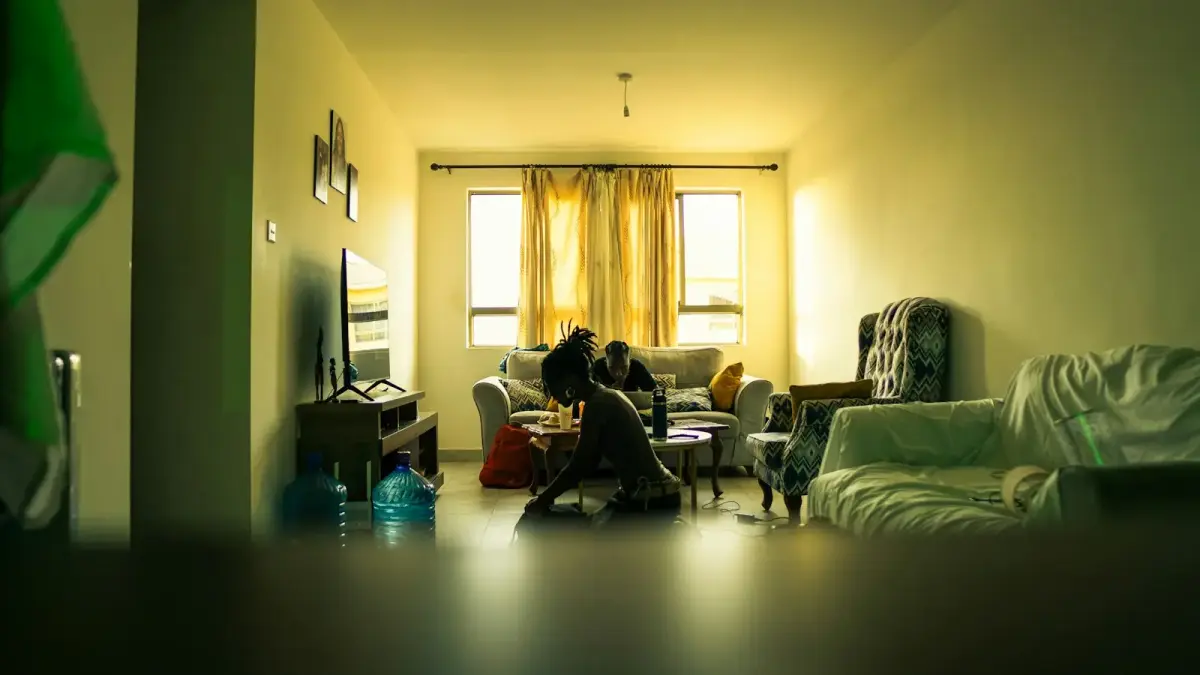
The television in my parents’ living room was never off.
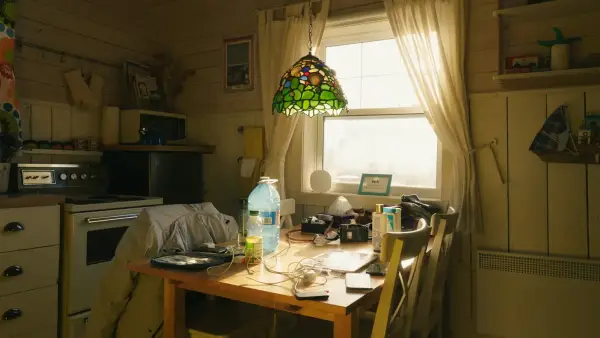
I don’t mean we watched a lot of TV. I mean the television was on the way a faucet drips - constant, background, unremarkable. Nobody chose a show. Nobody sat down with intention. The TV came on when the first person woke up and it stayed on until the last person fell asleep, and in between it played to a room of people who were not watching it but who would have panicked if someone pressed the power button.
It wasn’t until I slept at a friend’s house at age eleven - a house where the parents turned everything off at nine o’clock and the hallway went so quiet I could hear the refrigerator cycling - that I understood something was different about my home. Their silence felt like a dare. Like the room was holding its breath.
I lay in that guest bed with my heart doing something it had no reason to do, and I remember thinking: I need the noise back.
If you grew up in a home where the television served as the family’s emotional infrastructure - not entertainment but insulation - these patterns probably live in your body right now, decades later, still running.
1. You cannot fall asleep in a quiet room
This is usually the one people notice first, and it’s the one they’re most likely to dismiss as a quirk. You need something on. A fan. A podcast set to a sleep timer. A YouTube video you’ve seen forty times playing on your phone face-down on the nightstand. The specific content doesn’t matter. What matters is that the room is not silent.
Because silence, for you, was never neutral. Silence was the thing that happened right before your mother’s voice went sharp. Silence was the kitchen after a fight, before someone decided whether to apologize or escalate. Silence was the car ride home when your father gripped the steering wheel and said nothing, and the nothing was worse than anything he could have said.
A 2019 study published in the Journal of Sleep Research found that adults who grew up in high-conflict households showed markedly different physiological responses to ambient silence compared to adults from low-conflict homes. Their cortisol levels rose in quiet environments. Not in loud ones. In quiet ones. Their bodies had learned to read silence as a threat cue - the precursor to conflict rather than the absence of it.
You’re not being difficult about sleep. Your nervous system has a definition of safety, and that definition includes sound.
2. You turn the TV on the moment you walk into a hotel room
You don’t even think about it. Key card in the slot, bag on the bed, remote in your hand. The channel doesn’t matter. You’re not planning to watch. You’re furnishing the room with something it’s missing, and what it’s missing is the layer of sound that tells your body this is a space you can exist in.
Other people walk into hotel rooms and notice the view, the thread count, the minibar. You notice the silence. And the silence is not peaceful. It’s a room-shaped version of every empty house you walked into after school, keys in your hand, listening for clues about what kind of evening it was going to be.
Your partner might joke about it. But you’re not watching. You’re regulating. You’re filling the space between people with something that isn’t the people themselves.
3. You put headphones in the moment you’re alone
The walk to the car. The elevator ride. The three minutes between meetings when you’re standing in a hallway with nothing to do. Headphones go in. A podcast starts. Music fills the gap. And you never quite examine why those ninety seconds of aloneness felt like something you needed to manage.
This is the portable version of the television. You’ve miniaturized the family’s coping mechanism and carry it in your pocket. The technology changed. The function didn’t.
Research by psychologist Matthew Davis at Cambridge, published in a 2023 paper in Frontiers in Psychology, found that individuals with elevated anxiety sensitivity - particularly those whose anxiety was linked to environmental unpredictability in childhood - showed a strong behavioral preference for self-initiated auditory input during solitary moments. In plain language, they filled silence before silence could fill them.
You’re not addicted to your phone. You’re not a podcast junkie. You are a person whose childhood taught them that silence is the loading screen before something bad, and you learned to keep the loading screen from ever appearing.
4. You feel a strange unease in a quiet house
Your partner leaves for the weekend. The kids are at a sleepover. The house is yours. And instead of the relief you expected, something crawls up the back of your neck.
The quiet isn’t peaceful. It’s loud. It’s the loudest thing in the room because your body is listening for what comes next, the way it always listened - for the front door, for footsteps on the stairs, for the particular quality of silence that meant someone was crying in another room and trying not to be heard.
You find yourself turning on the kitchen radio. Opening a window so you can hear traffic. Running the dishwasher even though it’s half empty, just to have the sound of water and machinery doing something predictable in the background.
A 2021 study in the Journal of Anxiety Disorders examined what researchers called “silence intolerance” in adults with histories of childhood household tension. They found that the aversion wasn’t to quiet itself - participants were fine with noise-canceling headphones in busy environments. The aversion was specifically to domestic silence. Quiet houses. Still living rooms. The particular acoustics of a home with no one speaking in it. The context mattered. It was always the context.
You’re not restless. You’re standing inside a shape that your nervous system remembers, and it’s doing the only thing it knows how to do - scanning for danger that isn’t coming but that it was never told had stopped.
5. You leave the news on while you cook, clean, and fold laundry
Not because you’re interested in the news. Half the time you couldn’t repeat a single headline from the last hour. The news is texture. It’s the sound of adult voices discussing things in measured tones, and that sound - steady, predictable, emotionally contained - is the exact opposite of the silence your childhood kitchen held when the real conversations were happening behind closed doors.
You could put on music. You could put on nothing. But the news feels right in a way you’ve never examined. It feels like supervision. Like someone competent is in the room, narrating the world in a tone that suggests everything is manageable.
This is what the television did in your parents’ house. It wasn’t entertainment. It was a third presence. It sat between your mother and father like a mediator, absorbing the tension, filling the pauses, making the room feel populated even when the two people in it had stopped being able to reach each other.
You’re not a news addict. You’re recreating the mediator because the alternative - two people in a kitchen with nothing between them but air - still feels like a room where something is about to go wrong.
6. You feel anxious when someone turns the music off in the car
The drive is fine. Conversation is happening, or it isn’t - either way, the radio is on and the car feels manageable. Then someone reaches over and turns it off. Says something like, “Let’s just talk.” Or worse, says nothing and lets the silence arrive like a third passenger.
Your chest tightens. Not dramatically. Just enough that you notice your breathing change and your hands adjust on the wheel. The silence in a moving car has a specific quality - sealed, inescapable, intimate - and that quality maps perfectly onto every drive your family ever took after leaving someone’s house too early, or after the dinner that didn’t go well, or on the way to the place where something difficult was going to be discussed.
Daniel Goleman has written about how the amygdala stores emotional memories not as narratives but as sensory templates - sounds, textures, spatial configurations that trigger the same physiological response as the original event. The silence of a car with the radio off is one of those templates. Your body doesn’t need to remember the specific argument. It remembers the shape of the quiet that surrounded it.
You might reach for the volume knob yourself. You might start talking just to fill the space. Either way, you are a person managing an atmosphere that no one else in the car can feel.
7. You experience genuine confusion when people say they enjoy silence
Someone tells you they spent the weekend at a cabin with no Wi-Fi, no television, no phone service. They say it was amazing. They say the quiet was healing. They describe sitting on a porch listening to nothing but wind and birds and they get this look on their face - calm, almost reverent - and you think: that sounds like a punishment.
You don’t say that. You nod. You say, “That sounds great.” But inside, you’re running a simulation of yourself in that cabin, and every version ends with you pacing, or lying in bed at two in the morning listening to the walls of a strange house settle and feeling your heart rate climb.
Silence, for these people, means the absence of demand. Silence, for you, means the presence of something unresolved. You grew up in a home where silence was not a state of peace. Silence was a state of waiting.
Susan Cain’s research on quiet has illuminated how different nervous systems respond to low-stimulation environments. But what clinicians who study childhood hypervigilance have expanded on is that the meaning assigned to silence is not universal. It’s biographical. A person who grew up where silence was safe will seek it out. A person who grew up where silence was the overture to conflict will spend their adult life making sure it never fully arrives.
8. You create background noise for your own children without realizing it
This is the one that might stop you.
You have the kitchen radio on while they do homework. You leave a show playing in the living room even though nobody’s watching. You put music on during dinner - not because anyone requested it, but because dinner in silence feels like something you can’t give them. Not because silence would hurt them. Because silence hurts you, and you’re building their childhood from the blueprint of your own nervous system.
You’re not doing anything wrong. You’re doing what every parent does - constructing the version of home that feels safe, based on the only definition of safe your body ever learned. And your body learned that safe sounds like something. A laugh track. A weather report. A song playing from another room.
The difference is that you can name it now. You can notice the impulse - the hand reaching for the remote when the room gets too still - and let yourself feel what’s underneath it. Not to fix it. Just to recognize that the noise was never about entertainment, and the silence was never about peace, and the television was always doing a job that no one in your family had the words to do themselves.
You are not broken for needing sound. You are a person who survived a home where quiet meant danger, and you built an ingenious, portable, lifelong system for making sure danger never arrives unannounced.
The TV was never just a TV.
It was the thing that kept the room from becoming the room you were afraid of. And the fact that you still reach for it - in hotel rooms and kitchens and cars and the last three minutes before sleep - doesn’t mean something is wrong with you.
It means you learned, very young, how to keep yourself safe. And you’ve been doing it ever since, so quietly and so completely that most people in your life have never noticed you’re doing it at all.