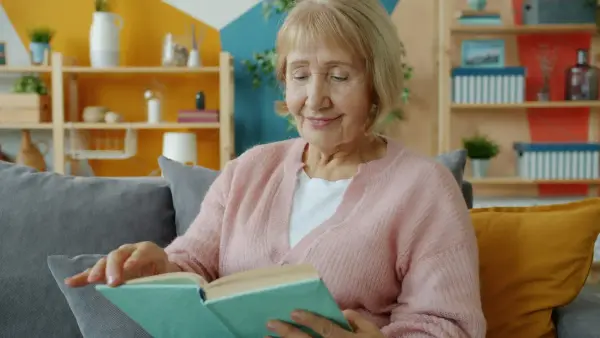
There is a particular kind of woman who still folds her napkin into a perfect square at every restaurant - smoothing the creases with the heel of her hand, lining the edges up against the knife, making the table correct before she touches her food - not because she is particular but because a girl who was messy was a girl who embarrassed the family, and the sixty-year-old woman who cannot sit down to eat without first performing this small act of order is still answering to a mother who has been dead for fifteen years
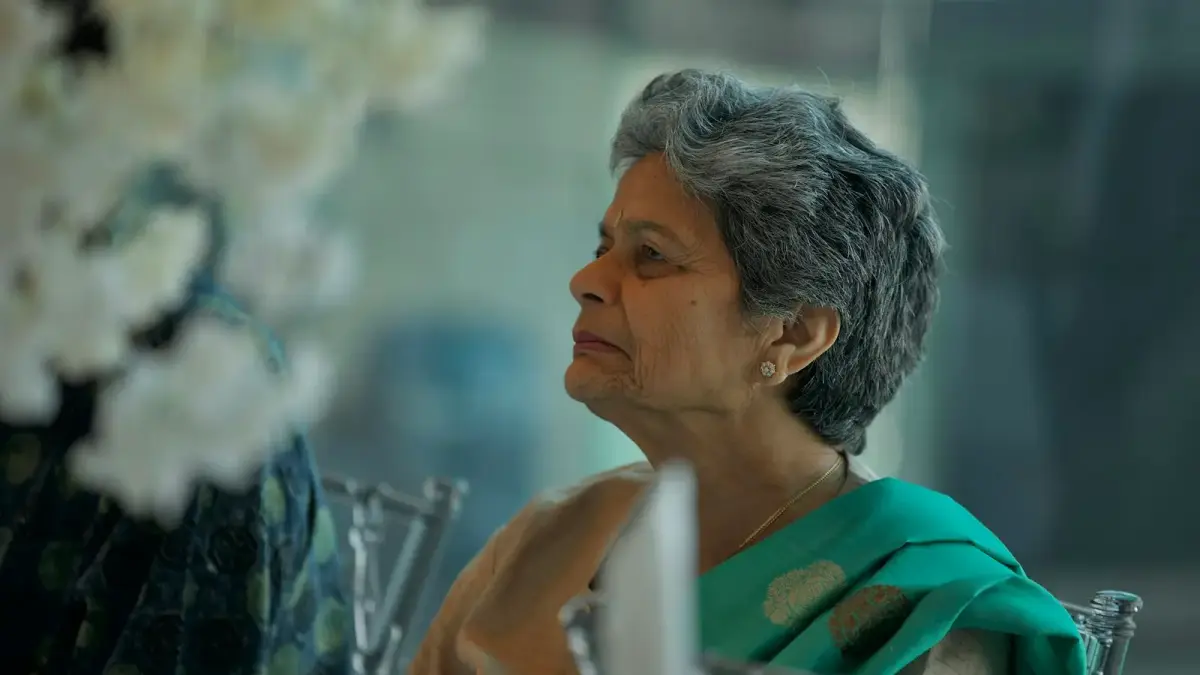
I watched my friend Linda do it last Tuesday at a restaurant neither of us could really afford. Before she looked at the menu, before she reached for water, before she said a single word about her day, she picked up the cloth napkin, unfolded it, and refolded it into a crisp square. She smoothed the creases flat with the heel of her hand. She lined the edge up against the knife. She adjusted the fork by a centimeter.
Then she looked up at me and smiled.
She had no idea she had done it.
I didn’t say anything, because I didn’t need to. I knew exactly what I was looking at. I had watched my own mother do the same thing for forty years. And I had caught myself doing it, too - in diners, at holiday tables, at the kitchen counter when nobody was watching - straightening the edges of something that didn’t need to be straight, making the surface correct before I could allow myself to begin.
The table had to be right before you were allowed to want anything
If you grew up in a certain kind of household - and you know if you did - the table was not just where you ate. The table was a performance. The table was the measure of whether the woman running the house was doing enough, caring enough, holding everything together tightly enough that the seams didn’t show.
A crooked napkin was not a crooked napkin. It was evidence.
It meant someone wasn’t paying attention. It meant someone had gotten lazy. It meant the house was slipping, and if the house was slipping, the woman in charge of the house was slipping, and if she was slipping, what would people think.
The correction was never loud. That’s what makes it so hard to name. Nobody screamed about napkins. Nobody threw anything. Your mother simply reached over, refolded the cloth, placed it back beside your plate, and said something like, “Let’s try that again, sweetheart.”
And you understood. Not with your mind but with your body. You understood that a girl who was messy was a girl who embarrassed the family. You understood that neatness was not preference - it was loyalty. It was love made visible. It was the only proof that mattered.
She wasn’t teaching you manners - she was teaching you survival
A 2019 study published in the Journal of Family Psychology found that women who grew up in households with rigid domestic standards were significantly more likely to report compulsive tidying behaviors in adulthood - not because they valued cleanliness more than other people, but because disorder triggered a stress response that had been conditioned into them before they had language for it.
The researchers called it “environmental hypervigilance.” The women in the study didn’t clean because they liked cleaning. They cleaned because a disordered space felt dangerous. It felt like something bad was about to happen. It felt like someone was about to be disappointed.
And when they traced the origin of that feeling, it almost always led back to a mother or grandmother who had lived in a world where a woman’s domestic presentation was the only power she had.
Your mother wasn’t being cruel when she corrected your napkin. She was preparing you for a world she understood - a world where a woman who kept a beautiful table was respected, and a woman who didn’t was talked about. She was handing you the only armor she knew how to make.
The problem is that armor doesn’t come with instructions for when to take it off.
The ritual outlives the reason
Linda’s mother died in 2011. Breast cancer, slow and terrible and stretched across two years of hospital rooms and hushed phone calls. Linda was the one who handled the arrangements. She was the one who cleaned out the house, packed the china, donated the tablecloths to the church.
She told me once that the hardest thing she threw away was a set of napkin rings. Not because they were valuable. Because her mother had polished them every Thanksgiving morning for thirty years, and the idea of them sitting in a Goodwill bin felt like a betrayal she could not explain to anyone who hadn’t grown up watching someone polish brass at six in the morning while the turkey was still cold.
That was thirteen years ago. Linda has moved twice since then. She has a different career, a different city, a different life.
But she still folds the napkin.
She still lines up the silverware.
She still cannot sit down to a meal without first making the space around her plate look the way her mother would have wanted it to look, and she does it so automatically, so completely without thought, that she doesn’t even register the motion of her own hands.
Psychologist Dr. Gabor Mate has written extensively about how the body stores what the mind releases - how behaviors learned in childhood become so embedded in our nervous systems that they persist long after the original context has disappeared. You don’t fold the napkin because you remember being told to fold the napkin. You fold it because your hands remember, even when you don’t.
This is not fussiness - this is the last conversation
Here is what I want you to understand, if you are the woman at the restaurant who cannot stop straightening things.
You are not being controlling. You are not being uptight. You are not - and I need you to hear this - being ridiculous.
You are having a conversation.
You are having the last conversation you will ever have with a woman who shaped every corner of your domestic life, who taught you that the world would judge you by your surfaces and then spent her entire life trying to make sure your surfaces were immaculate, who loved you in the language of pressed tablecloths and properly set places and napkins folded into squares so sharp you could cut yourself on the crease.
She is not here to see the napkin anymore. She is not here to nod, to approve, to reach over and adjust the fork you placed a little too far to the left. She is not here.
But your hands still do it.
And every time they do, you are saying something to her that you may not have the words for - something that lives below language, below memory, below the part of your brain that knows she is gone. You are saying: I remember. I learned. I am still the girl you raised. The table is correct.
The inheritance you cannot put down
A 2021 study in Frontiers in Psychology examined what researchers called “post-bereavement habit persistence” - the way people continue performing small domestic rituals associated with deceased loved ones, often for years or decades after the loss. The study found that these behaviors were not pathological. They were not signs of unresolved grief. They were, in the researchers’ words, “embodied memorials” - the body’s way of maintaining a connection that the conscious mind has been forced to release.
The women in the study who continued setting an extra place, folding towels a specific way, or arranging flowers the way their mothers had arranged them reported feeling closer to their lost parent during these moments. Not sad. Not stuck. Closer. As though the act itself was a bridge to someone who could no longer be reached by any other means.
This is what nobody tells you about inherited domestic behavior. It is not a cage. It is a telephone line. It is the only number that still connects, and every time you fold that napkin, you are picking up the receiver and saying hello to someone who will never answer but whose silence feels, somehow, like enough.
What I have learned to do with mine
I fold napkins too. I straighten the silverware. I wipe the table down before I set anything on it, even when it is already clean. I cannot help it, and I have stopped trying to help it.
But I have started doing something else, too. When I catch myself in the act - when I notice my hands smoothing, adjusting, perfecting the space around my plate - I pause. Just for a second. And I let myself feel what is underneath the motion.
It is not anxiety. It is not compulsion.
It is tenderness. A vast, quiet, aching tenderness for a woman who did her best with what she had, who believed that a well-kept table was the difference between dignity and shame, who could not give me permission to be messy because she had never been given that permission herself.
I don’t need to stop folding the napkin. I don’t need to unlearn it or heal it or process it into something more evolved.
I just need to know what it is.
It is love. It is an old, inherited, imperfect, beautiful kind of love that comes with creases pressed into cloth and edges lined up against knives and a table made correct before anyone is allowed to want anything.
And if you are the woman who does this - if you are sixty or fifty-five or seventy-two and you cannot sit down at a restaurant without first making the space around you match a standard that was set by someone who is no longer alive - I want you to know that you are not being fussy.
You are being faithful.
You are keeping a promise that was never spoken aloud, honoring an inheritance that cannot be appraised or divided or donated to the church, continuing a conversation that has no words and no end and no audience except the quiet, sacred memory of a woman who taught you that the table matters.
And it does matter. Not because the napkin needs to be straight.
Because she needed you to be the kind of girl who would straighten it.
And you are. You still are.