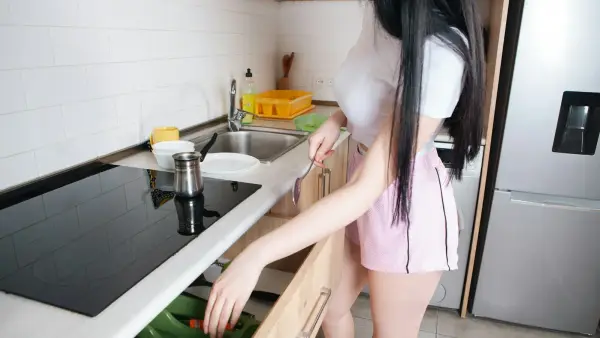
There are women who still eat off the chipped plates every night and keep the matching set behind glass for company that rarely comes - who own beautiful things they never use, who keep the guest towels pristine while drying themselves with something threadbare - not because they are practical or saving the good things for a special occasion but because a girl who watched her mother reserve every nice thing for people outside the family learned before ten that the everyday version of herself did not deserve the porcelain, and the woman at fifty-four serving her own family dinner on a cracked plate while twelve complete place settings sit untouched in the cabinet is not waiting for the right occasion but waiting for a version of her life that finally earns what she already owns
The Cabinet That Holds More Than Dishes
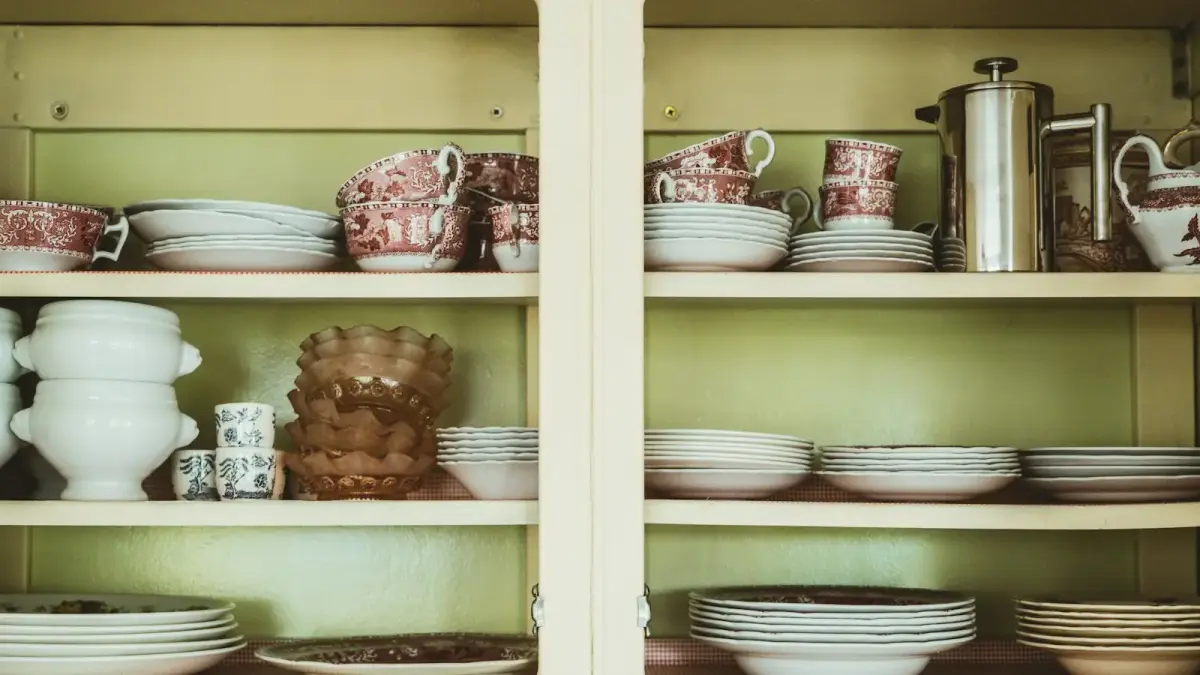
I noticed it last Thanksgiving. My mother standing at the sink, scrubbing the same plate she’s used for thirty years - a white one with a hairline crack running through the center like a river on a map. Behind her, visible through the dining room doorway, sat the china cabinet. Twelve place settings of blue and gold porcelain, arranged with the precision of a museum exhibit, untouched since I was a child.
She’d bought that set in 1987 with money she’d saved for two years. I remember the day it arrived - how she unwrapped each piece like it was something holy, how she placed them behind the glass doors with hands that trembled slightly.
That was nearly forty years ago. We have never eaten off those plates.
Not for birthdays. Not for Christmas. Not for the dinner she made when my father came home from the hospital. The occasion that warranted the good porcelain never arrived - or rather, it arrived a thousand times and she never recognized it, because somewhere deep in her bones she believed that her family sitting down to Tuesday night meatloaf was not the kind of moment that deserved something beautiful.
What Your Mother Was Really Teaching You
She didn’t mean to teach you this. That’s the cruelest part.
When your mother kept the good towels folded in the linen closet and handed you something worn thin enough to see through, she wasn’t being unkind. She was enacting a logic she’d inherited - one that said nice things are finite, breakable, irreplaceable on her budget. One that said the world outside the front door was where you performed your best self, and inside was where you survived.
The guest soap stayed wrapped in its paper. The living room stayed roped off with an invisible velvet cord. The plastic stayed on the couch cushions until company came.
And you absorbed a lesson she never said out loud: you are not the occasion. Your ordinary life does not warrant the beautiful thing. You must earn the porcelain through some version of yourself that hasn’t arrived yet - thinner, more successful, more deserving.
A 2019 study published in the Journal of Consumer Psychology found that people from lower socioeconomic backgrounds are significantly more likely to preserve possessions rather than use them - not because they value material things more, but because each object carries the weight of what it cost to acquire. The researchers called it “consumption guilt,” but I think it’s something sadder than guilt. I think it’s a quiet agreement with the world that told your mother she wasn’t worth her own nice things.
The Girl Who Learned Before Ten
You watched. Children always watch.
You watched your mother put on lipstick only when leaving the house. You watched her change into her “good” clothes for the grocery store and come home to something stained and stretched. You watched her set the table with mismatched plates for your father and then bring out the matching ones when the neighbors came for coffee.
The lesson landed in your body before your mind could name it. Pierre Bourdieu, the French sociologist who spent his career studying how class lives in the body, called it habitus - the way social position becomes physical instinct. The things you reach for without thinking. The things you deny yourself without deciding to.
By ten you already knew which version of yourself deserved care and which one was just getting through the day. The public self - the one teachers saw, the one that went to church, the one that sat up straight at other people’s tables - that self deserved effort. The private self, the one eating cereal in her pajamas on Saturday, was just surviving until the next performance.
You are fifty-four now. You have your own china cabinet.
The Inheritance Nobody Talks About
We talk about inheriting trauma and inheriting wealth, but we rarely talk about inheriting unworthiness - the way it passes between women like a recipe card, handwritten and grease-stained, tucked between the pages of something else.
Your grandmother kept her wedding dress wrapped in tissue paper her whole life and was buried in something plain. Your mother kept the good plates behind glass. And you - you keep the expensive candle unlit on the shelf, the cashmere scarf folded in the drawer, the bath oil a friend gave you three Christmases ago still sealed in its box.
You tell yourself you’re being practical. You tell yourself you’re saving it. But saving it for what? For whom?
A 2021 study in Frontiers in Psychology examined how women in particular internalize material deprivation as personal unworthiness. The researchers found that girls raised in households where resources were visibly reserved for others - guests, special occasions, public-facing moments - were more likely as adults to describe themselves as “not the kind of person” who deserves luxury, even when they could comfortably afford it. The scarcity was gone. The belief remained.
The Cracked Plate Is Not a Badge of Honor
There’s a version of this story that sounds like virtue. Frugality. Practicality. Good sense. The woman who doesn’t need nice things, who’s above all that, who’s too sensible for indulgence.
But sit with it honestly. When you reach past the matching set to grab the cracked plate - the one with the chip on the rim that catches your lip if you’re not careful - what is the feeling in your chest? Is it really contentment? Or is it something more like obedience?
You are obeying a rule nobody wrote down. A rule that says the beautiful things in your home are for a version of your life that is more important than the one you’re currently living. That your Wednesday night, your Saturday morning, your quiet cup of tea at four in the afternoon while the house is empty - these moments are not enough.
But here’s what I want you to hear. Those moments are your life. They are not the waiting room before your life begins. They are not the rehearsal. The Tuesday you’re living right now, unremarkable and quiet - that is the occasion.
What It Means to Use the Good Plates
I’m not talking about dishes. Not really.
I’m talking about the women who keep their joy behind glass. Who save their gentleness for strangers. Who give their families the chipped version of themselves - tired, stretched thin, wearing something stained - and reserve their warmth, their beauty, their full attention for anyone except the people who live inside their house.
I’m talking about the way you pour yourself into making the guest room perfect while your own bedroom hasn’t had new sheets in six years. The way you cook elaborate meals when friends come over but eat standing at the counter when it’s just you.
Using the good plates is not about materialism. It’s about deciding - quietly, without announcement - that your ordinary life is worth your own care. That the people who see you every day deserve the same version of you that strangers get. That you deserve the same version of you that strangers get.
Your Mother’s Grief, Not Your Sentence
I want to be gentle here, because your mother wasn’t wrong. Not exactly.
She grew up in a world where nice things really were irreplaceable. Where a broken plate meant eating off something cracked for the next decade because there was no money for a new one. Where the good china represented the single most beautiful thing she would ever own, and using it daily meant risking the one piece of evidence that she had taste, that she belonged somewhere lovelier than her life suggested.
Her preservation was a form of protection. A survival strategy born from real scarcity.
But you are not living her life. You can buy another plate if one breaks. You can replace the towel. The scarcity that made her logic necessary does not apply to your Tuesday - and yet you’re still following her rules, still eating off the cracked plate, still saving the beautiful thing for a guest who isn’t coming.
Her grief does not have to be your sentence. You can honor what she survived without continuing to reenact it.
The Quiet Revolution of an Ordinary Tuesday
Brene Brown talks about how worthiness is not something you earn - it’s something you practice. And I think the practice starts with something as small as a plate.
Tomorrow morning, open the cabinet. Take out one of the good plates - the ones you’ve been keeping behind glass. Put your toast on it. Your scrambled eggs. Your Tuesday breakfast that nobody will photograph or remember.
Notice what happens in your body. Notice the resistance. The voice that says this is silly, this is wasteful, this is for when you have people over. That voice is not yours. That voice is a seven-year-old girl watching her mother wrap something beautiful in tissue paper and put it away.
You don’t have to do anything dramatic. You don’t have to announce it. You don’t have to smash the old plates in some symbolic gesture.
Just eat your breakfast off something that isn’t cracked. Just dry your face with the good towel. Just light the candle on a night when it’s only you.
Not because you’ve earned it. Not because the occasion is special enough. But because you are the occasion. You always were.
The matching set has been waiting for you this whole time. Not for company. Not for Christmas. For the quiet, unremarkable, completely sufficient woman who has been walking past it every day for thirty years, believing she hadn’t yet become the person who deserved to use what she already owned.
You are that person. You have always been that person.
Open the cabinet.