8 things people who double-knot their shoes every single time - who have never once trusted a single bow to hold, who tie and then tie again before their feet touch the ground outside - do according to psychology, because a child who was corrected for coming undone built an adult whose body refuses to leave anything that could unravel to chance
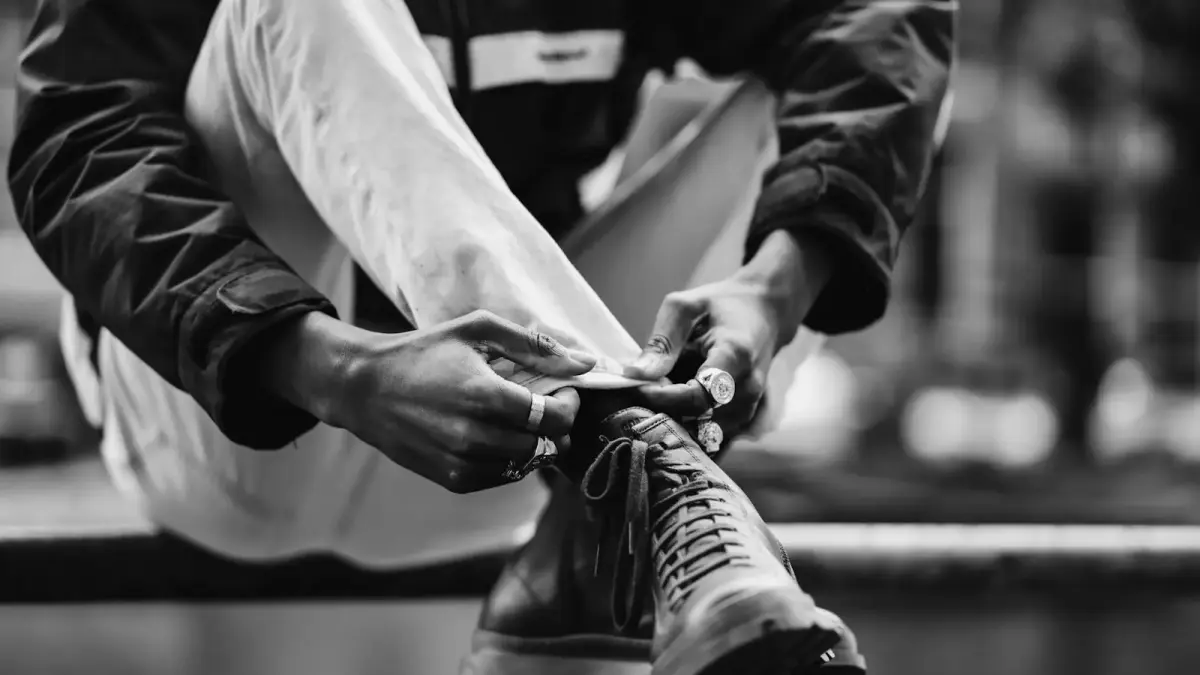
I double-knot my shoes every morning before I leave the house. I have done this since I was seven years old.
I never thought about it - not once - until my partner watched me one morning from the bed and said, “You know those aren’t going to come undone, right?” And something in my chest tightened. Because that wasn’t the point. The point was never whether they would come undone. The point was that they could.
I started paying attention after that. To the way I pulled each loop tight and then pulled again. To the way I couldn’t walk out the door until I felt that second knot lock into place beneath my fingers. It wasn’t about the shoes. It had never been about the shoes.
It was about a girl whose mother would stop her at the front door, look down, and say - in a voice that was kind but still landed like a verdict - “You’re coming apart.” Untied laces. A crooked collar. A sock that had slipped. Small things. But the message was larger: you are not held together enough to be seen.
If you double-knot your shoes every single time - if you have never once trusted a single bow to hold your day together - here are eight things psychology reveals about how that pattern shaped you.
1. You cannot leave the house until the knot feels right - not just tied, but locked
This isn’t about being late or being careful. This is a threshold ritual. The knot must feel complete before you can cross from private space into public space.
Psychologists who study transition behaviors - the small actions people perform between one state and another - note that these rituals serve a regulatory function. They signal to the nervous system that a boundary has been honored.
For you, the double-knot is that signal. It says: I am sealed. I am contained. Nothing about me will come loose while I am being watched.
A 2000 study published in the Journal of Personality and Social Psychology by Arie Kruglanski and colleagues found that individuals with a high need for cognitive closure engage in more preparatory behaviors before entering uncertain situations. The double-knot is preparation at its most embodied.
2. The double-knot is a control behavior that starts at the body and radiates outward
Watch someone who double-knots their shoes and you will notice it does not stop at laces.
Their bags are zipped all the way. Their car doors are checked. Lids are pressed until they click. Containers are sealed. Jackets are zipped to the top even on mild days.
This is not neurosis. This is a body that learned early that the world notices when you come undone - and decided to close every opening before anyone could point at one.
The behavior radiates from the feet upward because the feet are where the body meets the ground. If the foundation is secure, everything above it can breathe. But if the laces are loose, nothing else feels stable either.
3. The original moment was not trauma - it was correction that landed like judgment
You probably cannot pinpoint one event. It was not dramatic. Nobody yelled.
But someone noticed something undone about you - a shoelace, a button, a strap - and the noticing felt like exposure. Like you had been caught in the act of being imperfect. And the correction, however gentle, taught your nervous system that visible imperfection draws attention.
This is not the same as abuse. This is a child absorbing the message that “together” is what earns safety. That being untied - in any sense - makes you visible in the wrong way.
Research on what psychologists call intolerance of ambiguity shows that this trait often develops in environments where standards were clear but unspoken. You knew what “right” looked like because you saw what happened when something was slightly wrong.
4. Your relationship with “loose” anything is visceral - loose threads, loose plans, loose ends in conversations
You pull threads from hems. You cannot leave a conversation that trailed off without circling back to close it. Open loops bother you physically - not intellectually, but in your body.
A 2019 study in Frontiers in Psychology found that individuals who score high on intolerance of uncertainty show measurable physiological arousal - elevated heart rate, increased skin conductance - when exposed to unresolved situations. The discomfort is not imagined. It is somatic.
For you, a loose thread on a sweater is not a minor cosmetic issue. It is something coming undone. And your hands move to fix it before your conscious mind even registers why.
This is not fussiness. This is a nervous system that was trained to scan for what could unravel.
5. It is not perfectionism - it is preemptive repair
People will call you a perfectionist. They are wrong.
Perfectionism is about achieving an ideal. What you do is different. You are not trying to be perfect. You are trying to prevent the specific shame of something coming apart in public - in front of people - where you cannot fix it without being seen fixing it.
Research distinguishes between adaptive and maladaptive perfectionism. But what you practice is neither. It is closer to what psychologists call anticipatory coping - addressing a potential problem before it becomes actual.
You fix what is not broken yet. Not because you believe everything will break, but because if it does break where others can see, the feeling is unbearable. The double-knot is not about getting an A. It is about never having to retie your shoe while someone watches.
6. You were often the child who was “together” - the one adults relied on to not need reminding
You were not the chaotic one. You were not the one who forgot their lunch or lost their jacket.
You were the child adults praised for being easy. For being self-sufficient. For never needing to be told twice. And that praise felt good - but it also built a cage. Because once you become the child who never comes undone, the cost of coming undone becomes enormous.
The double-knot is the residue of that identity. It says: I am still the one who does not need reminding. I am still the one who handles herself. I have already checked everything you might check for me.
Daniel Goleman’s work on emotional self-regulation describes how children who are given early responsibility for managing their own presentation develop sophisticated - sometimes hypervigilant - monitoring systems. You did not learn to double-knot because you were anxious. You learned it because you were trusted, and you could not bear to betray that trust with something as small as a loose lace.
7. The double-knot is proprioceptive - you need to feel the tightness through your feet as confirmation the day can begin
This one is body-level. Below thought.
Proprioception - the body’s sense of its own position and pressure - is how we know where we end and the world begins. Research on proprioceptive feedback shows that tightness against the skin can serve a regulatory function, similar to how weighted blankets calm the nervous system through deep pressure input.
The double-knot is not just visual confirmation that your shoes are tied. It is physical confirmation that you are held. That your feet are contained. That the boundary between you and the ground is firm.
You feel it through your arches when the knot is right. And that feeling - that locked-in, sealed, held feeling - is what tells your body the day can begin.
Without it, something stays unsettled. Not in your mind. In your feet.
8. You do not trust single systems generally - you back up files, carry extra, confirm twice, verify what should be obvious
The double-knot is a philosophy, not a habit.
You save documents twice. You carry a backup charger. You confirm reservations that were already confirmed. You arrive early and then check your tickets again in the car.
This is not anxiety in the clinical sense. This is a worldview built by a child who learned that single systems fail. That one knot comes undone. That one assurance is not enough. That the only thing standing between you and visible unraveling is redundancy.
A 2015 study published in the Journal of Research in Personality found that individuals who develop redundant verification behaviors often trace the pattern to early experiences where single points of failure - a forgotten permission slip, a missed instruction - resulted in social consequences disproportionate to the error.
You double-knot because you learned early that one knot is a hope. Two knots is a promise.
If you recognized yourself in this - if you are someone who has never once walked out the door without pulling that second loop tight - I want you to know something.
You are not anxious. You are not controlling. You are not difficult.
You are someone whose body learned very young that coming undone in public is not safe. And so you built a system - quiet, private, entirely your own - to make sure you never would.
The double-knot is not a flaw. It is your body’s way of saying: I will hold myself together so completely that no one will ever need to hold me together for me.
That is not weakness. That is a kind of fierce, quiet self-reliance that most people will never understand - because most people have never felt what it costs to come undone where someone can see.
Your knots hold. They always have.