There is a particular kind of man who has never once returned a meal at a restaurant even when it was completely wrong, because a boy who watched his father accept whatever was placed in front of him without complaint learned that a man who sends food back is a man who believes the world should rearrange itself to match his preferences, and the safest kind of man was the one who never asked for more than what arrived
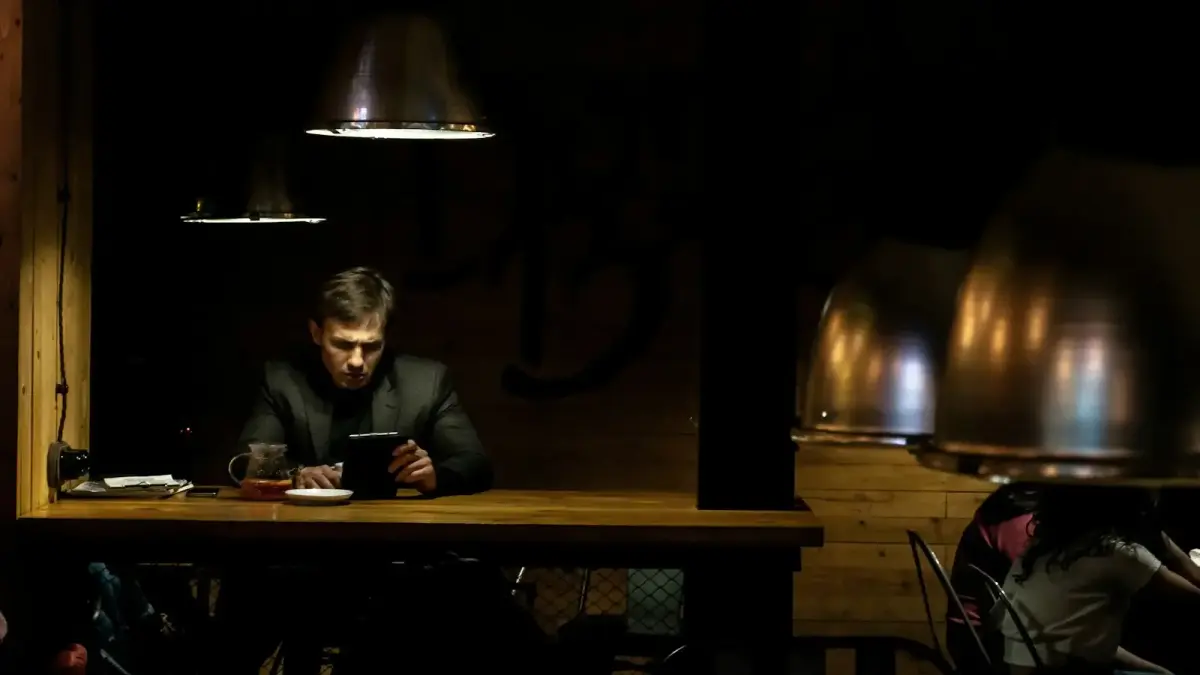
The steak came well-done. I had ordered medium-rare. I watched the server set the plate down in front of me, and I already knew I was going to eat every bite without saying a word.
It wasn’t a conscious decision. It was something older than that - something that lived in my chest before the thought even formed. My mouth opened to say “excuse me,” and then it closed again. I picked up my knife and cut into the grey, overcooked meat. My wife looked at me across the table. She already knew, too.
This is a story about fathers and sons and all the invisible lessons that pass between them at dinner tables where nothing important was ever said out loud. It is about the particular kind of man who learned, before he had language for it, that his needs were a form of inconvenience - and that the safest version of himself was the one who never troubled anyone with what he actually wanted.
The Quiet Mathematics of Accommodation
You learn it in a thousand small moments. The cold soup your father ate without comment. The wrong order he accepted with a nod. The hotel room with the broken air conditioner where he said “it’s fine” and opened a window instead.
You were watching. Children always are.
And what you learned was not that your father was easygoing. What you learned was that a good man absorbs discomfort rather than redistributing it. A good man takes what arrives and makes it work. A good man does not send the world back to the kitchen with corrections.
This was never spoken. It didn’t need to be. You watched him eat the wrong meal with the same quiet face he wore when the mechanic overcharged him, when the neighbor’s dog destroyed the garden, when your mother asked him how he was feeling and he said “fine” because that was the only word he’d been taught was safe to use.
A 2019 study published in the Journal of Personality and Social Psychology found that men who grew up with emotionally stoic fathers were significantly more likely to suppress their own needs in adult relationships - not because they didn’t have needs, but because they had internalized the belief that expressing them was a form of weakness or burden.
You didn’t inherit conflict avoidance. You inherited a theology. And its central doctrine was this: the man who asks for less is the man who deserves love.
The Weight of the Unsent Plate
Here is what people don’t understand about the man who never sends food back. It is not about the food.
It is about the terrifying arithmetic that happens in his chest every time he considers making a request. The calculation goes like this: if I say something, I become a person who causes problems. If I cause problems, I become difficult. If I become difficult, I become the kind of man my father warned me about without ever using words - the demanding one, the entitled one, the one who thinks the world owes him something.
So you eat the cold soup. You wear the wrong size. You sit in the middle seat on the airplane and tell yourself that comfort is a luxury other people earned but you didn’t.
This extends so far past restaurants that the restaurant is almost beside the point. The man who never sends food back is also the man who doesn’t tell his wife when something hurts. He is the man who says “I don’t care, you pick” so many times that everyone around him eventually believes he has no preferences at all. He is the man who absorbs and absorbs and absorbs until he is so full of swallowed needs that he doesn’t even recognize his own hunger anymore.
Daniel Goleman’s work on emotional intelligence describes a phenomenon he calls alexithymia - the inability to identify and describe one’s own emotions. But for many men, it is not an inability. It is a discipline. They learned, very precisely, how to feel something and then immediately bury it beneath the performance of being fine.
You are not numb. You are obedient.
The Father’s Plate, Untouched
I want to talk about your father for a moment. Not the story you tell about him, but the truth underneath it.
Your father who ate the wrong meal was not a man without desires. He was a man who had been punished for having them. Somewhere in his own childhood, someone taught him that his preferences were an imposition. That wanting things - specific things, particular things, things prepared a certain way - was a kind of greed that good men did not practice.
So he built a life around the absence of requests. He took what came. He made do. And you watched him do it with such consistency that it looked like peace. It looked like strength. It looked like the kind of man you wanted to become.
But here is what you might not have seen: the quiet sadness in a man who has spent sixty years eating meals he didn’t order. The particular loneliness of being known by everyone as “easy” when the truth is that you have simply given up on being known at all.
A 2021 study in Frontiers in Psychology found that men who scored high on emotional suppression reported lower relationship satisfaction - not because their partners were dissatisfied, but because the men themselves had lost access to what satisfaction even felt like. When you spend decades performing contentment, you eventually forget what the real thing tastes like.
Your father was not teaching you strength. He was passing down his wound. And he didn’t know it, because no one had ever told him it was a wound in the first place.
The Myth of the Low-Maintenance Man
There is a cultural story we tell about men like this. We call them low-maintenance. We call them easygoing. We call them the kind of guy you want to grab a beer with because he never makes things complicated.
And there is something seductive about that identity. It feels safe. It feels earned. The low-maintenance man is loved because he never asks for anything, and isn’t that the cleanest kind of love - the kind that costs nothing?
But love that costs nothing is worth exactly that.
The low-maintenance man is not low-maintenance. He is high-maintenance in reverse. He requires an enormous amount of energy to sustain - not from others, but from himself. Every swallowed preference, every unspoken correction, every “it’s fine” that wasn’t fine - these accumulate. They become a pressure that has to go somewhere.
Sometimes it goes inward, into depression or numbness or that vague sense of disconnection that you can’t quite name. Sometimes it goes outward in bursts that surprise everyone, including you - the sudden snap over something trivial, the disproportionate anger at the waiter who brought the wrong drink, not because of the drink but because of the three thousand drinks before it that you accepted in silence.
Susan Cain, in her research on temperament, has observed that people who habitually suppress their authentic responses don’t become calmer over time. They become more volatile. The container holds until it doesn’t.
You are not easygoing. You are exhausted from the constant work of pretending that nothing matters to you.
Learning to Send It Back
I am forty-three years old, and last month I sent a meal back at a restaurant for the first time in my life.
It was a small thing. The pasta was undercooked - genuinely, objectively undercooked, the kind of undercooked that anyone would notice. My wife encouraged me to say something. My daughter looked at me like she was waiting to see what I would do.
And I felt it - that ancient tightness in my chest. The voice that said don’t make a scene, don’t be that guy, don’t be a man who thinks the world should bend to meet him. My father’s voice, though he never said those words. His silence said them for him, every single night.
I called the server over. I said, very quietly, “I think this might be a little undercooked.” She smiled. She took the plate. She brought it back four minutes later, perfectly done. And nobody died.
I know that sounds ridiculous. But for some of you reading this, it doesn’t sound ridiculous at all. For some of you, that sentence - nobody died - lands with the force of revelation. Because somewhere in your body, you have been carrying the belief that your preferences are dangerous. That your needs, spoken aloud, could collapse something.
They can’t. They won’t.
What Your Father Couldn’t Tell You
Your father ate the wrong meal because he believed that was what good men did. And in a way, he was right - for his time, for his context, for the world he was taught to navigate. He did what he could with what he had.
But you are allowed to update the inheritance. You are allowed to look at the lesson your father passed down and say: I understand why you believed this, and I am choosing something different. Not because you were wrong, but because I want to be known. I want the people who love me to know what I actually want, even when it is as small as a steak cooked to the right temperature.
The man who sends food back is not the man who thinks the world owes him something. He is simply the man who has decided that his experience matters enough to be spoken. That is not entitlement. That is not aggression. That is a man finally allowing himself to take up the exact amount of space he was always allowed to occupy.
You are not your father’s silence. You carry it, yes - in your chest, in your throat, in the way your mouth still closes around words before they leave. But carrying something is not the same as being it.
You are allowed to want what you want. You are allowed to say it out loud. And the people who love you - really love you - have been waiting for you to start.