She's 58 and still nods along when someone is talking to her, even on the phone where nobody can see, even when she agrees with nothing being said - not politeness, not passivity, a girl who learned that the visible performance of listening was the only currency that purchased the right to eventually speak, and the woman who nods at fifty-eight is still paying for something her childhood never gave away for free: the assumption that her attention was already present and did not need to be proved
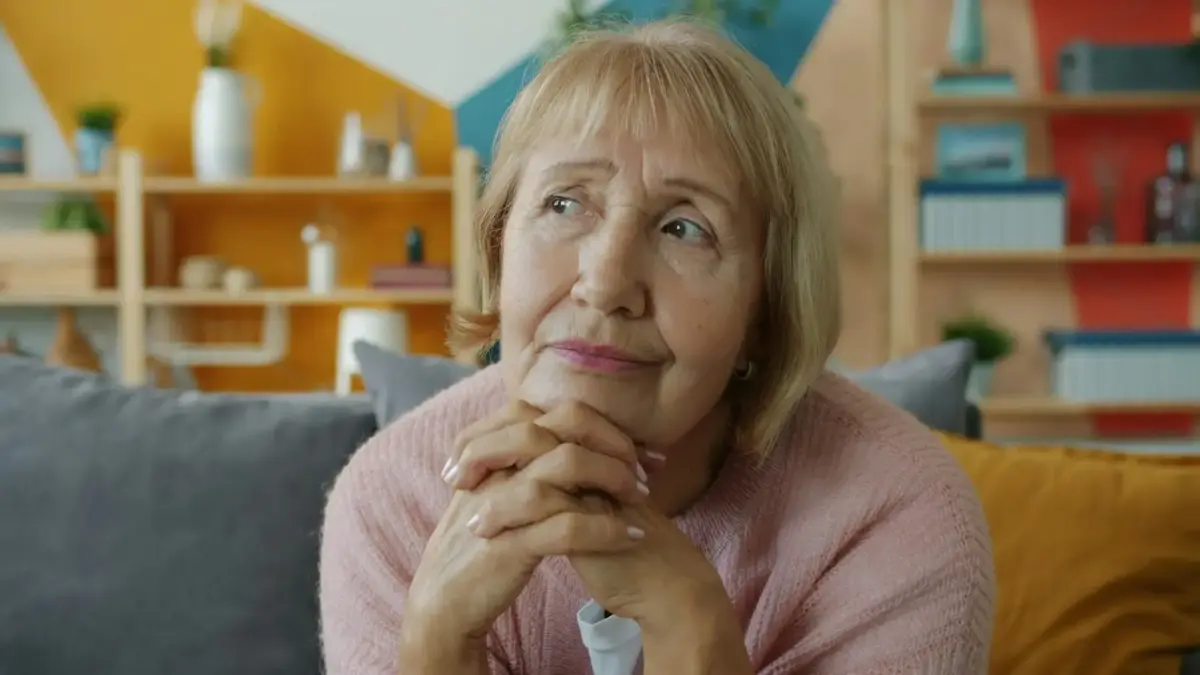
I caught myself doing it again last Tuesday.
My sister was telling me about her neighbor’s fence dispute - a story I had no stake in, no opinion about, no reason to perform engagement for - and I was nodding. Alone in my kitchen. Phone pressed to my ear. Nodding like someone was grading me on it.
I stopped mid-nod and stood very still. My neck actually ached from it, the way a muscle aches when it’s been holding a position so long you forgot it was holding anything at all.
I am fifty-eight years old. I have a doctorate. I have published research on nonverbal communication. And I nod on phone calls where nobody can see me, not because I agree, not because I’m polite, but because somewhere deep in the architecture of my body there is a girl who learned that listening doesn’t count unless it’s visible. Unless it’s performed. Unless someone can look at your face and confirm that yes, the attention is happening, and therefore the attention is real.
That girl is running a program she wrote decades ago. And the woman standing in the kitchen has never found the off switch.
The Protocol Nobody Installed on Purpose
Here is what I remember.
I am nine years old, sitting at the kitchen table. My mother is telling me something important - or maybe not important, I can’t remember the content, only the test that followed.
“Are you even listening to me?”
I was listening. I was always listening. But I had looked down at my hands for a moment, or my eyes had drifted toward the window, and that fraction of a second was enough evidence. The attention was invisible, and therefore it was absent.
So I learned the protocol. Eye contact - sustained, unbroken, almost aggressive in its steadiness. Small nods at regular intervals. Slight forward lean. Occasional “mmhmm” sounds timed to the rhythm of the speaker’s sentences, not to actual moments of agreement.
I learned that listening was not something you did with your ears. Listening was something you did with your entire face.
A 2019 study in the Journal of Nonverbal Behavior found that children who grow up in households where their attention is frequently questioned develop what researchers call “hyper-responsive listening displays” - exaggerated nonverbal signals of attentiveness that persist well into adulthood. These children don’t just listen harder. They listen louder.
The study didn’t surprise me. The study described my entire nervous system.
The Body That Never Got the Memo
The thing about survival behaviors is that they don’t retire when the danger does.
The girl who needed to prove she was listening grew into a teenager who made eye contact like her life depended on it, which in some emotional sense it did. She grew into a college student who sat in the front row of every lecture, not out of enthusiasm but because front-row sitting was the most visible form of paying attention she could find.
She grew into a woman who nods on phone calls.
Think about that for a moment. The phone is an audio medium. Nobody is watching. Nobody is grading the performance. And yet the body runs the protocol anyway, because the body does not understand context. The body understands repetition.
You did this thing ten thousand times in a room where someone was watching. You did it so many times that it stopped being a choice and started being a reflex, like blinking, like breathing, like the way your hand reaches for a seatbelt the moment you sit in a car.
The body never received the memo that listening is now believed without proof. The body is still in that kitchen, making sure its face says the right thing, because the last time its face said nothing it got accused of not caring.
What Partners See and What Partners Miss
People have told me, all my life, that I am a wonderful listener.
They mean it as a compliment. It lands like a small wound.
Because when someone says “you’re such a good listener,” what they’re actually praising is the performance. The nodding, the eye contact, the perfectly timed responses, the way I angle my body toward whoever is speaking as if they are the only source of gravity in the room.
They don’t know that this is not generosity. This is compliance.
My ex-husband once told me, during a fight, that he never felt like I was really there even though I was always looking right at him. He couldn’t articulate what he meant, and I couldn’t explain that he was right. I was always looking. I was rarely arriving.
Research from the University of Texas published in 2021 in Psychological Science found that individuals with high “performative attentiveness” often report feeling less emotionally present during conversations, not more. The act of monitoring your own display of listening - checking that you’re nodding enough, making enough eye contact, producing enough verbal affirmations - actually diverts cognitive resources away from the content of what’s being said.
You can look like the most engaged person in the room and be the furthest away. Because half your brain is doing the listening and the other half is auditing the performance of listening, making sure it’s convincing enough that nobody stops and asks the question you’ve been dreading since you were nine years old.
Are you even listening to me?
The Invisible Audience
There is a concept in psychology called the “internalized other” - the version of a significant person from your past who takes up residence in your mind and continues to evaluate you long after the real person has stopped.
For women who nod on phone calls, the internalized other is usually a parent. Sometimes a teacher. Sometimes an older sibling who appointed themselves the authority on whether your attention was sufficient.
The internalized other doesn’t care that you’re fifty-eight. Doesn’t care that you live alone or that you’re on a phone call or that the person on the other end couldn’t see you even if they wanted to. The internalized other watches, and the body performs, and the cycle continues in a room where nobody asked it to.
I think about this sometimes when I’m on a video call and I notice my face doing things I didn’t ask it to do. The earnest tilt of the head. The furrowed brow of concentration. The slow, rhythmic nodding that says I am here, I am with you, please don’t test me.
A 2023 study in Frontiers in Psychology examined what it called “ghost audiences” - the phenomenon of performing social behaviors for observers who are not present. The researchers found that these performances are most persistent in individuals who experienced conditional acceptance in childhood. Not abuse, necessarily. Not neglect. Just the quiet, steady lesson that your internal state was not trusted until your external state confirmed it.
Your feelings had to be visible to be valid. Your attention had to be demonstrated to be believed.
The Grief You Didn’t Know You Were Carrying
Here is the part that nobody warns you about.
When you’ve been performing listening for forty or fifty years, there comes a moment - usually quiet, usually unexpected - when you realize you’re not entirely sure what unperformed listening would feel like.
What does it look like to hear someone without also proving that you hear them? What does it feel like to be present without the accompanying audit of your own presence? Is there a version of paying attention that doesn’t involve checking whether your face is paying attention hard enough?
I sat with that question for a long time. It made me cry in a way I wasn’t expecting.
Because the grief isn’t that you learned to perform. The grief is that the performance has been running so long it’s overwritten whatever was underneath. You can’t find the original anymore. You can’t separate the genuine attention from the demonstrated attention because they fused together somewhere around age twelve and nobody told you they were supposed to be different things.
You nod on the phone and you wonder - am I nodding because I agree? Because I care? Because my neck just does this now? Because some part of me still believes that if I stop moving my head, the person speaking will stop believing I’m here?
The honest answer is you don’t know. And not knowing is its own quiet kind of loss.
What the Nod Actually Means
I want to reframe something before we end here.
If you are a woman who nods on phone calls, who makes eye contact like she’s being tested, who leans forward and performs attention for audiences who are not in the room and haven’t been in the room for decades - I want you to know what I have come to believe about this.
It is not inauthenticity. It is not weakness. It is not some failure to evolve past your childhood conditioning.
It is the body’s longest-running act of good faith.
That little girl made a deal. She said, I will show you my attention in whatever form you require, because being heard matters more to me than being comfortable. I will nod and lean and make my face a mirror of engagement, because connection is worth the performance it costs.
She wasn’t being fake. She was being desperate for something real - and performing was the only door she was given.
The woman who nods at fifty-eight is still honoring that deal. Still extending good faith to every conversation, every phone call, every person who speaks to her. The terms of the deal were unfair. The cost was too high. But the impulse underneath it - the desire to be in real contact with another person - that impulse was always genuine.
Your body didn’t learn to perform listening because you’re broken. Your body learned to perform listening because connection mattered to you more than almost anything, and performance was the price of admission in the home where you grew up.
You’re still paying the cover charge for a room you’ve already been allowed to enter.
One day your neck will be still during a phone call, and you won’t notice, and that will be the day the girl finally believes she’s been heard enough to stop proving it.
Until then, the nod is not a lie. The nod is the longest letter you ever wrote to someone who never learned to read it.
And you are not broken for still sending it.