8 things people who grew up without much money still do decades later even when they no longer have to, according to psychology - and every single one of them began as a way to survive a house where running out of something meant someone was going to have a very bad night
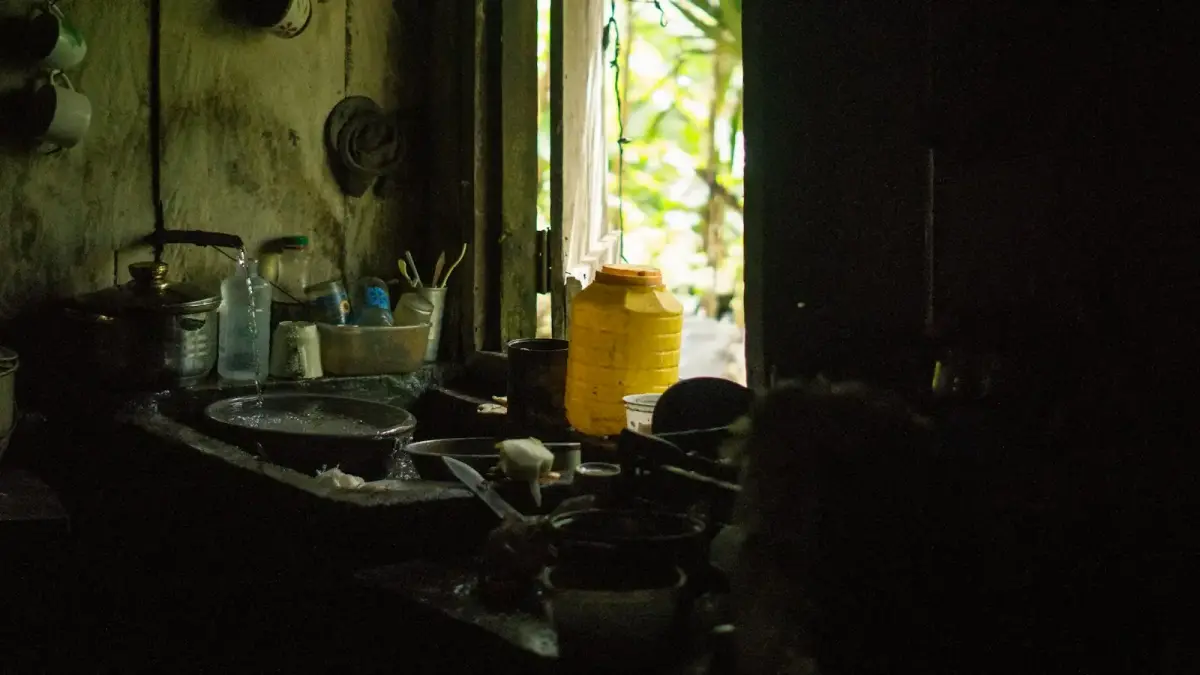
I still count the cans in the pantry.
Not because I need to. Not because there’s any real chance we’ll run out of anything before the next grocery trip. I count them because a part of me - the part that remembers exactly what it felt like when there were only two cans of green beans and a box of stale crackers left - never stopped counting.
I’m forty-three years old. I have a good job, a savings account, a mortgage. And I still stand in front of the pantry some evenings and do a quiet inventory, the way other people check that the front door is locked. It’s not rational. It’s not about the food. It’s about the fact that I learned, very young, that running out of something didn’t just mean inconvenience. It meant tension. It meant a shift in the air of the house. It meant someone was going to have a very bad night.
If you grew up like this - if money was weather in your house, something that changed without warning and rearranged everything - then you probably recognize what I’m about to describe. These aren’t quirks. They’re not anxiety disorders or financial dysfunction. They’re the fingerprints of survival, still pressed into the surface of your everyday life.
Here are eight of them. And every single one started as a way to keep yourself safe.
1. You check your bank balance before buying coffee
Not every time. But often enough that you’ve noticed it. You pull out your phone in the drive-through line, not because you think the $5.40 will bankrupt you, but because some part of your nervous system needs to verify that spending is safe before it can allow spending to happen.
A 2013 study by Sendhil Mullainathan and Eldar Shafir, published in their landmark research on scarcity, found that growing up in financial scarcity literally reshapes cognitive patterns. The brain learns to allocate enormous mental bandwidth to resource monitoring - and it doesn’t stop doing that just because the resources improve. The surveillance system stays online long after the threat has passed.
You know you can afford the coffee. You knew before you checked. But the checking isn’t about information. It’s about permission. And somewhere deep in the architecture of your nervous system, permission still needs to be earned.
2. You keep containers, bags, rubber bands - anything that “might be useful”
There’s a drawer in your kitchen. You know the one. It’s full of plastic bags folded into triangles, rubber bands from old bunches of broccoli, twist ties, takeout containers that have been washed and stacked, and at least three jars that are too nice to throw away but have no clear purpose.
Your partner or your kids might joke about it. You might even joke about it yourself. But the truth is, throwing away a perfectly functional container feels physically wrong - not wasteful in an environmental sense, but dangerous in a way you can’t quite articulate.
Because you remember. You remember when a good container was the difference between leftovers lasting and leftovers going bad. You remember when a plastic bag meant you didn’t have to buy something. You remember when resourcefulness wasn’t a lifestyle choice - it was the only option standing between your family and a much harder week.
3. You say “no” to restaurants and experiences before you even check if you can afford them
Someone suggests dinner out. A weekend trip. A concert. And before your conscious mind has time to do the math, your mouth has already said some version of “nah, I’m good” or “maybe next time” or “I’ve got stuff at home.”
It isn’t calculation. It’s reflex. The no comes from a place so deep it doesn’t even register as a decision. It’s the same no you heard growing up - not always spoken harshly, sometimes just a quiet “we’ll see,” which you learned early meant “we can’t.”
Research on socioeconomic identity persistence, including a 2019 study published in the Journal of Personality and Social Psychology, found that people who experienced financial hardship in childhood often maintain the spending patterns and social behaviors of their earlier economic class, even after significant upward mobility. Your bank account changed. Your reflexes didn’t.
The hard part isn’t that you can’t afford it. The hard part is that enjoyment still feels like something you have to justify.
4. You run mental math constantly - you know exactly what everything costs
You know the price of milk at three different stores. You know roughly what your electricity bill will be this month based on how often you ran the air conditioning. You know what your groceries cost before the cashier scans the last item, give or take a dollar.
This isn’t budgeting. Budgeting is a choice. This is surveillance - an automatic, running calculation that you can’t turn off because it was installed in your operating system before you were old enough to understand what money even was.
You watched someone do this math. A parent, a grandparent, someone who stood in the grocery aisle putting things back, doing quiet arithmetic with their lips barely moving. And you absorbed it. Not as a skill, but as a survival strategy. The math was never really about numbers. It was about predicting whether the next few days would be okay.
5. You struggle to spend money on yourself, even when you have plenty
You’ll buy your kids whatever they need without blinking. You’ll cover dinner for a friend. You’ll spend on the house, the car, the things that feel practical and justifiable. But spending on yourself - something purely for your own pleasure, with no utility attached - feels like standing at the edge of a cliff.
A 2021 study published in Frontiers in Psychology found that adults who experienced childhood financial insecurity often develop what researchers call “self-deprivation patterns” - a persistent reluctance to direct resources toward personal comfort or enjoyment, even in conditions of financial stability. The scarcity isn’t in your wallet anymore. It’s in your sense of what you deserve.
You’ll put the shirt back on the rack. You’ll talk yourself out of the nicer version. You’ll tell yourself the cheaper one is just as good, and you’ll almost believe it. Not because you can’t afford the better one, but because growing up the way you did taught you that your needs came last - and that lesson went deeper than money.
6. You buy in bulk, stock up, and quietly fear running out
Your freezer is full. Your pantry is full. There are paper towels in the closet and backup shampoo under the sink and enough canned tomatoes to get through a natural disaster. Not because you’re a prepper. Because you’re a person who remembers what it felt like when the last of something was the last of something.
Running out, for you, isn’t an inconvenience. It’s an alarm. It’s a full-body memory of a time when empty meant someone had to make a hard choice - which bill to skip, which meal to shrink, which need to ignore for another week.
Mullainathan and Shafir’s scarcity research explains this too. The brain that learned to operate under threat of deprivation develops what they call a “tunneling” effect - a hyper-focus on preventing the specific kind of shortage that once caused harm. You’re not hoarding. You’re building the buffer that didn’t exist when you were small. And even though the buffer is now ten layers deep, the part of you that needed it still doesn’t feel safe enough to stop.
7. You feel like your financial stability is temporary - like it could be taken away at any moment
You have savings. You have a career. On paper, you’re fine. But there’s a quiet voice in the back of your head that says this isn’t permanent. That something will happen - a layoff, an emergency, a crack in the foundation you’ve built - and you’ll be right back where you started.
This isn’t pessimism. It’s pattern recognition, trained on a childhood where stability really was temporary. Where a good month didn’t mean the next month would be good too. Where the car breaking down or the rent going up could undo weeks of careful management in a single afternoon.
A 2017 study in Psychological Science found that early experiences of economic instability create lasting threat-detection patterns in the brain - essentially teaching the nervous system that calm is the setup for crisis, not the absence of it. You learned to distrust comfort. And now, even when comfort is real and earned, your body keeps waiting for the other shoe to drop.
8. You feel guilty when things are too easy - like comfort itself is something you haven’t earned
This one is the quietest. And maybe the most painful. Because it means that even when everything is working - when the bills are paid and the fridge is full and nobody is stressed about money - you can’t quite relax into it. There’s a low hum of wrongness, like you’re getting away with something.
You watch other people enjoy things without thinking. A vacation. A nice dinner. A lazy Sunday with nothing to worry about. And you wonder how they do that - how they sit inside comfort without feeling like they’re borrowing it from somewhere, like eventually someone will come to collect.
That guilt isn’t irrational. It’s the emotional residue of growing up in a home where ease was rare and often short-lived. When comfort was always followed by a correction - a bill, a fight, a sudden tightening - your nervous system learned to treat comfort itself as the warning sign. Relaxation became the thing that preceded the fall.
And so you stay vigilant. Even now. Even when there’s nothing to be vigilant about.
What the kid inside you needs to hear
These eight things aren’t flaws. They’re not signs of damage or dysfunction or a mind that can’t let go of the past. They’re the opposite. They’re proof that you survived something real - something that required you to be smart and watchful and careful in ways that most people never had to be.
The kid who counted the cans in the pantry was paying attention. The kid who learned to say no before anyone could say no for them was protecting themselves. The kid who memorized prices and calculated change and folded plastic bags into triangles was doing the best they could with what they had.
That kid is still inside you. Still running the math. Still checking the account. Still keeping the drawer full of things that might be useful someday. And the kindest thing you can do - the thing that actually helps - isn’t to force yourself to stop. It’s to recognize what those behaviors were for. To look at them and say: you kept me safe. Thank you. I don’t need you the same way anymore, but I understand why you’re here.
You’re not broken. You’re not cheap. You’re not stuck in the past.
You’re someone who learned, very early, that the world could shift without warning. And you built a system to survive it. The fact that the system is still running - even now, even when you don’t need it to be - isn’t a problem.
It’s a testament to how seriously that kid took the job of keeping you alive.