8 things people who always check the rearview mirror even when they know the lane is clear - who glance up every few seconds on an empty highway, who watch the car behind them more carefully than the road ahead, who cannot merge without looking three times even when there is no one there - do without realizing it, according to psychology
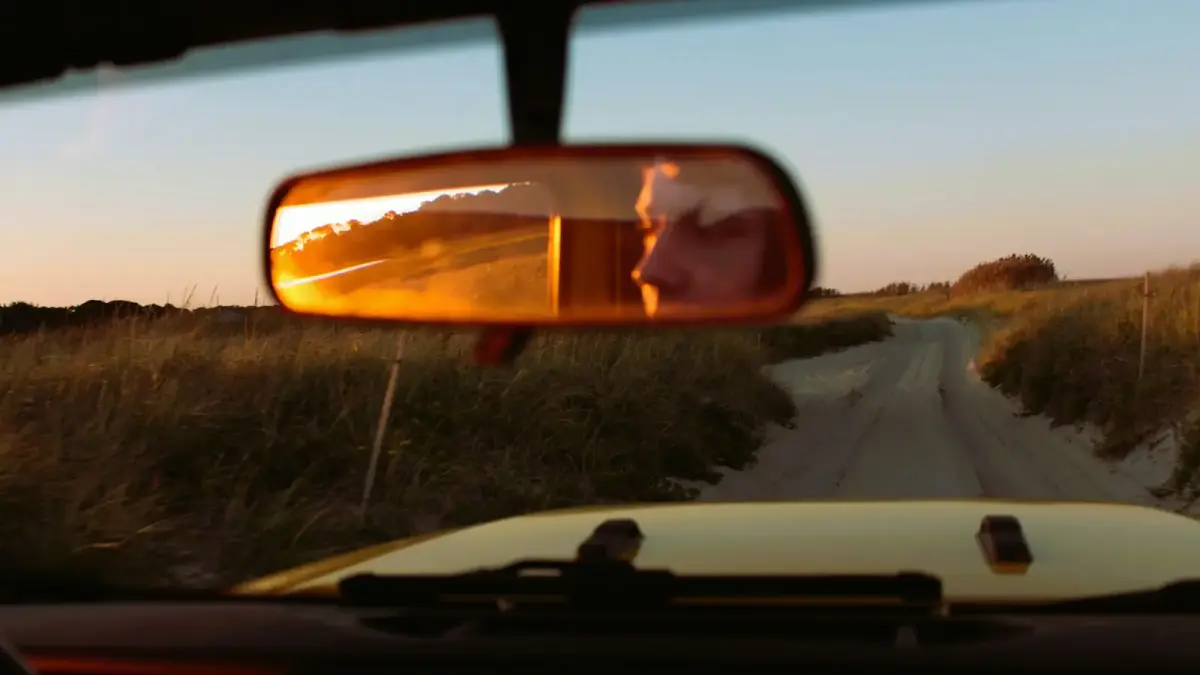
I was on a two-lane highway in rural Kansas last summer. No one behind me for miles. Flat earth in every direction, the kind of road where you can see a car approaching from ten minutes away.
And I still checked the rearview mirror eleven times in four minutes.
I counted because someone in the passenger seat pointed it out. “There’s nobody there,” she said, almost laughing. And she was right. There was nobody there. There hadn’t been anybody there for the last twenty miles.
But my eyes kept flicking upward like they were answering a question my body refused to stop asking: Who’s behind me? What’s coming? How fast do I need to react?
That wasn’t careful driving. That was a nervous system doing what it was trained to do when I was seven years old and needed to know which version of a parent was walking through the front door based on the sound of their footsteps in the hallway.
The rearview mirror is the most socially acceptable surveillance tool we have. Nobody questions it. Nobody calls it anxious. They call it safe driving. But for some of us, it was never about safety on the road. It was about a body that learned long ago to never stop monitoring what was behind it.
If you recognize yourself in this, here are eight things you probably do without realizing it.
1. You track people’s movements in a room the way you track cars on a highway
You always know where everyone is. Not because you’re watching them directly - that would be too obvious - but because your peripheral awareness is running constantly, like background software you never installed but can’t uninstall either.
At a dinner party, you know who just stood up. At a meeting, you register the person shifting in their seat behind you. In a grocery store, you’re aware of the person three aisles over who’s been moving in the same direction as you for the last four minutes.
A 2019 study published in Psychological Science found that individuals with histories of early threat exposure develop enhanced peripheral threat detection - their visual processing systems literally prioritize movement in their surroundings over central-focus tasks. Your brain isn’t being paranoid. It was shaped to notice what other people’s brains were allowed to ignore.
2. You sit with your back to the wall in restaurants and you’ve never once thought of it as a choice
You just end up there. You walk in, scan the room, and gravitate toward the seat that gives you the widest view of the entrance and the most solid thing behind you.
If someone takes that seat first, you feel a low hum of discomfort that you’d never mention out loud. You adjust. You angle your chair slightly. You cope. But something in your chest doesn’t fully settle.
This isn’t a personality quirk. It’s a positioning instinct. The same part of you that checks the rearview mirror on an empty road is the part that needs to know nobody can approach you from behind without you seeing it first. The body remembers what the mind has tried to file away.
3. You notice micro-changes in someone’s tone before they’ve even finished the sentence
People describe you as “perceptive” or “intuitive.” They say you read rooms well, that you always seem to know when something’s off. They mean it as a compliment.
What they don’t know is that you developed this skill the way a child develops any survival skill - through repetition, necessity, and the understanding that missing a cue could cost you something.
Dr. Gabor Mate has written extensively about how children in unpredictable environments become experts at reading emotional weather. They learn to decode the difference between a sigh that means tiredness and a sigh that means the evening is about to go sideways. That attunement doesn’t disappear when you grow up. It just finds new environments to operate in - offices, relationships, phone calls where you can hear the pause before someone delivers bad news.
The rearview mirror habit and the tone-reading habit are the same habit. Both are monitoring systems. One watches for physical approach. The other watches for emotional approach. Neither one ever turns off.
4. You over-prepare for situations that almost never go wrong
You arrive early. You pack extra. You have a backup plan for your backup plan. You’ve thought through three exit strategies for a casual brunch.
People call this “being organized.” And sure, some of it is organizational talent. But beneath the color-coded calendar and the extra phone charger and the fact that you always know where the nearest hospital is, there’s a quieter truth: you don’t trust that things will just be fine.
A 2021 study in Frontiers in Psychology found that adults who experienced unpredictable caregiving environments in childhood showed significantly elevated anticipatory anxiety - not about specific threats, but about the general possibility that something could go wrong at any moment. The preparation isn’t about the brunch. It’s about the nervous system that learned early on that the worst things happen when you’re not ready for them.
5. You struggle to fall asleep in unfamiliar places - and sometimes familiar ones
Your body doesn’t surrender easily. Sleep requires a level of trust that your system doesn’t naturally extend to any environment, no matter how safe it objectively is.
In a hotel room, you check the lock twice. You listen to the hallway. You orient yourself toward the door. At home, you might sleep lightly, waking at small sounds, already half-alert before your conscious mind catches up.
This isn’t insomnia in the traditional sense. It’s sentinel behavior. Your body volunteered for a night watch shift decades ago, and nobody ever told it the war was over. The same nervous system that compulsively checks the rearview mirror during the day doesn’t suddenly stand down at midnight. It keeps scanning. It keeps listening. It keeps doing the only job it’s ever known.
6. You have a hard time letting other people drive
Not because you think they’re bad drivers. You might even know, intellectually, that they’re perfectly competent. But handing over the wheel means handing over your ability to monitor, react, and control what happens next.
And that’s the part your body can’t tolerate.
When someone else is driving, you find yourself pressing an invisible brake pedal on the passenger side. You watch the mirrors for them. You brace a half-second before they brake, because your body calculated the stopping distance before they did.
This isn’t about the car. It’s about the fact that your entire childhood taught you one lesson above all others: the only person you can count on to keep you safe is you. Letting go of the steering wheel feels like letting go of the only protection you ever had. The rearview mirror was never about traffic. It was about control. And when someone else is driving, you’ve lost both.
7. You apologize for things that aren’t your fault - and you do it reflexively, not strategically
The “sorry” comes out before you’ve even assessed the situation. Someone bumps into you - you apologize. A meeting runs long - you apologize. The weather is bad on the day of an outdoor gathering you planned - you apologize.
This reflex has the same root as the mirror-checking. Both are threat-reduction strategies. Checking behind you reduces the threat of being caught off guard. Apologizing preemptively reduces the threat of someone becoming angry with you.
A 2020 study published in the Journal of Personality and Social Psychology found that individuals with heightened threat sensitivity were significantly more likely to engage in preemptive appeasement behaviors - saying sorry, taking blame, minimizing their own needs - as a way to de-escalate situations before conflict could begin. You’re not weak for apologizing too much. You’re running a conflict-prevention program that was written when you were too small to handle conflict any other way.
8. You carry tension in your neck, shoulders, and jaw - and you often don’t notice until someone touches you
Your body holds the posture of readiness even when there’s nothing to be ready for. Your shoulders are closer to your ears than they need to be. Your jaw is clenched while you’re reading. Your neck is stiff by noon, and you haven’t done anything physically demanding.
This is the muscular signature of a nervous system that never fully downshifts. Dr. Bessel van der Kolk’s research on how trauma lives in the body has shown that chronic hypervigilance creates patterns of muscular bracing - the body holds itself in a state of preparation for impact, even when no impact is coming.
The neck tension and the rearview mirror habit are connected in a way that most people never think about. The muscles that turn your head to check behind you are the same muscles that stay tight all day. Your body is always half-turned toward what might be approaching. Even when you’re sitting still, some part of you is looking over your shoulder.
Here’s what I want you to sit with for a moment.
The rearview mirror thing isn’t a flaw. It isn’t anxiety in the way people casually use that word. It’s evidence that you survived something that required you to stay alert, and your body got so good at the job that it never stopped doing it.
You developed a surveillance system that kept you safe. It monitored footsteps, tones of voice, facial expressions, the energy in a room, the space behind you. And now it monitors the highway, the restaurant, the hotel room, the meeting. It monitors everything because it was never told that the original threat is gone.
That’s not something to be ashamed of. That’s something to be gentle with.
If you’re the person who checks the mirror on an empty road, you’re also the person who notices when someone at the table is quietly struggling. You’re the one who reads the room before anyone else has even looked up. You’re the one people trust with their hard conversations because they sense, correctly, that you’ve been paying attention to every word.
Your vigilance cost you something. It cost you easy sleep, relaxed shoulders, the ability to sit with your back to an open room. But it also gave you a depth of awareness that most people will never have.
The mirror is empty. The road behind you is clear. And maybe, just maybe, you can glance up a little less often today.
Not because you have to. But because you’re allowed to.