Children who always knew exactly how much milk was left in the refrigerator without opening the door - who could tell you the number of eggs, the slices of bread remaining, and exactly how many days before the peanut butter ran out - often become adults who open the refrigerator and take a silent inventory every time they pass through the kitchen, not because they are planning a meal but because a boy who once reached into an empty cereal box and found nothing learned that the distance between enough and nothing was one breakfast he failed to count
The count I never stopped running
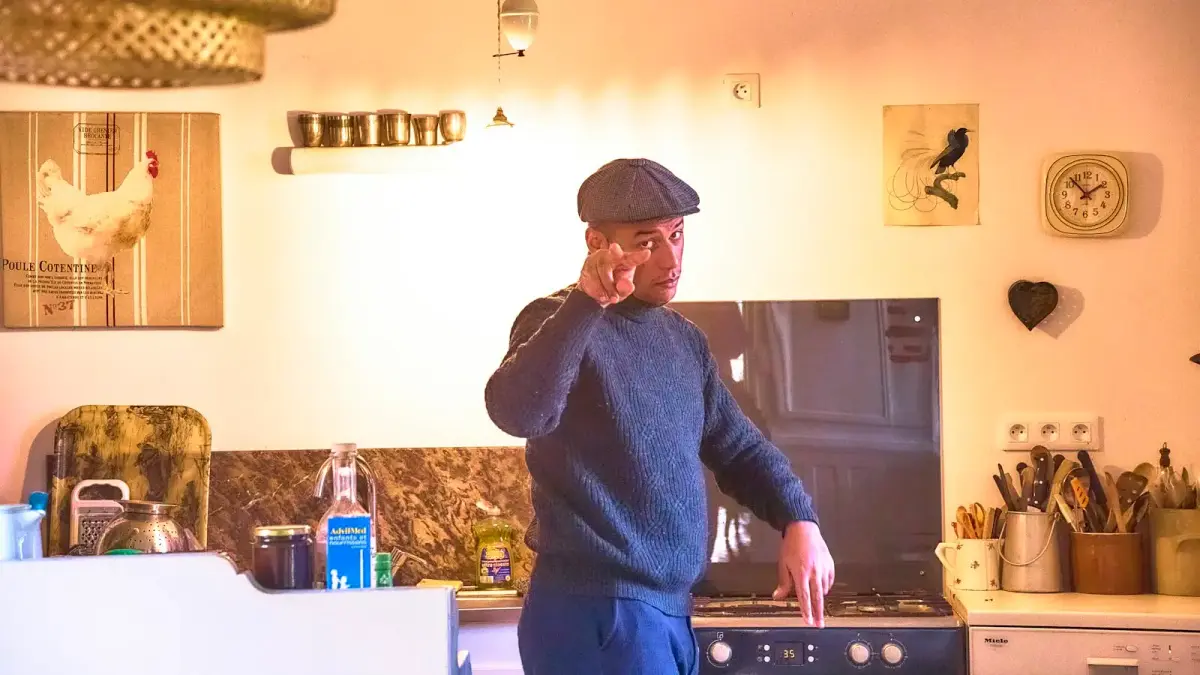
I was standing in my kitchen last Tuesday - good job, paid-off car, more food in the pantry than my mother ever had in a month - and I caught myself doing it again. I opened the refrigerator, not because I was hungry, but because something in me needed to know what was in there. How much milk. Whether we were down to the last eggs. How many days the lunch meat had left before it turned.
I wasn’t planning dinner. I wasn’t making a list. I was running an inventory that a nine-year-old boy installed in my nervous system twenty-five years ago, and I have never once figured out how to shut it off.
My wife walked in and asked what I was looking for. I said “nothing” and closed the door. That was the truth and also a lie. I was looking for nothing - literally scanning for the absence of things, the gap on the shelf, the container that was lighter than it should be. Because a boy who once opened the refrigerator and found only a bottle of mustard and half a stick of margarine learns something about the world that no amount of career success fully overwrites.
He learns that the distance between enough and nothing is one meal he didn’t see coming.
What a hungry child’s brain actually learns
When people talk about growing up poor, they usually talk about what was missing. The shoes that didn’t fit. The field trips you couldn’t go on. The winters where the heat wasn’t quite enough. But there’s a particular kind of intelligence that poverty installs in a child - not the intelligence schools measure, but the intelligence of monitoring.
You learn to read a kitchen the way a sailor reads weather. The weight of the milk jug when you pick it up tells you how many mornings are left. The number of slices in the bread bag tells you whether you can have a sandwich or whether that bread needs to last through the weekend. The peanut butter jar gets tilted slightly so you can see the level through the plastic without unscrewing the lid.
Nobody teaches you this. There’s no lesson, no instruction. Your brain just starts doing it because the alternative - being surprised by an empty shelf - is a feeling so destabilizing that your entire nervous system reorganizes itself to prevent it from happening again.
A 2019 study published in Psychological Science found that people who experienced resource scarcity in childhood showed heightened vigilance patterns around resource monitoring well into adulthood, even when their current circumstances were financially stable. The researchers called it “scarcity vigilance” - a cognitive pattern where the brain continues to allocate attention toward tracking available resources long after the threat has passed.
I could have told them that without the study. I could have told them that at age ten.
The invisible labor no one names
Here is something I’ve never heard anyone say out loud: growing up in a household where food was unreliable is a full-time job for a child, and nobody puts it on your resume.
You are always calculating. Not just what’s in the fridge, but what’s coming. When does Mom get paid. Whether that check will actually clear. Whether the neighbor who sometimes brings over a casserole will come by this week or whether she’s on vacation. You learn to read your mother’s face when she opens the mail because her expression will tell you what kind of week it’s going to be before she says a word.
This is labor. Real, exhausting, cognitive labor. But because you’re eight or nine or twelve, and because the family rule is that we don’t talk about money - not because we’re private but because the shame is too heavy to hold and speak at the same time - you do all of this silently. You run the math in your head during class. You check the pantry when you get home from school the way other kids check to see if their friends are online.
And the thing about invisible labor is that it never gets acknowledged, which means it never gets retired. It just keeps running in the background like a program you never learned to close.
The man who still counts
I earn more now in a month than my mother earned in some years. I know this. The rational part of my brain knows this every single day. And still, I cannot walk past the kitchen without a pulse of awareness about what’s inside the refrigerator.
When the fridge looks “low” - and I want you to understand what low means to me, because low does not mean empty, low means there are only four or five things on a shelf instead of six or seven - I feel a physical tightening in my chest. Not panic. Not anything dramatic. Just a quiet alarm, like a smoke detector with a low battery that chirps once every few minutes. Enough to keep you slightly on edge. Not enough for anyone else to notice.
I buy more groceries than we need. I know I do. My wife has gently pointed out that we throw away food sometimes because I’ve bought too much, and the guilt of that - the guilt of wasting food when you grew up counting slices of bread - is its own particular kind of pain that I don’t think I’ve ever fully explained to another person.
Gabor Mate has written about how the body keeps a record of early survival adaptations long after the circumstances change. The nervous system, he argues, doesn’t update on the same timeline as your bank account. You can move to a different tax bracket and your body will still be living in the house where the electricity got turned off in February.
That’s the thing nobody tells you about escaping poverty. Your address changes. Your zip code changes. Your nervous system stays exactly where it was.
Scarcity as an operating system
What I’ve come to understand - slowly, and mostly by watching myself do things I can’t explain to people who didn’t grow up this way - is that childhood food insecurity doesn’t create a habit. It installs an operating system.
A habit is something you do. An operating system is something that runs underneath everything you do, shaping decisions you don’t even recognize as decisions. The way I scan a restaurant menu and automatically find the cheapest entree before I give myself permission to look at what I actually want. The way I feel a small spike of anxiety in my stomach when someone suggests splitting the check because some ancient part of me is still calculating whether I can afford my share. The way I cannot throw away food that is clearly past its date without a negotiation in my chest between the adult who knows better and the boy who knows what it feels like to have nothing.
A 2021 study in the journal Frontiers in Psychology found that adults who experienced food insecurity before the age of twelve showed measurably different neural activation patterns when making decisions about food purchasing and food waste compared to adults who grew up in food-secure households. The scarcity-experienced group showed elevated amygdala activation - the brain’s threat detection center - during tasks that food-secure adults processed as routine.
In other words, what looks like a simple trip to the grocery store is, for some of us, a walk through a minefield that only we can see.
The class marker nobody talks about
There are a hundred ways that growing up poor marks you, and most of them are invisible to people who didn’t share that experience. The way you notice prices before you notice products. The way you feel slightly fraudulent in nice restaurants. The way someone saying “just order whatever you want” produces not freedom but a quiet algorithmic calculation about what’s acceptable.
But the food monitoring - the silent inventory, the ambient awareness of supply levels, the inability to see an empty shelf without your heart rate shifting - this one might be the most intimate. Because it lives in your kitchen. It lives in the most domestic, most private, most daily part of your life. You can hide your relationship with money from coworkers. You can’t hide your relationship with the refrigerator from the person you share a home with.
I think this is why so many men I know who grew up poor never talk about it. Not the money part - some of us can talk about that now, especially once we’ve “made it” and the story has a triumphant arc. But the body part. The part where you’re standing in a fully stocked kitchen and your hands are slightly tense because the milk is at the halfway mark and halfway, to the boy who still lives in your chest, means you’re already behind.
That’s not a story with a triumphant arc. That’s just a Tuesday. That’s just you, at forty, still counting.
The quiet reframe
I spent years thinking something was wrong with me. That the checking, the monitoring, the low hum of food-awareness that never turns off - that all of it meant I was anxious, or obsessive, or somehow broken by a childhood I should have been able to outgrow.
But here is what I want to say to you if you recognize any of this. If you are the person who knows exactly what’s in your pantry at all times. If you are the person who feels a small wave of something - not quite fear, not quite sadness, but something in between - when the groceries run lower than a level your body considers safe.
You are not broken.
What you are is someone whose body learned, at an age when you were too young to drive to the store yourself, that counting was the only form of control available to you. You couldn’t earn money. You couldn’t fix the problem. But you could know exactly how many bowls of cereal were left, and that knowing - that vigilance, that silent accounting - was the one thing standing between you and the feeling of reaching into a box and finding nothing.
A 2020 study in the Journal of Personality and Social Psychology found that early-life resource monitoring behaviors often served a genuine protective function - children who tracked household resources more carefully reported lower subjective distress during periods of scarcity, suggesting that the monitoring itself was an adaptive coping strategy, not a dysfunction.
Your body built a system that worked. It kept you prepared. It kept you from being blindsided. And the fact that it’s still running - in a kitchen that’s full, in a life that’s stable, in a home where the electricity has never once been turned off - doesn’t mean you’re broken.
It means your body remembers what it cost you to learn this. And it is not willing to let you forget.
What the boy in the kitchen deserves to hear
I still open the refrigerator and count. I probably always will. But I’ve stopped being ashamed of it. I’ve stopped treating it like a malfunction and started treating it like a scar - something that marks where a wound was, something that tells a true story about what I survived.
The boy who knew exactly how much milk was left without opening the door was not anxious. He was brilliant. He was doing the only thing a child can do when the adults around him couldn’t keep the shelves full - he was paying attention so hard that his attention became a kind of love. A love for his own survival. A love that said: I will not let you be caught without knowing.
If you grew up running that inventory, I want you to know that you did something remarkable. You kept yourself oriented in a world that wasn’t giving you enough. You built a system out of nothing but observation and fear, and that system carried you to a kitchen where the shelves are full and the milk is fresh and the only reason you’re still counting is because the boy you were did such a good job of protecting you that he never learned how to stop.
You don’t have to stop. You just have to know that the counting was never the problem. The counting was always the solution. And the man who still does it in a full kitchen is not failing to move on.
He’s honoring the child who got him here.