She's 60 and has never once left food on her plate at a restaurant - not the garnish, not the bread, not the three bites of pasta she stopped wanting twenty minutes ago - because the girl inside her still watches her mother wrap leftover chicken in foil like it was something precious
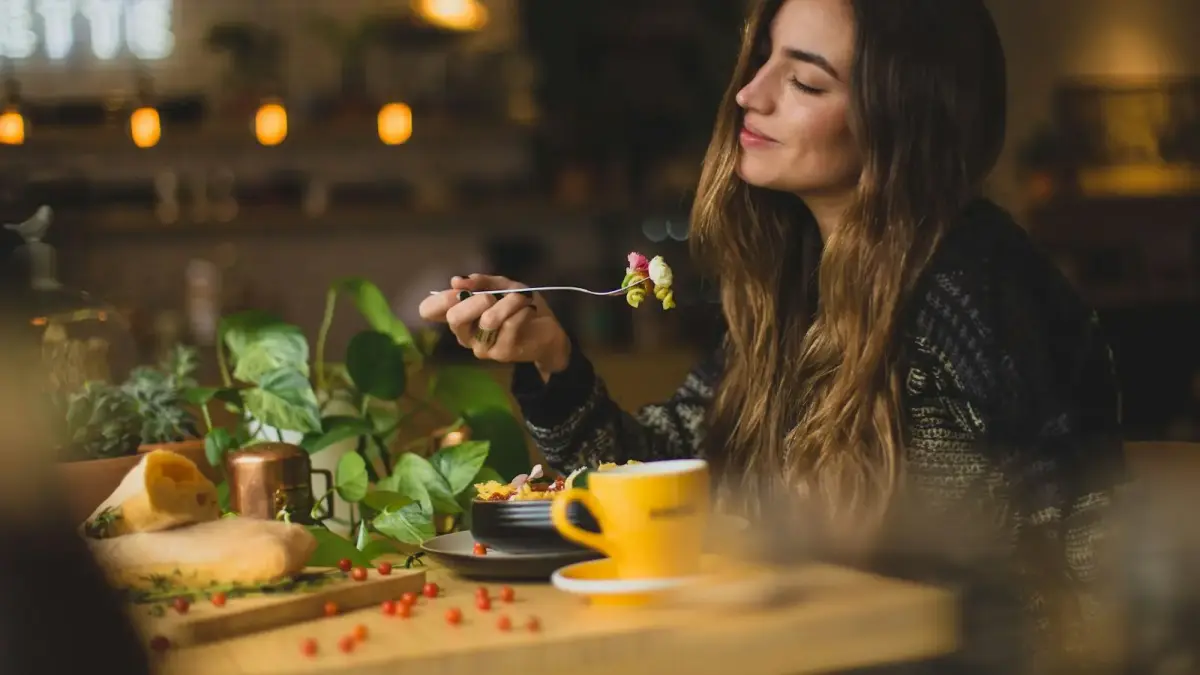
I was at a restaurant last Tuesday - a nice one, white tablecloths, the kind of place where a single entree costs what my mother spent feeding our family for two days. My friend left half her salmon on the plate. Just left it there like it was nothing, like the fish had simply stopped being interesting to her.
And I felt my stomach tighten.
Not hunger. Something older than hunger. Something that lives in the part of my brain that still hears my mother’s voice saying, “There are people who would be grateful for that.” I watched the server carry my friend’s plate away with all that salmon still on it, and I had to physically stop myself from asking for a box. For her food. That wasn’t mine.
I’m sixty years old. I have a retirement account and a kitchen full of groceries and absolutely no reason to panic about three ounces of leftover fish. But the girl I used to be doesn’t know that. She’s still standing in a kitchen where the refrigerator was organized like a survival plan, and every shelf was a ledger of what the family could afford to lose.
I don’t think I’ve ever left food on a plate at a restaurant. Not once. Not a single roll from the bread basket, not the decorative kale, not the three remaining bites of risotto I stopped wanting twenty minutes before the check arrived. And until recently, I thought that was just good manners.
It isn’t manners. It’s math.
The Arithmetic You Learn Before You Learn Actual Math
Before I understood multiplication, I understood portions. I knew that a whole chicken could become three meals if you were careful. Monday was the roast. Tuesday was the pulled meat mixed with rice. Wednesday was the bones simmered into soup with whatever vegetables were starting to go soft.
My mother could make food stretch the way other mothers made art. It wasn’t creative to her - it was survival dressed up as cooking. She kept aluminum foil in a drawer the way wealthy people keep wine in a cellar. Every piece was smoothed, folded, and reused until it fell apart in your hands.
A 2019 study published in the Journal of Consumer Psychology found that people who grew up in resource-scarce households develop what researchers call “scarcity mindset persistence” - behavioral patterns around conservation that remain active decades after the original scarcity has ended. The brain doesn’t update its threat assessment just because the bank account did.
I read that study and felt seen in a way that made me want to cry.
Because that’s exactly what happens. You grow up watching your mother count the slices in a loaf of bread, and thirty years later you’re earning six figures and still eating the crust because someone baked it. You’re still finishing the cold fries because throwing them away feels like a betrayal of every meal your mother stretched thin so you wouldn’t notice you were poor.
The scarcity doesn’t leave when the money arrives. It moves in permanently, like a tenant who signed a lease your adult self never agreed to.
The Woman Who Always Asks for a Box
I want you to picture her at the restaurant. You’ve seen her. Maybe you are her.
She’s the one who signals the server when there are three bites of chicken left on her plate. She asks for a to-go box with the same quiet efficiency she brings to everything - no fuss, no explanation. Her dining companions barely notice because she does it so smoothly, like it’s just a preference.
It is not a preference. It is a compulsion born from watching food disappear from a kitchen that never had enough.
She will take that box home. She will put it in the refrigerator. She may or may not eat it tomorrow. But the act of saving it - of refusing to let it become trash - completes a circuit in her nervous system that has been running since childhood. The food isn’t really food anymore. It’s proof that she is not the kind of person who wastes things, which is another way of saying she is not the kind of person who forgets where she came from.
Dr. Gabor Mate has written extensively about how early experiences of deprivation create what he calls “implicit memories” - bodily responses that operate below conscious awareness. You don’t decide to feel anxious when food goes uneaten. Your body decides for you, pulling from a database of experiences you can’t even fully remember.
The woman asking for the box at the restaurant isn’t being frugal. She’s being faithful. Faithful to a mother, a kitchen, a version of survival that shaped every cell of who she became.
Eating the Bread Because Someone Baked It
There’s a specific kind of guilt that lives in the bread basket. I don’t know how else to describe it.
Everyone at the table takes a piece, butters it, eats it casually. But for some of us, the bread is not casual. The bread is labor. Someone measured the flour. Someone kneaded the dough. Someone stood over a hot oven. And leaving a roll untouched in the basket means all of that effort was for nothing.
This is not rational. I know it’s not rational. The restaurant will throw the bread away whether I eat it or not. My eating it changes nothing about the waste in the system. But the girl I used to be doesn’t think in systems. She thinks in mothers. And her mother never once let bread go stale without turning it into something - bread pudding, croutons, a thickener for soup.
I eat the bread because someone baked it. I finish the side salad because someone washed those leaves. I scrape the sauce from the plate because I can still hear the sound of a wooden spoon against the bottom of a pot that was never quite full enough.
A 2021 study in Frontiers in Psychology found that adults who grew up in lower-income households showed heightened emotional responses to food waste compared to those from higher-income backgrounds - even when both groups had achieved similar economic status as adults. The researchers noted that these responses were not about money. They were about identity.
That word - identity - stopped me cold when I read it. Because that’s exactly what plate-clearing is. It’s not a habit. It’s a declaration of who you are and who your people were.
The Relational Cost Nobody Talks About
Here’s what nobody sees from the outside.
My husband - a kind man who grew up in a house where the pantry was always full - thinks my plate-clearing is charming. “You always appreciate a meal,” he tells me, like it’s a compliment. Like I’m savoring the food rather than performing an ancient ritual of not-wasting that has nothing to do with enjoyment.
He doesn’t understand that I haven’t tasted the last three bites of anything in years. By the time I’m finishing a plate, I’ve left my body. I’m not eating because I’m hungry. I’m eating because leaving food behind activates a shame so deep it doesn’t have language.
And I can’t explain this to him without sounding like I’m asking for pity, which I’m not. I don’t want pity. I want someone to understand that what they’re watching when I clean my plate isn’t politeness or appetite or even habit. It’s a woman still feeding a family that doesn’t live in the house anymore. Still stretching a chicken that’s been gone for forty years. Still performing the math of a kitchen where every calorie was accounted for.
The loneliest part of class-encoded behavior is that it’s invisible to people who didn’t grow up inside it. Your friends see a woman who eats everything on her plate. You see a girl who was taught that waste is the same thing as ingratitude, and ingratitude is the same thing as forgetting, and forgetting is the worst thing you can do to people who sacrificed so you could eat at all.
The Meal You Were Never Allowed to Simply Enjoy
I went out for my sixtieth birthday last month. My daughter chose the restaurant - somewhere beautiful, with tasting courses and wine pairings and tiny desserts arranged on a slate tile like edible jewelry.
Every course arrived and I did what I have always done. I ate everything. Every bite, every garnish, every smear of sauce. I ate the herbs they used for decoration. I ate the microgreens that were clearly not meant to be eaten. My daughter watched me with an expression I couldn’t quite read.
Later, in the car, she said something that cracked me open.
“Mom, you don’t have to finish everything. You’re allowed to just enjoy it.”
She said it gently, the way you say something to a person you love who is doing something that worries you. And I wanted to tell her that she was right - that I know I’m allowed to leave food on the plate, that I know the world won’t collapse if three bites of tiramisu end up in the trash.
But knowing and feeling are different countries, and I have a passport to only one of them.
Susan Cain once wrote about how the behaviors we develop in childhood become so woven into our identity that removing them feels like removing a part of ourselves. She was writing about introversion, but the principle holds for everything we learned before we had words for it. The plate-clearing isn’t something I do. It’s something I am. And being asked to stop feels like being asked to abandon the girl who stood in that kitchen and watched her mother turn nothing into dinner.
What the Clean Plate Really Says
I’m sixty years old and I have never left food on a plate at a restaurant.
This is not discipline. It’s not frugality. It’s not even gratitude, though it wears gratitude’s clothing. It is a love letter written in the only language my childhood taught me - the language of nothing wasted, nothing forgotten, nothing left behind.
Every clean plate is a promise to my mother that I remember. That I still see her standing at that counter, smoothing the foil, sliding the leftovers onto a shelf that held the entire economy of our family’s survival. That I haven’t become the kind of person who leaves salmon on a plate because it stopped being interesting.
I don’t know if I’ll ever be able to leave food behind. I don’t know if I want to. But I’m starting to understand that what I’m carrying isn’t a habit - it’s a history. And histories don’t need to be fixed. They need to be witnessed.
If you’re the woman who eats the bread because someone baked it, who asks for the box when there are three bites left, who finishes the cold fries because throwing them away feels like treason - I see you. Not as someone with a quirk or an issue or an inability to relax at dinner. But as someone whose body remembers a kitchen that her mind has tried very hard to leave behind.
You’re not being difficult. You’re being devoted. And that devotion, however heavy it sometimes feels, is one of the most human things I know.