Children who always sat with their back against the wall - who chose the corner booth, the end seat, the chair that let them see every door and every face in the room - often become adults who scan every restaurant for the right seat before they even look at the menu
I did it again last Tuesday.
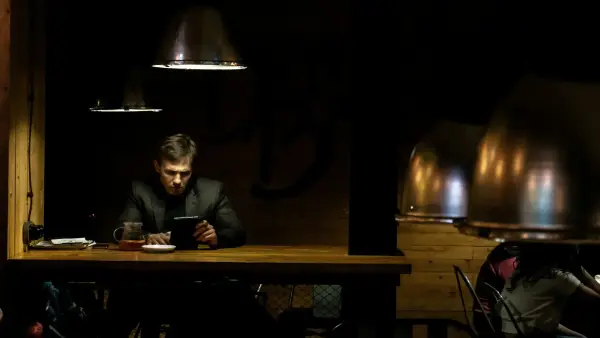
My friend had already grabbed a table at this new Thai place downtown - a perfectly nice table, right in the middle of the dining room. She waved me over. I smiled, sat down, and within thirty seconds I was doing the thing. The scan. The quiet inventory of every door, every walkway, every angle where someone could approach without me seeing them first.
I didn’t pick up the menu. I picked up the room.
“Can we move?” I asked, nodding toward the booth against the far wall. She didn’t ask why. She’s known me long enough. We moved, I sat with my back to the wall, and only then - only when I could see the entrance, the kitchen door, and every table between me and the exit - did my shoulders come down.
I used to think this was a personality trait. A preference, like how some people like window seats and some people don’t. But it isn’t a preference. It’s architecture. It was built into me in a house where the sound of a door opening could mean anything, and the only advantage I ever had was seeing it coming.
If you do this too, I want you to know something. Your body isn’t being difficult. It’s doing the only job it was ever trained to do.
1. You scan every room for the “right” seat before you can settle into anything
You walk into a restaurant, a waiting room, a friend’s living room, and something in you goes to work before you’ve even taken off your coat. It’s fast. It’s automatic. You’re not thinking about it - your eyes are just doing their sweep. Doors. Windows. Who’s sitting where. Where the open sightlines are. Where the blind spots fall.
You find the seat that lets you see the most and sit with your back exposed the least. Then - and only then - can you actually be present.
Stephen Porges, the neuroscientist who developed polyvagal theory, calls this neuroception - your nervous system’s below-conscious scanning for safety and threat. It happens faster than thought. A 2022 study published in Frontiers in Psychology found that adults who experienced unpredictable childhood environments showed heightened neuroceptive responses in novel spaces, meaning their nervous systems were doing more safety calculations per second than people who grew up in stable homes.
You’re not being controlling about where you sit. Your body is solving a problem it was handed decades ago.
2. You always choose the aisle seat - never the window, never the middle, never anywhere you could be trapped
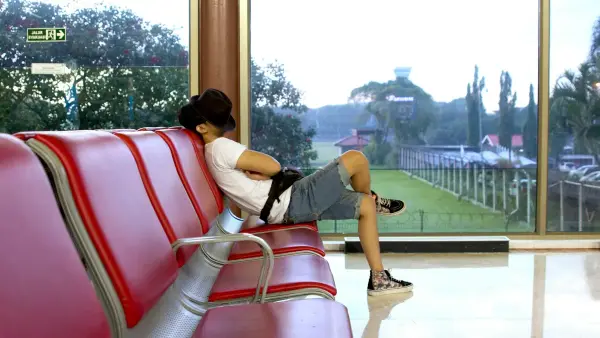
On a plane, the window seat is supposed to be the good one. You get the view. You get the wall to lean against. But you don’t want the wall. You want the exit.
The aisle seat means you can stand up without asking permission. You can see people coming down the corridor. You are never boxed in by two strangers with no way to move.
This isn’t about legroom. This is about a childhood where being cornered - in a room, in a conversation, in someone else’s mood - taught your nervous system that the worst thing in the world is having no way out.
The same thing shows up in movie theaters (last row, aisle seat), in lecture halls (back row, near the door), and at dinner parties (the chair closest to the hallway). You’ve been mapping your exits since you were small enough that the exits you needed were in rooms you couldn’t actually leave.
3. Your desk at work faces the door - and you can’t explain why that matters so much
Some people arrange their office for natural light. You arrange yours for sightlines.
Your desk faces the door. Or if it can’t face the door, it’s angled so you can see anyone approaching from your peripheral vision. The idea of sitting with your back to an open doorway, people walking past behind you all day, makes something in your chest tighten in a way you can’t quite name.
A 2019 study in the Journal of Environmental Psychology found that workspace orientation significantly affected stress markers in employees, with those seated facing away from entry points showing higher cortisol levels throughout the day. The researchers noted this effect was particularly pronounced in individuals with early adverse experiences.
You might have told your coworkers you just like your desk that way. The truth is deeper. A child who learned to track footsteps - who could tell by the weight of a footfall whether the next few minutes would be calm or chaotic - doesn’t stop tracking footsteps just because they grow up and get an office job.
4. You back into parking spaces - always ready to leave
This one catches people off guard when I mention it, but the nod of recognition is always immediate.
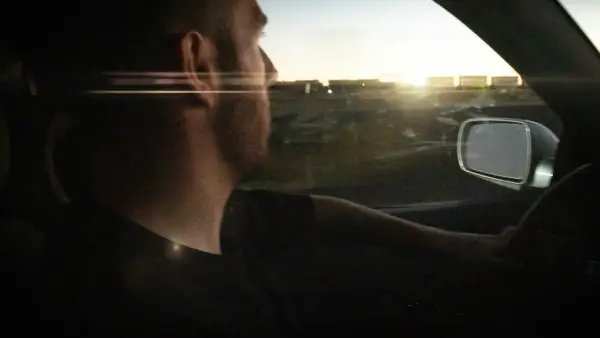
You pull into a parking space and you reverse in. Every time. Not because someone taught you it was safer for visibility (though it is). Because something in you needs to be pointed toward the exit. Ready. Facing out.
It’s the spatial version of sleeping in your shoes. Your body learned young that leaving might need to happen fast, and the thirty seconds it takes to back out of a parking space feel like thirty seconds you can’t afford. The car becomes the room. The parking lot becomes the house. And you need to be facing the door.
This is your nervous system doing what it does best - solving for escape before you consciously register any danger. It was brilliant when you were small. It just never got the memo that you’re safe now.
5. You feel immediate discomfort when someone stands behind you
Someone walks up behind you in the kitchen and you flinch before you can stop it. A coworker leans over your shoulder to look at your screen and your whole body goes rigid. The barber’s chair, the dentist’s chair, anyone positioned where you can’t see them - it all produces the same quiet alarm.
This isn’t about personal space in the way most people understand it. This is about the specific vulnerability of having someone in your blind spot.
Gabor Mate has written extensively about how the body stores the survival strategies of childhood long after the danger has passed. A child in an unpredictable home learns that people behind you are people you can’t read - and people you can’t read are people you can’t prepare for. The flinch isn’t dramatic. It’s a micro-adjustment. But it’s been running in your body for so long that you probably think it’s just how you’re wired.
It is how you’re wired. But it was wired by experience, not by birth.
6. You know every exit in any building you enter
You probably can’t name this consciously, but if I asked you right now to tell me how many exits are in your workplace, you’d know. If I asked you the fastest route to the stairwell from wherever you’re sitting, you’d know that too.
You don’t study fire escape maps. You don’t think about it. But some part of you catalogs every exit the moment you walk into a space - the front door, the back hallway, the side entrance, the windows that open.
A 2021 study in Psychological Science examined spatial awareness patterns in adults and found that individuals with histories of childhood environmental unpredictability demonstrated significantly enhanced spatial mapping of egress routes, effectively building mental maps of escape options without conscious effort. The researchers described this as a “persistent orientation toward environmental affordances for withdrawal.”
You were a child who needed to know how to leave every room you were in. You’re an adult who still does.
7. You have a “your” chair at every gathering - and losing it rattles you more than it should
At your parents’ Thanksgiving table, at your friend’s weekly dinner, at the Monday morning meeting - you have a seat. Your seat. And when someone new takes it, you feel something that’s way out of proportion to the situation. It’s not about the chair. It’s about the fact that you’ve already done the work of finding the safe spot in that room, and now you have to do it all over again.
The safe spot isn’t arbitrary. It’s the seat you chose after your nervous system did its calculations - the one with the wall behind you, the door in front of you, the most visual coverage, the fewest blind spots. Losing it means rerunning all those calculations while pretending you’re fine, smiling, making conversation, acting like you don’t feel suddenly exposed.
That chair was never about comfort. It was about the only kind of control a hypervigilant child could find in rooms full of adults whose moods ran the household.
8. You can’t fall asleep with your back to an open door
This is the one that lives closest to the bone.
You sleep facing the door. Or if the bed doesn’t allow that, you sleep with your back against the wall. The idea of lying in the dark with your spine exposed to an open doorway, unable to see what might come through it - that doesn’t feel like a preference. It feels like a physical impossibility.
A 2020 study in the Journal of Research in Personality found that sleep positioning preferences in adults correlated with early environmental safety perceptions, with individuals from unpredictable homes significantly more likely to adopt sleep positions oriented toward room entry points well into adulthood.
You were a child who fell asleep listening. For footsteps. For volume changes. For the specific frequency of a voice that meant the night was about to shift. Your ears were your sentries. Your position in bed was your last line of defense. And even now, decades later and in a home you chose and a bed you feel safe in, your body still arranges itself the old way.
Not because you’re in danger.
Because the child you were never got to stop being on duty.
Here’s the thing about all of this that I want to leave you with.
These aren’t quirks. They aren’t anxiety symptoms to manage away or habits to break through willpower. They’re the living architecture of a nervous system that did something extraordinary - it kept a small person safe in a world that wasn’t predictable enough to relax in.
Every room scan, every backed-in car, every aisle seat and wall-facing desk and flinch when someone stands behind you - that’s your childhood self still standing guard. Still doing the job. Still watching the doors because someone had to, and that someone was always you.
You can be gentle with this. You can notice it without fighting it. You can let yourself take the corner booth without feeling like something is wrong with you.
Because nothing is wrong with you. Something happened around you. And you adapted with the only tools a child has - a body, a pair of eyes, and the determination to never be caught off guard again.
That’s not a flaw. That’s the kind of quiet bravery most people will never have to understand.