Children who grew up in houses where the groceries were budgeted to the dollar - where their mother knew the price of every item in the cart before she reached the register and a child learned to put things back on the shelf before being asked - often become adults who feel a flash of shame when someone sees what is in their shopping cart, because a body that learned to edit its wants in public never stopped performing scarcity for an audience that left the room decades ago
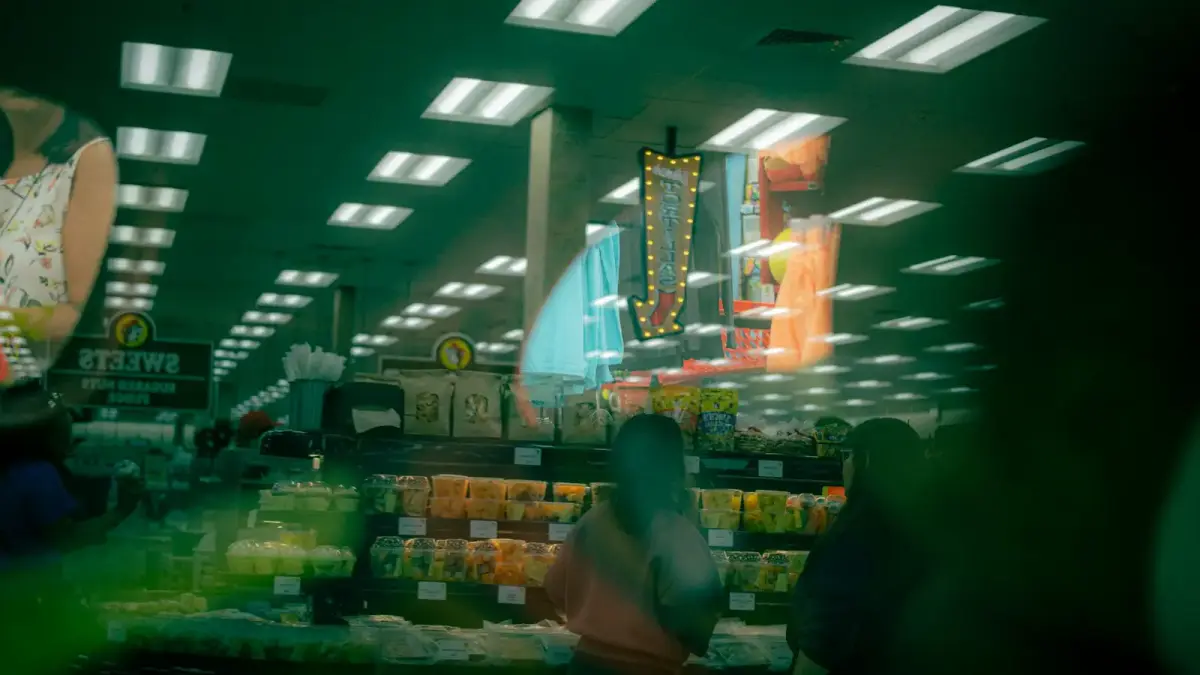
I was standing in the organic section last Saturday, holding a seven-dollar jar of almond butter, when a woman turned into the aisle with her cart and I put the jar back on the shelf.
I didn’t think about it. I didn’t decide to. My hand just returned the thing to the place it came from, the way a reflex finishes before your conscious mind even knows it started.
She wasn’t looking at me. She wasn’t anyone I knew. She was checking her phone and reaching for pasta sauce three shelves over, completely unaware that I existed. But something in my chest had already tightened - a small, familiar alarm that someone might see what I was holding, might see what I was willing to spend, might do the math the way my mother used to do the math and find the number unreasonable.
I am forty-four years old. I have a good salary. I can afford the almond butter. I bought it, eventually - after she turned the corner and the aisle was empty again.
And standing there with the jar in my hand for the second time, I realized I have been performing this scene in one form or another for my entire adult life. Editing the cart when someone gets close. Rearranging items so the expensive thing is underneath the practical ones. Feeling, in some deep and wordless place, that the contents of my grocery cart are a public confession of who I think I am - and who I think I’m allowed to be.
The kitchen table where you learned arithmetic was a feeling
My mother could walk through a grocery store and tell you the total before the cashier scanned the first item. Not an estimate. The number. She kept a running count in her head the way other people hum a song - automatically, constantly, without appearing to try.
I didn’t understand as a child that this was a survival skill. I thought everyone’s mother could do it. I thought every kid watched the numbers climb on the register display with that specific tightness behind their ribs, counting along, hoping the total would land under the line that meant dinner this week would be fine rather than fine with an asterisk.
The grocery store was not a place of abundance in our house. It was a negotiation. Every item that went into the cart had been pre-approved by a budget that lived in my mother’s head - precise, unyielding, updated weekly based on what was on sale and what we already had at home. There was no wandering. No browsing. No picking something up because it looked interesting. You went in with a list, you stuck to the list, and if something wasn’t on the list, it didn’t exist.
I learned to read prices before I learned to read chapter books. Not because anyone sat me down and taught me, but because prices were the grammar of our outings. They determined what happened next. They determined whether my mother’s shoulders stayed relaxed or whether that particular stillness would settle over her face - the one that meant we were close to the edge of something she didn’t want to name out loud in the cereal aisle.
And I learned, without anyone ever saying it, that the thing you do when you’re close to the edge is put something back.
The shelf was always waiting for you to return things to it
There is a gesture that children in tight-budget households learn early, and it is this: the quiet return. You pick something up - a box of the cereal with the cartoon on it, the yogurt that comes in tubes instead of tubs, the cookies your friend had at her house last weekend. You hold it for a moment. You look at the price. And then you put it back on the shelf before anyone has to ask you to.
No one applauds this. No one even notices, usually. But you feel it - a tiny, private resignation that becomes so routine it stops registering as loss. You just learn that wanting is a two-step process: you feel the want, and then you release it. Over and over, aisle after aisle, week after week, until the releasing becomes faster than the wanting.
A 2018 study published in the Journal of Personality and Social Psychology found that children who grew up in economically strained households developed what the researchers called “preemptive self-denial” - a pattern of suppressing desires before they could be expressed or refused. The study tracked participants into adulthood and found the pattern remarkably durable. Decades after the financial pressure had eased, subjects still reported an automatic impulse to decline things they wanted, particularly in contexts that resembled the original environment of scarcity.
The grocery store is the original environment. It is the classroom where the lesson was taught. And the lesson was not “we can’t afford this.” The lesson was something quieter and more permanent: wanting visible things in public is a risk.
What the checkout line really was
If you grew up in a household where money was measured in single dollars, you understand that the checkout line is not a line. It is a stage.
The conveyor belt is a display case. Everything you chose - every item you permitted yourself, every small indulgence, every compromise - is laid out in a row for the cashier and the person behind you and anyone else who happens to glance over. There is nowhere to hide. The off-brand cereal. The dented cans from the discount bin. The way everything in your pile looks careful and calculated while the person in front of you has a cart full of things they clearly grabbed without thinking twice.
I remember watching my mother at the register. The way she’d arrange things on the belt in a particular order - not randomly but strategically, as though the sequence mattered, as though there were a right way to present your groceries to the world. I didn’t know then that she was managing an image. I didn’t know she felt observed. I just absorbed the posture: the straightened spine, the careful hands, the face that said we are fine, this is normal, we buy what we need and we need what we buy.
A 2020 study published in the Journal of Consumer Research found that adults who experienced financial hardship in childhood showed heightened self-consciousness during purchasing behaviors - particularly in physical retail environments where transactions were visible to others. The researchers described a phenomenon they called “economic spectatorship anxiety,” in which the individual experiences the act of buying as a kind of public self-disclosure. You are not just purchasing groceries. You are telling a story about your class, your worth, your right to occupy space in this particular store with these particular prices.
My mother was performing competence at that register. I learned the choreography without knowing I was learning it. And thirty years later, I still arrange my items on the belt with an invisible audience in mind.
The cart that betrays you
Here is where the childhood lesson becomes an adult haunting.
You are grown now. You may earn more than your parents ever did. You may have a refrigerator that is full and a pantry with options and a bank account that would not flinch at a seven-dollar jar of almond butter. But the body doesn’t care about your bank account. The body remembers the shelf, the returning, the quiet arithmetic of being a child who understood that wanting was expensive.
So you walk into a store and the performance begins without your permission.
You check the unit price on everything - not because you need to, but because not checking feels reckless, like leaving the house without locking the door. You reach for the name brand and then put it back. You feel a micro-flinch of guilt when you buy something that is not strictly necessary. You position the organic eggs underneath the toilet paper, as though someone is about to audit your cart and find you guilty of living above your station.
And the worst part - the part that catches you off guard even now - is the shame that floods in when someone you know appears in the aisle. Not because of anything they say. They don’t say anything. They just see your cart. And being seen with your wants on display triggers something old and deep and wordless - something that predates logic, predates your salary, predates every rational thing you know about your own financial stability.
Gabor Mate writes about how the body stores experiences that the conscious mind has processed and moved past. The body doesn’t care that you’ve done the emotional work, that you understand where this comes from, that you can name the pattern and trace it to its source. The body has its own memory, and its memory is in your hands - the hands that still reach for the cheaper option first, that still hesitate before placing something indulgent on the belt, that still perform the quiet return in stores where no one is watching and nothing needs to go back.
The performance no one asked for
The cruelest thing about scarcity conditioning is that it keeps running after the scarcity ends. You are performing for an audience that left decades ago.
Your mother is not standing behind you in the checkout line. Your father is not checking the receipt in the car. The siblings who would have noticed if you got the better cereal are in other states with their own carts and their own invisible performances. The people who taught you to edit your desires are not here. But you edit anyway, because the editing became who you are before you had any say in the matter.
This is not about money. It has never been about money.
It is about a nervous system that was calibrated in a kitchen where every dollar had a destination and every purchase was a moral decision. It is about a child who learned that the gap between what you want and what you allow yourself to want is where safety lives. It is about the particular way that financial stress in a household doesn’t just limit what you buy - it shapes what you believe you deserve.
A 2022 study published in Psychological Science examined how childhood socioeconomic status affected self-concept in adulthood, independent of current economic position. The findings were striking: participants who had achieved significant upward mobility still carried what the researchers described as a “scarcity identity” - an internalized sense of themselves as people who must be careful, who must not want too much, who must earn pleasure through practicality. The bank account had changed. The story they told themselves about who they were and what they were allowed to have had not.
You are not being frugal. Frugality is a choice. This is something older than choice - a reflex wired into your posture, your breathing, your hands.
The aisle where you finally stay
I want to tell you that the performance stops. That there is a moment when you pick up the expensive olive oil and simply put it in the cart and walk away and feel nothing.
I’m not there yet. I don’t know if I’ll get there.
But I will tell you what has changed. I notice it now. I catch the flinch before it finishes. I feel my hand begin the return and I pause - not to override the impulse, but to witness it. To say, quietly, to the version of me who learned this in aisle six of a grocery store in 1990: I see what you’re doing. I know why you’re doing it. And I’m going to buy the almond butter anyway.
Not because the shame disappears. It doesn’t. But because you can hold the shame in one hand and the jar in the other and walk to the register with both. You can let the cashier see your cart - the whole cart, the name brand and the organic and the thing you wanted just because you wanted it - and survive the seeing.
Your mother did something extraordinary in those aisles. She fed a family on numbers that shouldn’t have worked. She turned scarcity into a math problem and solved it every single week. The vigilance she taught you was not a flaw. It was love expressed in the only language the budget allowed.
But you are not in her kitchen anymore. You are in your own life, with your own cart, and the shelf is not waiting for you to return anything.
You are allowed to keep what you picked up.
You always were.