Children who grew up where Saturday morning meant the laundromat - who counted quarters from a jar and folded clothes on a public table where everyone could see what they owned - often become adults who feel a gratitude for their own washing machine that has nothing to do with convenience and everything to do with what laundry once cost them
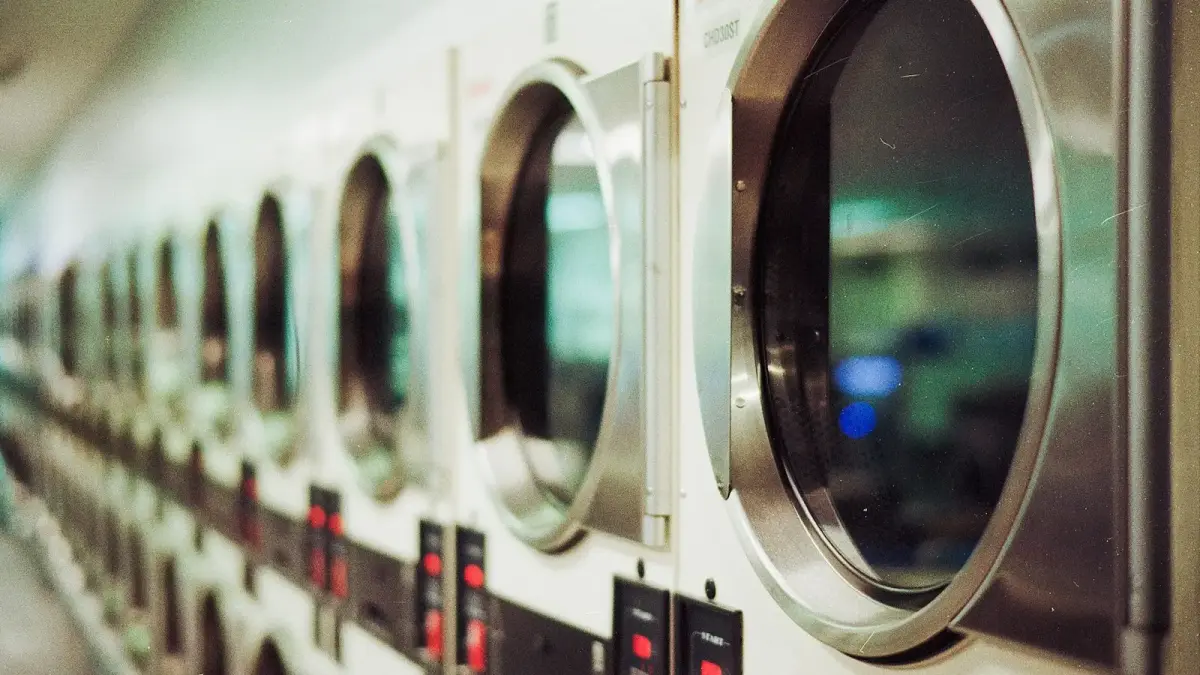
I still remember the sound of quarters dropping into a machine. That hard, metallic clink - one after another - each coin deliberate, each one accounted for.
Saturday mornings in our house didn’t start with cartoons. They started with my mother pulling a jar off the kitchen counter, counting coins on the table like she was solving a math problem she already knew the answer to, and loading everything we owned into garbage bags because we didn’t have a proper laundry basket.
The laundromat was four blocks away. Close enough to walk. Far enough to feel every ounce of those bags by the time you got there.
I haven’t been inside a laundromat in over twenty years. But every single time I press the start button on my washing machine - in my own house, in my own basement - something catches in my chest. Not nostalgia. Something closer to disbelief. Like some part of me still can’t quite accept that I’m allowed to wash my clothes in private now.
If you know that feeling, this is for you. Because the laundromat wasn’t just a place. It was a weekly reminder of everything your family couldn’t afford - played out in public, measured in quarters, timed by machines that never waited for you to be ready.
1. They fold with a precision that borders on ritual
Watch someone who grew up doing laundry at the laundromat fold a towel. There’s a carefulness to it that goes beyond neatness. It’s muscle memory built from years of folding on a public table, surrounded by strangers.
At the laundromat, folding wasn’t a chore. It was a performance. Your clothes - thin, faded, sometimes patched - were suddenly visible to everyone. The way you folded them became the only thing you could control about how people saw you.
A 2019 study in the Journal of Personality and Social Psychology found that individuals who experienced economic hardship in childhood develop heightened self-monitoring behaviors in public settings, a pattern that persists well into adulthood regardless of current income. The researchers called it “visibility management.” I’d call it survival. You learned to fold fast, fold tight, fold like your dignity depended on it - because in some quiet way, it did.
2. They feel an outsized gratitude for appliances most people barely think about
Here’s the thing nobody talks about. For a lot of people, a washer and dryer is just furniture. Something that came with the apartment or got delivered the week they moved in. They don’t think about it. They certainly don’t feel grateful for it.
But if you grew up hauling laundry to a public place, the first time you did a load in your own home probably felt like crossing some invisible finish line. Not a financial milestone - something deeper. A private one.
You stood there listening to the water fill and something inside you unclenched. Because laundry at home means nobody sees your clothes. Nobody counts your quarters. Nobody watches you sort your underwear under fluorescent lights while pretending not to notice.
That gratitude doesn’t fade. It doesn’t adjust to your new normal. It stays, quietly enormous, every single time.
3. They sort meticulously because mistakes once cost real money
If you had your own machine, a wrong sort was an inconvenience. You’d re-wash. No big deal.
At the laundromat, a wrong sort was a financial event. That extra load meant another dollar fifty, maybe two dollars, pulled from a jar that had already been counted down to the last quarter. It meant telling your mother you needed more money for a machine, and watching her face do that thing where she calculated what that meant for the rest of the week.
So you learned to sort perfectly. Whites from darks from delicates. You learned it the way other kids learned to ride a bike - through repetition, consequence, and the quiet fear of getting it wrong. And now, decades later, you still separate everything with a seriousness that your partner probably finds a little excessive. You can’t explain it to them. You just know that carelessness with laundry still feels dangerous, even when it isn’t.
4. They have a complicated relationship with waiting
The laundromat taught you to wait. Not patiently - just without options.
Thirty-two minutes for the wash cycle. Forty-five for the dryer if it was working properly. Longer if it wasn’t, and the ones at our laundromat were never quite working properly. You sat on molded plastic chairs that were always slightly sticky, and you waited alongside strangers who were also waiting, and nobody talked about why you were all there on a Saturday morning instead of somewhere else.
A 2021 study published in Psychological Science found that children raised in resource-scarce environments develop a different relationship with time, often oscillating between extreme patience and intense urgency depending on whether they perceive a situation as within or outside their control. That tracks. Because I can wait for hours without complaint in situations where waiting is all there is. But the moment I feel like I’m wasting time by choice, something inside me panics. Time was a resource at the laundromat. You didn’t spend it - you endured it.
5. They understand that poverty is public in ways wealth never has to be
This is the part that’s hardest to explain to someone who didn’t live it. Wealth is private. You can be rich behind closed doors and nobody knows the details. But poverty - real, weekly, grind-it-out poverty - is visible.
The laundromat was where your economic status became undeniable. Not because anyone said anything. But because everything you owned was right there on the folding table. The shirts with the fraying collars. The jeans that had been patched at the knee. The socks that didn’t match because you bought them at different dollar stores in different months.
You couldn’t hide any of it. And so you learned to carry that visibility with a kind of careful blankness - a face that said “I’m fine, this is normal, there’s nothing to see here.” You got very good at that face. Some of us still wear it.
6. They keep clothes longer than anyone around them understands
People who grew up middle class or above cycle through clothes. Something fades, they replace it. A shirt gets a small stain, they toss it. It’s not wasteful to them - it’s just how clothes work.
But if you grew up counting quarters to wash what you had, you learned that every piece of clothing represented an investment. Not just the purchase price, but the ongoing cost of maintaining it. Every wash cycle cost money. Every item that wore out too soon was a loss you felt in your budget.
So you keep things. You wear that sweater until it’s genuinely falling apart, not because you can’t afford a new one, but because some part of your brain still calculates the cost of every garment across its entire lifespan. You repair things other people would donate. You feel a small, irrational grief when a favorite shirt finally gives out. That grief isn’t about the shirt. It’s about a version of you that learned to make things last because lasting was all you could afford.
7. They notice class markers that are invisible to everyone else
Growing up at the laundromat gave you a literacy that most people don’t even know exists. You can walk into someone’s home and know, within minutes, what their childhood looked like. Not from the furniture or the address - from smaller things.
Whether they have a utility room or a stacked unit in a closet. Whether their detergent is name brand or generic. Whether their towels match. These aren’t judgments. They’re just things you see because you were trained by circumstance to read the signals of economic stability the way other kids learned to read body language on the playground.
A 2018 study in Frontiers in Psychology found that adults who experienced childhood poverty demonstrate significantly heightened awareness of socioeconomic cues in their environment, a form of social cognition that researchers described as both adaptive and emotionally taxing. It is taxing. Because you can’t unsee it. You walk through the world with a filter that most people don’t carry, and it makes certain social situations quietly exhausting.
8. They turned laundry into something private and almost sacred
Here’s what I think is the most telling pattern of all. People who grew up doing laundry in public don’t just do laundry at home now. They’ve turned it into a ritual.
The specific detergent they chose themselves. The temperature settings they know by heart. The way they pull warm clothes from the dryer and fold them in their own living room, on their own couch, with nobody watching. Some of them even enjoy it - not the task itself, but the privacy of it. The luxury of doing something so basic, so human, without an audience.
It’s not about the laundry. It was never about the laundry. It’s about the fact that for years, one of the most ordinary acts of daily life required you to go somewhere public, pay money you barely had, and expose the most intimate details of your household to strangers. And now you don’t have to. That shift - from public necessity to private choice - never stops feeling like a gift.
If you read this and something in your chest tightened, I want you to know that I see you. Not the version of you that has the house and the washer and the matched towels now. The version of you that sat on a plastic chair at nine years old, watching a dryer spin, counting the minutes until you could bag everything up and carry it home.
That kid learned something most people never have to. That dignity isn’t guaranteed. That ordinary life costs money. That the distance between “getting by” and “comfortable” can be measured in quarters.
And if you still feel a small wave of something - gratitude, relief, maybe even disbelief - every time you start a load of laundry in your own home, that’s not strange. That’s not excessive. That’s the part of you that remembers what it cost, honoring the fact that it doesn’t cost that anymore.
You earned that washing machine. Not just financially. Emotionally. You earned the right to do something ordinary in private, without counting coins, without an audience, without the hum of a room full of strangers’ machines marking time you couldn’t afford to waste.
Let yourself feel it. Every single time.