Children who learned to read the speed of footsteps in a hallway - who could tell from the weight and rhythm of approaching steps whether the person coming toward their room was calm or angry, whether the evening was safe or whether it had already turned - often become adults who can identify every person they love by the sound of their walk alone, because a child who needed to know what was coming before the door opened built a listening system that was never given permission to shut down
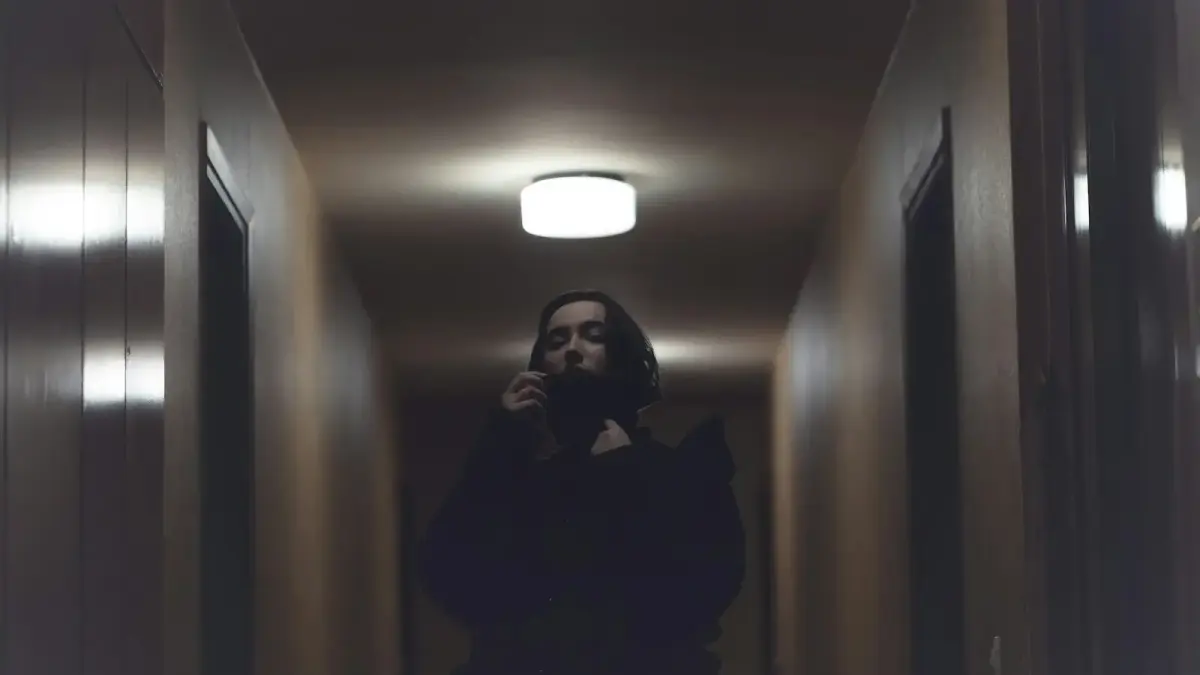
I was nine when I realized I could tell who was walking down the hallway without looking. Not just whether it was my mother or my father - that was easy. I could tell what kind of evening it was going to be.
My father’s normal walk had a particular cadence. Heel first, then the ball of his foot, a steady metronomic rhythm that meant he was coming to say goodnight, that the house was settled, that the day had ended the way days were supposed to end. But when his steps were faster, heavier, when the heel struck the floor like it was making a point - I knew. I knew before the doorknob turned. I knew before he was even close enough for me to hear his breathing.
I didn’t think of this as a skill. I didn’t think of it at all. It was just the water I swam in, the way my ears had learned to do what my eyes couldn’t - scan for danger through walls, around corners, from underneath a blanket where I was pretending to be asleep.
It took me twenty years to understand that not everyone listens like this. That most people hear footsteps as background noise, the same way they hear the refrigerator hum or the furnace click on. They don’t catalogue them. They don’t cross-reference them against a mental database of what each variation means.
But if you grew up in a home where the sound of someone approaching your room carried information about your safety, you built something in childhood that still runs today - a listening system so precise and so automatic that you probably don’t even realize it’s operating.
Here are the ways that early auditory vigilance tends to show up in adult life.
1. You can identify people by the sound of their walk before you see them
This is the most obvious marker, and the one that surprises people the most when they realize not everyone does it. You know your partner’s footsteps from your coworker’s footsteps from your neighbor’s footsteps. You can tell who just came through the front door from two rooms away. You don’t need to look.
A 2019 study published in the journal Cognition found that humans can extract remarkably detailed information from gait sounds alone - identifying not just who is walking but inferring emotional state, weight shifts, and urgency from acoustic cues. Most people have a passive version of this ability. But children who grew up monitoring footsteps for safety developed an active, highly refined version that far exceeds the baseline.
You didn’t learn this on purpose. You learned it because you had to.
2. You register tiny changes in someone’s gait and immediately start interpreting them
Your partner comes up the stairs after work, and tonight their steps are slightly faster than usual - not rushing, just a few beats quicker. Most people wouldn’t notice. You notice before they’ve reached the top step.
And you’re already running the calculation. Faster could mean they’re excited about something. Or it could mean something went wrong and they’re carrying tension in their legs. You listen for the next cue - the way they set their bag down, the force of it, whether it lands soft or dropped - to refine your read.
This isn’t anxiety. It’s pattern recognition operating on a level so granular that it feels like intuition. But it started as survival. A child who could decode the difference between a tired walk and an angry walk had a few extra seconds to prepare, to adjust, to make themselves smaller or more agreeable before the interaction even began.
3. You have an involuntary physical response to certain sounds of approach
There’s a specific kind of footstep - heavy, deliberate, slightly irregular - that activates something in your body before your conscious mind has time to process it. Your shoulders tighten. Your breathing shallows. Your stomach drops half an inch.
This happens even when the person approaching is someone you love, someone safe, someone who has never given you a reason to be afraid. Your body doesn’t care about context. It cares about acoustic signatures. And certain patterns of weight and rhythm were coded into your nervous system decades ago as signals to brace.
Research from Dr. Bessel van der Kolk’s work on trauma and the body has shown that the auditory system retains threat associations long after the original danger has passed. The body, as he describes it, keeps the score - and part of that score is written in the frequencies your ears learned to flag as warnings when you were too young to have any other defense.
4. You instinctively track the location of every person in a building by sound alone
You’re at a dinner party, sitting in the living room, mid-conversation. But a part of your attention is always tracking movement elsewhere in the house. Someone just walked from the kitchen to the bathroom. Someone else shifted from one room to another. You couldn’t explain how you know this. You just do.
As a child, this was your map. You needed to know where the unpredictable person was at all times, and you couldn’t always see them, so your ears drew a floorplan of the house and tracked every body moving through it. The kitchen meant they were getting something to drink. The bedroom meant they’d retreated. The hallway meant they were in transit, and transit meant they might be coming your way.
You still build these maps. In offices, in apartments, in hotels. Your ears are always quietly taking attendance.
5. Silence doesn’t feel peaceful to you - it feels like missing information
Most people experience silence as an absence. For you, silence is a presence. It’s a gap in the data stream, and gaps are where the danger hides.
Because here’s what other people don’t understand about growing up in a home where footsteps carried meaning: the absence of footsteps carried meaning too. Silence could mean someone was standing still in the hallway, deciding. It could mean they’d left the house and you didn’t know when they’d be back. It could mean they were sleeping it off, which was good, or it could mean they were sitting in the dark, which wasn’t.
A 2021 study in Frontiers in Psychology found that individuals with early-life stress show heightened auditory processing even in the absence of sound - their brains remain in a state of monitoring readiness, scanning for the onset of meaningful noise. The researchers described it as an auditory sentinel mode. Your nervous system never stopped standing guard at the door.
6. You have trouble sleeping because you can’t stop listening
This one is so common it almost feels universal among people who grew up reading footsteps. Bedtime was the most vulnerable time. You were lying still, in the dark, unable to see. Your ears became your entire security system.
And they’re still on patrol. You hear the house settling and your ears check it against the database. You hear a car door outside and your body logs the time. You hear your partner shift in bed and some ancient part of you runs a quick assessment - normal shift or something else.
You’ve probably been told you’re a light sleeper. That framing is kind, but incomplete. You’re not a light sleeper. You’re a sleeper whose auditory cortex never received the signal that it’s safe to fully power down.
7. You sometimes know someone’s emotional state before they’ve said a word
This is the gift hidden inside the wound. Because you spent years decoding approach sounds for emotional content, you developed an extraordinary ability to read people through non-visual, non-verbal channels. You hear stress in someone’s breathing pattern. You hear sadness in the pace of their movement. You hear anger in the way a cabinet closes.
People call this being perceptive. People call this emotional intelligence. And it is. But it didn’t emerge from some innate gift or careful study. It emerged from a child lying in bed at night, ears straining against the dark, decoding the emotional weather of the household from the sound of a single pair of shoes on hardwood.
Daniel Goleman’s work on emotional intelligence describes the capacity to read others accurately as a cornerstone of interpersonal skill. What he doesn’t always address is how many emotionally intelligent adults built that capacity not from safety but from its absence - learning to read every available signal because missing one could mean the difference between a calm evening and a terrible one.
8. You struggle to explain this to people who didn’t grow up this way
You’ve tried. Maybe you mentioned to a friend that you always know who’s walking toward your office by the sound of their shoes, and they laughed and said something like, “That’s funny, I never notice that.” And you smiled and moved on, because how do you explain that you don’t notice it either - your nervous system just does it, the same way your lungs breathe without being asked.
The gap isn’t about ability. Almost everyone could learn to identify people by their footsteps if they practiced. The gap is about necessity. You didn’t practice. You were trained by an environment that made auditory surveillance a condition of feeling safe. And that kind of learning doesn’t uninstall. It just runs in the background, quietly, permanently, like an app you never downloaded but can’t delete.
What this means - and what it doesn’t
If you recognized yourself in this article, I want to be careful about what I’m saying and what I’m not.
I’m not saying your childhood was defined by one thing. I’m not saying your parents were monsters. Many of the people reading this grew up in homes that were complicated - not uniformly bad, not always unsafe, but unpredictable enough that a child’s nervous system decided to build an early warning system just in case.
And that system worked. It kept you oriented. It gave you information when you had no power. It was, in its own way, brilliant.
The question now is whether it’s still serving you or whether it’s just exhausting you. Whether the listening that once kept you safe is now keeping you from resting. Whether the precision that makes you extraordinary at reading people is also making it impossible to stop reading them, even when you want to.
You were never broken for hearing too much
The child who memorized the rhythm of every footstep in the house wasn’t anxious. They were resourceful. They were doing exactly what a developing brain is supposed to do - adapting to the environment it was given, building the tools it needed to navigate what it couldn’t control.
You carry that adaptation with you. It’s woven into the way you listen, the way you orient in a room, the way your ears are always, always working. It’s part of what makes you the person who notices things other people miss, who senses shifts before they surface, who hears the world in a resolution most people will never access.
That’s not a disorder. That’s a depth of perception that was earned at a cost you didn’t choose to pay.
And if no one has said this to you before - you’re allowed to rest now. Your ears have done enough. The hallway is quiet, and it means nothing more than quiet. You can let the footsteps just be footsteps.
You can let them pass.