Children who always kept every instruction manual in a drawer - for the toaster that broke in 2003, for the bicycle they outgrew at twelve - are now adults who cannot throw away a warranty card for an appliance they no longer own, because in houses where broken things stayed broken, that folded pamphlet was the only promise anything could be fixed
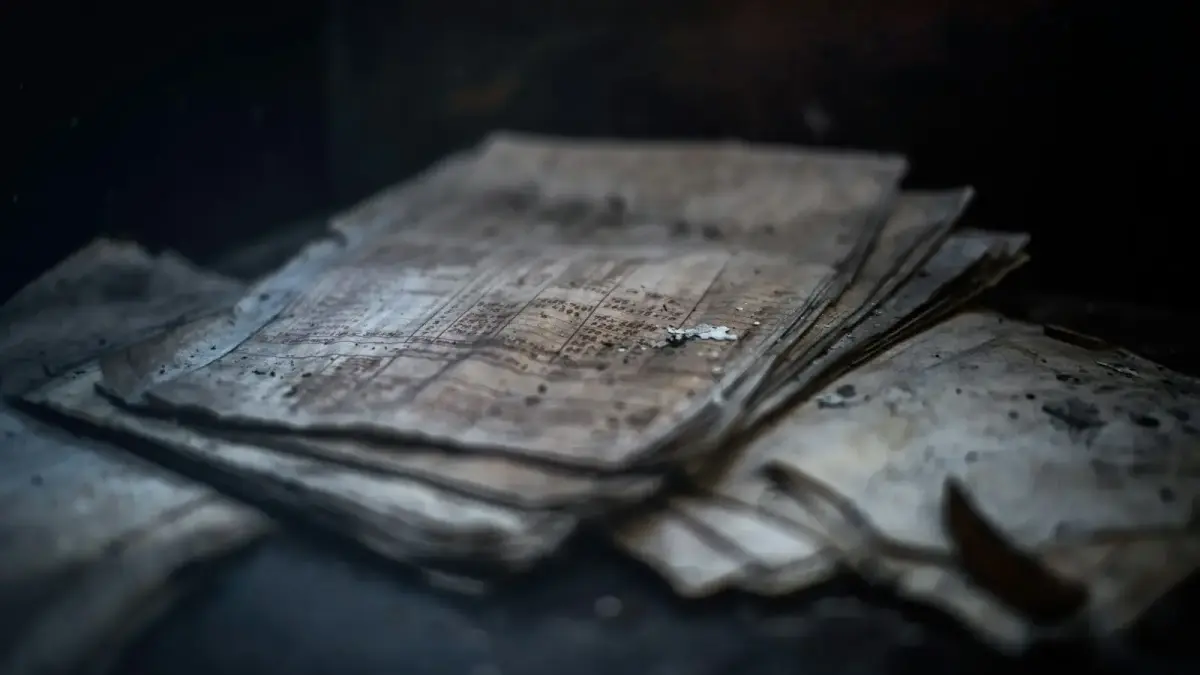
There is a drawer in my kitchen that I have not cleaned out in fourteen years.
It sticks a little when you pull it open, because the papers inside have swelled and shifted into a shape that resists the runner. Inside are instruction manuals for a coffee maker I donated in 2019, a warranty card for a microwave that stopped heating evenly sometime during the Obama administration, and a folded pamphlet for a vacuum cleaner my mother gave me when I moved into my first apartment - a vacuum that broke three months later and went to the curb on a Tuesday morning in October.
I know these things are gone. I know the warranty expired. I know the 1-800 number on the back of that pamphlet probably connects to nothing now.
But I cannot make my hand throw them away.
If you grew up in a house where things broke and stayed broken - where a dripping faucet dripped for years, where the oven door had to be propped shut with a chair, where the television remote was held together with a rubber band and hope - then you already understand what that drawer is. You don’t need me to explain it. You’ve already felt the small pulse of recognition in your chest.
1. The manual was the only repair tool you could always afford
In households where money was tight, calling a repairman was not an option. Buying a replacement was not an option. What you had was the thing itself, your own hands, and whatever instructions came folded inside the box.
My father once spent an entire Saturday evening on the kitchen floor with the washing machine manual spread open beside him, reading each step out loud to himself like a prayer. He did not fix the machine. But the manual meant he could try. And trying was the only form of agency available to him.
A 2014 study published in the Journal of Consumer Research found that people who grew up in resource-scarce environments develop stronger attachments to objects that represent potential rather than current utility. The manual was never just paper. It was a promise that the broken thing was not permanently broken - that somewhere inside those small-print paragraphs and diagrams was a path back to working.
2. You learned that information could substitute for money
When you cannot afford the solution, you research the solution. You read about it. You learn the name of the part that broke. You understand the mechanism even if you cannot replace it.
This is how many children in lower-income households first develop a relationship with knowledge - not through curiosity, but through necessity. The manual was the first textbook. The diagram of the internal parts of a dishwasher was the first anatomy lesson. You did not study because learning was fun. You studied because learning was the only free thing your family could do about a problem that cost money to solve.
The adult who saves every receipt, who screenshots every confirmation email, who keeps the original packaging in the closet for three years “just in case” - that adult is not disorganized. They are still gathering information as a substitute for resources they once did not have.
3. Throwing it away means admitting the thing is truly gone
Here is what people who did not grow up this way don’t understand: the manual keeps the object alive.
As long as the instruction booklet for the 2003 toaster is still in the drawer, the toaster is not entirely gone. It exists in potential. It could, theoretically, be found at a yard sale, repaired, returned to the counter. The manual is the thread connecting you to a version of reality where things come back.
Throwing the manual away is not cleaning. It is a small funeral. It is admitting that the thing broke, that nobody fixed it, that the money was never there, and that the pamphlet was never actually enough.
For people who grew up watching their parents hold onto broken things because they could not afford whole ones, every act of discarding carries that weight.
4. The drawer became an archive of everything your family tried to hold together
Open the drawer. Look at what is inside.
A warranty card for a blender that overheated in 2007. The instruction sheet for a ceiling fan your uncle installed wrong, with a pencil note in the margin about which wire was which. A receipt for a printer cartridge that cost $42 - you remember your mother hesitating at the register.
This is not clutter. This is a filing system for a household that was always on the edge of something breaking. Every piece of paper in that drawer represents a moment when something went wrong and someone in your family tried to figure out how to make it right with nothing but printed instructions and patience.
Psychologist Suniya Luthar, whose work on resilience among economically disadvantaged families spans decades, has documented how resourcefulness in the face of scarcity becomes embedded in identity. You don’t just learn to save things. You become a person who saves things. The behavior outlasts the circumstance by years - sometimes by a lifetime.
5. You save instructions for things you already know how to use
This is the part that confuses people from more comfortable backgrounds. You have a smartphone. You could look up how to reset any appliance in thirty seconds. You do not need the paper manual anymore.
But you keep it anyway.
Because the manual was never about the information. It was about having something in your hands that said: this problem has a solution, and the solution is written down, and you can hold it. In a childhood where so much felt uncertain and unfixable, that physical object - that folded, stapled, sometimes water-stained pamphlet - was evidence that somebody, somewhere, had already figured this out.
You don’t keep the manual because you need directions. You keep it because you need the feeling of being prepared for the next thing that breaks.
6. You feel guilty when something breaks that you could have prevented
A 2021 study published in Frontiers in Psychology found that adults who experienced economic hardship in childhood show heightened self-blame when household items malfunction. The researchers described it as “anticipatory responsibility” - a feeling that you should have seen the failure coming, should have maintained things better, should have read the manual more carefully.
This is why you keep the warranty card even after the warranty expires. Somewhere in your nervous system lives a child who believes that if she had just paid closer attention, the washing machine wouldn’t have flooded the kitchen floor. That if she had read every page of every manual, she could have prevented the cascade of breaking things that shaped her family’s daily life.
The card in the drawer is not about getting a replacement. It is about proving to yourself that you did everything you could.
7. You are building the infrastructure your childhood never had
Here is what I want you to understand about your drawer full of folded paper for things that no longer exist.
You are not being irrational. You are not being messy. You are not failing at minimalism.
You are doing what your younger self needed someone to do - creating a system, an archive, a safety net made of information. You are building the infrastructure of a household where things can be fixed, where knowledge is filed and accessible, where no one has to sit on the kitchen floor at ten o’clock at night squinting at a diagram they cannot quite read.
The drawer is not clutter. It is the organizational backbone of a child who decided, very early, that she would be ready for the next thing that went wrong. Even if being ready only meant having a piece of paper that described, in twelve-point font, how the thing was supposed to work.
8. The people who understand this least are the ones who always had the money to replace things
Marie Kondo’s question - “does it spark joy?” - assumes that objects serve emotional purposes and can be released when the emotion fades. But that framework was designed for abundance. It assumes you can replace what you discard.
For people who grew up without that assumption, every object carries a second weight: what if I need this, and I can’t get another one? The manual, the receipt, the warranty card - they don’t spark joy. They spark something older and more fundamental than joy. They spark the feeling of not being caught unprepared.
You cannot KonMari a nervous system that was shaped by scarcity. You can only understand it, name it, and stop judging yourself for the drawer that won’t close all the way.
9. The drawer is not the problem - the drawer is the solution your younger self invented
Every organizational behavior that feels excessive in adulthood made perfect sense in the environment where it developed. The child who watched her parents struggle to repair things without tools, without money, without help - that child built the only tool she could: a drawer full of knowledge. A paper archive of every machine the household ever owned, filed and folded and kept safe against the day when something broke again.
And something always broke again.
Daniel Goleman has written about how emotional memories shape our unconscious habits long after the original circumstances change. Your drawer is an emotional memory given physical form. It is the residue of a childhood strategy that worked - not because the manuals fixed things, but because the act of keeping them gave a small, anxious child the feeling that someone in the house was paying attention.
You don’t have to clean the drawer out.
You also don’t have to keep it exactly as it is. You get to decide. But I want you to stop telling yourself it means something is wrong with you, that you are a hoarder, that you can’t let go.
The drawer full of instruction manuals for things that no longer exist is not evidence of a problem. It is evidence of a child who found the only free tool available to her family - information - and decided to never be without it again.
That child was resourceful. That child was paying attention. That child was doing her best to hold the household together with the only material she had: paper, and the belief that knowing how something worked was almost as good as having the money to fix it.
You can be gentle with her. She earned that drawer.