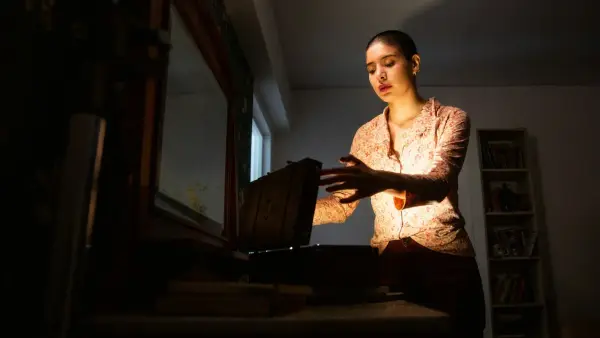
Children who became the peacemaker between warring parents - stepping between arguments, softening messages, reading the air before anyone spoke - often become adults who can walk into any tense room and calm it down within minutes but have never once allowed themselves to have an emotion that might inconvenience someone else
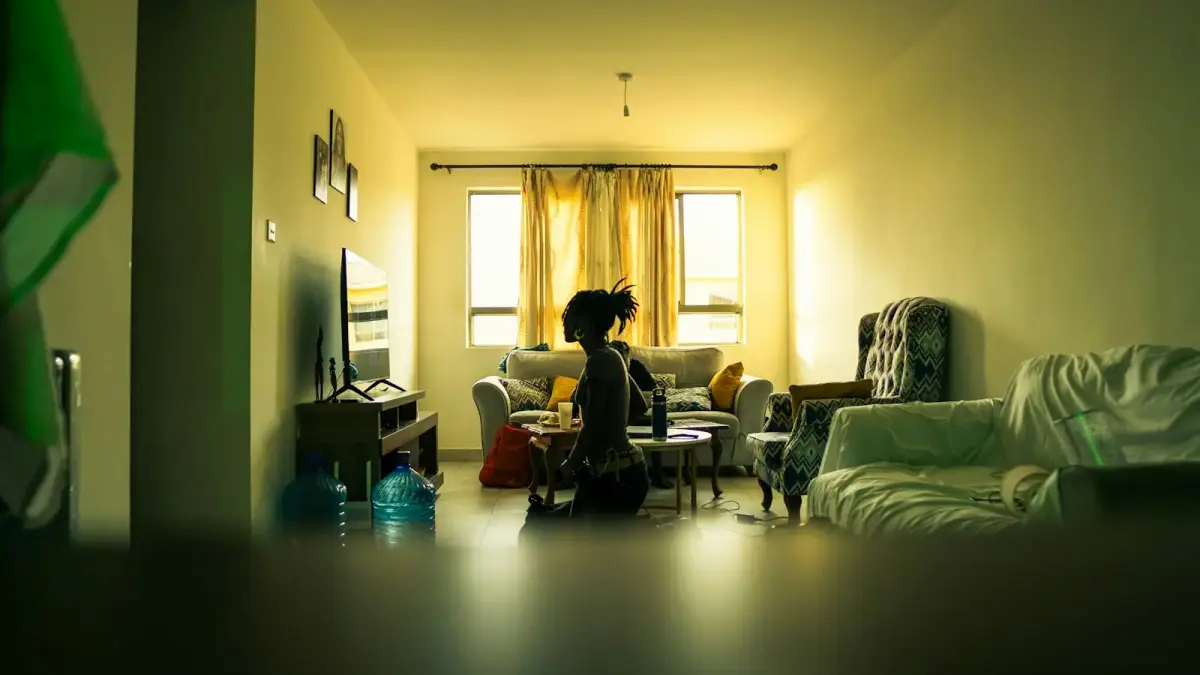
I was nine the first time I realized I could change the weather in a room.
My parents were in the kitchen, voices climbing toward that pitch I’d learned to recognize before the first word was even spoken. Something about money. Something about a phone call that went too long. The details didn’t matter. What mattered was the frequency - that particular vibration in the air that told me the walls were about to close in.
I walked in, said something about needing help with homework, and watched both of them exhale. My mother softened. My father unclenched his jaw. The storm passed. I went back to my room and sat on the floor and stared at the carpet for twenty minutes, feeling nothing at all, which I mistook for peace.
I was not keeping the peace. I was performing it. And I got so good at that performance that I carried it into every classroom, every friendship, every relationship, and every job I ever had - always the one who could walk into tension and dissolve it, always the one whose own feelings never seemed to show up until everyone else had gone home.
If that sounds familiar, I want you to know something. That skill you developed wasn’t a flaw. But the cost of it deserves to be named.
You learned to read rooms before you learned to read books
Children who grow up in high-conflict homes develop something researchers call hypervigilance to emotional cues. A 2017 study published in the Journal of Family Psychology found that children exposed to frequent interparental conflict showed heightened sensitivity to angry vocal tones and facial micro-expressions - often detecting shifts in mood faster than their peers by a significant margin.
But here’s what the study doesn’t capture in its data: what it actually feels like to be that child.
You weren’t just noticing anger. You were scanning for it constantly. The sound of a car pulling into the driveway. The way a cabinet closed - gently or with force. Whether dinner was served in silence or with small talk. You were gathering intelligence the way a soldier reads terrain, except you were seven and the battlefield was your living room.
This wasn’t anxiety in the clinical sense, though it often gets labeled that way later. It was adaptation. You were doing exactly what your nervous system needed to do to survive an unpredictable environment.
The problem is that survival skills don’t retire when the danger ends. They just find new rooms to scan.
The role you were never asked to play
No one sat you down and said, “Your job is to keep your parents from falling apart.” No one handed you a title or a job description. It happened the way most childhood roles happen - through repetition, reinforcement, and the quiet math of figuring out what keeps the house standing.
You learned that when you intervened, things got quieter. When you made a joke at the right moment, the tension cracked. When you carried a message from one parent to the other - softening the edges, translating the fury into something manageable - the evening survived.
Psychologist Salvador Minuchin described this dynamic as parentification, where a child is recruited into an adult emotional role within the family system. You became the diplomat, the translator, the emotional buffer. And because it worked, because the house did stay standing, you internalized a belief so deep it became invisible: my value comes from keeping other people calm.
That belief didn’t stay in your childhood home. It moved with you.
Why you’re the person everyone calls in a crisis
People like you are extraordinary in tense environments. You walk into a meeting where two colleagues are barely speaking and within ten minutes, somehow, everyone is laughing. You sit with a friend who is falling apart and say the exact right thing - not because you rehearsed it, but because you’ve been rehearsing it since you were five.
You know how to lower your voice when someone else raises theirs. You know how to validate without agreeing. You know how to hold space for someone’s anger without flinching, because flinching was never an option.
A 2020 study in Frontiers in Psychology found that adults who reported taking on mediating roles in childhood scored significantly higher on measures of emotional intelligence, particularly in the domains of emotion perception and emotion management. The researchers noted that these individuals were often described by peers as calming, trustworthy, and unusually perceptive.
You probably hear that a lot. That you’re calming. That people feel safe around you. That you just have this way about you.
And you probably smile when they say it, because receiving that compliment is the closest you get to feeling like your existence is justified.
The thing you never learned to do
Here’s where the story turns, and I need you to stay with me.
You learned to manage everyone else’s emotions with surgical precision. But somewhere in that process, you quietly abandoned your own. Not dramatically. Not in a single moment. It happened like erosion - slowly, invisibly, until the riverbed was just gone.
Think about the last time you were truly angry. Not annoyed. Not frustrated. Angry. The kind of anger that rises in your chest and demands to be spoken.
If you’re like most former peacemakers, you probably can’t locate it. Or if you can, you remember swallowing it. Reframing it. Deciding it wasn’t that serious. Telling yourself that the other person was probably going through something, and your anger would only make things worse.
You do this with sadness too. And disappointment. And need. Especially need.
Because the unspoken rule you learned as a child was this: your emotions are a disruption. Other people’s emotions are an emergency you must attend to. Your own emotions are an inconvenience you must contain.
You didn’t learn this from cruelty. You learned it from cause and effect. Every time you suppressed your own feelings to attend to someone else’s, the house got quieter. Every time you expressed a need, the attention shifted away from the real problem - which was keeping your parents from destroying each other.
Your feelings became collateral damage. And after a while, you stopped noticing the loss.
The body keeps the invoice
Psychologist Gabor Mate has written extensively about how emotional suppression doesn’t make feelings disappear - it just relocates them. The emotion you didn’t express at ten doesn’t evaporate. It takes up residence in your body, your sleep, your jaw, your gut.
Former peacemakers often show up in doctors’ offices with chronic tension, insomnia, digestive issues, or that vague, persistent exhaustion that doesn’t respond to rest. They show up in therapists’ offices saying, “I don’t know why I’m here exactly, I just feel like something is missing.”
What’s missing is you. The version of you that has needs and expresses them. The version that can say, “I’m angry and I’m not going to make it easier for you to hear that.” The version that can sit in a room full of tension and not feel personally responsible for fixing it.
A 2019 study in the Journal of Personality and Social Psychology found that chronic emotional suppression was associated with reduced relationship satisfaction - not because the suppressor was unhappy, but because their partners reported feeling shut out. The very skill that makes you safe to be around also makes you difficult to truly know.
People feel calm near you. But they don’t always feel close to you. And you might not notice the difference, because calm is the only version of closeness you were ever taught.
What it looks like in your adult life
You say “I’m fine” more than any other sentence.
You apologize when someone else steps on your foot.
You can spend an entire evening attending to someone else’s crisis and then drive home in silence, not sure what you’re feeling but certain it doesn’t matter right now.
You’ve been told you’re “too understanding.” You’ve been told you’re “impossible to fight with.” And both of those were meant as compliments, and both of them landed like small, quiet losses.
You pick partners who need calming. You pick friends who need holding. You pick jobs that need a steady hand in the chaos. Not because you’re drawn to dysfunction - because dysfunction is where your skill set makes you feel necessary.
And being necessary is the closest thing to being loved that you’ve ever trusted.
The permission you were never given
I want to say something to you that you may not have heard before, or that you heard but couldn’t let in.
Your emotions are not a burden. Your anger is not a disruption. Your sadness is not an inconvenience. Your needs are not a problem to be managed.
You are allowed to take up space in the room you’ve spent your whole life calming down.
This doesn’t mean you need to become someone who explodes or makes scenes. That’s not who you are, and I’m not asking you to perform a different kind of inauthenticity. What I’m asking is smaller and harder than that.
I’m asking you to notice the next time you swallow something. The next time you translate your own pain into concern for someone else. The next time you feel a feeling and immediately assess whether it’s safe to have it.
And instead of running the old calculation - will this upset someone, will this cause conflict, will this make me a problem - I want you to try a different question.
What would happen if I just let this be here?
Not acted on. Not performed. Not suppressed. Just felt. Just allowed to exist in your body for a moment without you deciding it needs to be useful or managed or hidden.
You were never the problem
The child who stepped between warring parents and calmed the room was doing something remarkable. You were holding a family together with emotional intelligence that most adults never develop. You were doing the work of a therapist at an age when you should have been doing the work of being a kid.
That child deserves enormous credit. And that child also deserves to be released from the job.
You don’t have to be the peacemaker anymore. You don’t have to scan every room for danger. You don’t have to carry the emotional weather of every person you love.
You are allowed to have a feeling that is loud, and inconvenient, and yours.
You are allowed to be the one in the room who needs something.
You always were. You just never had anyone who made it safe enough to try.
If you’re reading this and your chest is tight and your eyes are burning and you’re already composing the reason why this doesn’t really apply to you - I see you. That instinct to deflect, to minimize, to turn attention away from your own pain? That’s the peacemaker in you, still working overtime.
Let it rest. Even just for a moment.
You’ve calmed enough rooms. It’s time to come home to yourself.