Children who memorized every exit in every building they entered - who knew which windows opened, which doors were unlocked, which hallway led to the parking lot and which led to a dead end - often become adults who cannot sit down in any room until they have mapped every possible way out, because a child who grew up in a house where he sometimes needed to leave faster than a door would allow never stopped believing that the distance between safe and trapped is measured in exits
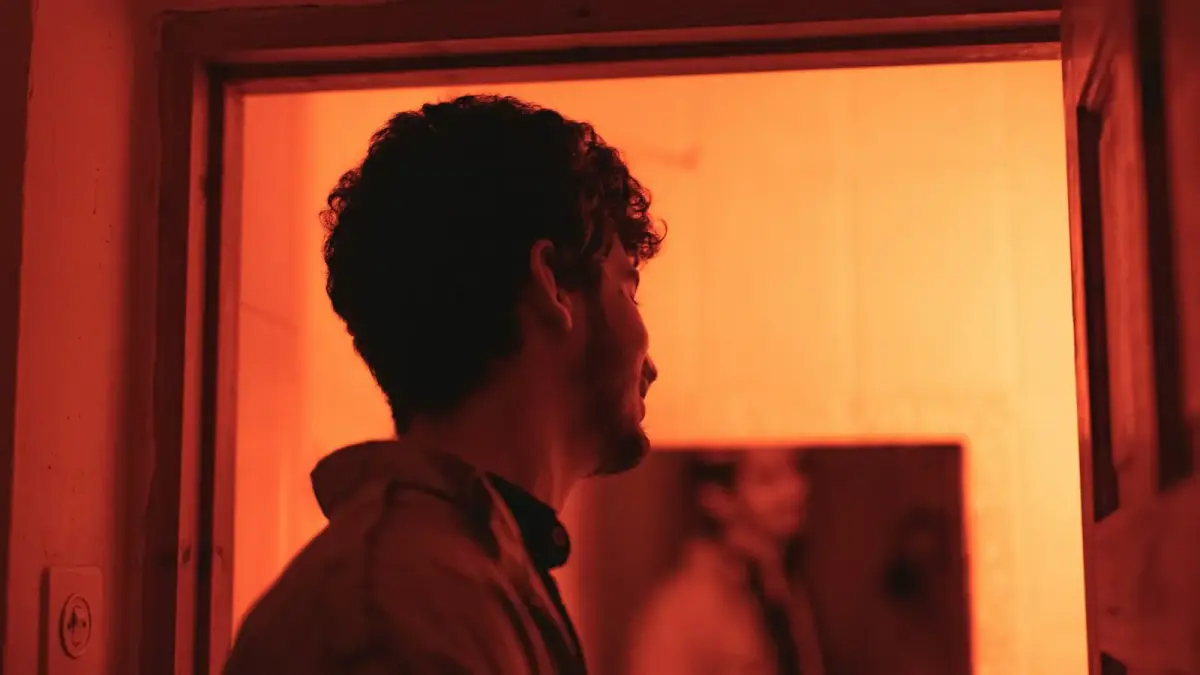
I still do this thing at restaurants that I never talk about.
Before I read the menu, before I take off my jacket, before I even acknowledge the person across the table - I scan the room. I find the front entrance. Then the kitchen door. Then the emergency exit, if there is one. I check whether the windows are the kind that open or the kind that are sealed shut. I note which direction the hallway goes and whether it leads outside or deeper into the building.
It takes about four seconds. Nobody notices. And by the time the server comes over, I have already mapped every possible way out of a room I walked into voluntarily.
For most of my adult life, I thought everyone did this. I thought it was common sense. Situational awareness. Something practical. It wasn’t until a friend watched me do it at a coffee shop - sit down, eyes sweep left, eyes sweep right, check the back hallway, settle - and said “what are you looking for?” that I realized this wasn’t something most people did at all.
I wasn’t looking for anything. I was making sure I could leave.
And if you grew up in a certain kind of house, you know exactly what I mean.
The architecture of a nervous childhood
Some children grow up learning where things are. The cereal is in the pantry. The towels are in the hall closet. The dog sleeps by the back door.
Other children grow up learning where things lead. That window opens. That door sticks. That hallway is a dead end, so if you go that way, you’re cornered.
The second group wasn’t learning their home. They were learning their escape routes.
A 2019 study published in the journal Development and Psychopathology found that children raised in unpredictable or volatile home environments develop enhanced threat-detection systems - neural networks that prioritize scanning for danger over processing neutral information. Their brains literally reorganize around the question: how fast can I get out of here?
This isn’t a conscious decision a child makes. No seven-year-old sits down and thinks, “I should memorize which windows open in case I need to climb out.” It happens the way any survival behavior happens - through repetition, through necessity, through a body that learned, before the mind had words for it, that the emotional weather in this house could change in under a minute.
And when the weather changed, you needed to know where the doors were.
What the body remembers
Here is what people don’t understand about growing up in a home where you sometimes needed to leave quickly: the leaving isn’t the hard part. The hard part is the not-knowing-when.
If the danger was constant, you would adjust. You would live in permanent high alert, and eventually your system would find some way to regulate around it. But most volatile homes aren’t constant. They’re intermittent. Monday is fine. Tuesday is fine. Wednesday evening, something shifts - a tone, a footstep pattern, a particular kind of silence - and suddenly you have ninety seconds to read the room and decide whether to stay or disappear.
That intermittence is what trains the scanning.
Dr. Bessel van der Kolk, whose research on trauma and the body has shaped decades of clinical understanding, describes this as the body keeping the score. The conscious mind may move on. The body does not. It keeps running the old calculations long after the original threat has passed.
So the man who always sits facing the door at dinner isn’t making a choice. His nervous system is making it for him. The boy who once needed to see who was coming down the hallway before they got too close is still sitting inside the man who just wants to eat his pasta in peace.
He’s not paranoid. He’s prepared. And the fact that he no longer needs to be prepared doesn’t change the fact that his body never got that message.
The invisible inventory
If you were this child, you developed a skill that most people never needed to develop - the ability to take an instant spatial inventory of any room you enter.
You know within seconds how many exits there are. You know which seats put your back to the wall and which put your back to the open room. You know if a table is too close to a corner, because corners mean fewer options. You know whether the crowd is the kind that would notice you leaving or the kind that wouldn’t.
You do this at restaurants. At parties. At work meetings. At family gatherings - especially at family gatherings.
A 2021 study in Frontiers in Psychology found that adults with histories of childhood adversity showed significantly heightened spatial awareness in unfamiliar environments. They were faster at identifying exits, more accurate at estimating distances to doorways, and more likely to choose seating positions that maximized their line of sight. The researchers called it “environmental monitoring behavior.” But that is a clinical phrase for something much simpler.
You are a person who learned, as a child, that knowing where the exits are is the difference between feeling safe and feeling trapped. And you never stopped taking inventory.
This isn’t anxiety, exactly. It doesn’t always feel like fear. Sometimes it feels more like a quiet hum underneath everything - a background process running in your nervous system that you barely notice until someone points it out or until you find yourself in a room with no windows and only one door, and suddenly your chest is tight and your palms are damp and you cannot explain why a perfectly safe conference room feels like a cage.
The seat facing the door
There is a specific body language pattern that therapists who specialize in developmental trauma can spot across a crowded room.
It is the person who arrives somewhere and does not sit down immediately. They pause. They look around. They choose their seat with a deliberateness that looks like preference but is actually strategy.
They sit facing the door. Always facing the door.
If someone else takes that seat first, they feel a flicker of something - not anger, not even frustration, but a low-grade unease that stays with them for the rest of the evening. They’ll manage it. They’ll be fine. But some part of them will spend the night with one ear trained on the entrance behind them, tracking footsteps they don’t need to track, monitoring a room that poses no actual threat.
Adam Grant has written about how our earliest experiences shape not just what we believe but how we physically orient ourselves in space. The patterns we developed for survival don’t disappear when the survival context ends. They become preferences. Habits. The things we do without thinking that we explain away as personality.
“I just like sitting here.”
“I’m more comfortable by the door.”
“I don’t know, I just don’t like booths.”
These aren’t preferences. They’re adaptations. They’re the adult vocabulary for a childhood that never gave you words for what you actually needed, which was the assurance that you could leave any room at any time without asking permission.
Learning to stay
The hardest thing about being the adult who maps exits is not the mapping itself. The mapping is automatic. It costs you nothing. It runs in the background like an old operating system that you never uninstalled.
The hardest thing is the staying.
Because the exit-mapping was never really about leaving a building. It was about leaving a feeling. It was about knowing that if the emotional temperature in a room rose past a certain point, you had options. You could remove yourself before something happened that you couldn’t control.
And the adult version of that looks like this: the man who leaves parties early, not because he’s antisocial but because his capacity for sustained proximity to unpredictable people has a time limit. The man who takes a walk in the middle of a conversation that’s getting too intense. The man who always drives separately so he’s never dependent on someone else’s timeline for when he gets to leave.
None of this looks like trauma to the outside world. It looks like independence. Self-sufficiency. A guy who just likes his space.
But underneath it is a boy who learned that the safest version of any room is the version where you already know how to leave it.
The distance between safe and trapped
Here is what I want to say to the man who scans every room before sitting down.
You are not paranoid. You are not broken. You are not overreacting. You are a person whose body learned something real, in a real situation, at an age when your body was the only tool you had for keeping yourself safe.
The scanning was intelligent. The mapping was intelligent. The refusal to sit with your back to the door was intelligent. Every single adaptation you developed was the right response to the wrong environment.
A 2022 study in Psychological Science found that many of the hypervigilant behaviors associated with early adversity - the scanning, the exit-mapping, the strategic positioning - were not symptoms of dysfunction but evidence of a nervous system that had learned, correctly, to prioritize safety in environments where safety was genuinely uncertain. The behavior wasn’t the problem. The environment was.
You don’t need to stop scanning rooms. You don’t need to force yourself to sit with your back to the door to prove you’ve healed. Healing doesn’t look like ignoring the signals your body sends. It looks like being able to notice them without being controlled by them.
It looks like walking into a restaurant, scanning the exits in four seconds, and then choosing to stay. Not because you’ve forgotten how to leave. But because you’ve started to trust that this room - this dinner, this person, this moment - might be one worth staying in.
The boy who memorized every exit was doing his best with what he had.
The man who still does it is carrying that boy with him, honoring the map that kept him safe.
And maybe one day, you sit down somewhere and realize you forgot to check the windows. Not because you stopped caring. But because, for the first time in a long time, the room felt like somewhere you actually wanted to be.
That’s not forgetting. That’s arriving.