There is a grief nobody gives a name to - the grief of outgrowing the place that raised you, of driving down streets you memorized at sixteen and realizing the town remembers nothing about the boy who used to ride his bike past the hardware store every summer, and the hardest part is not that you left but that you cannot explain to the people who stayed why leaving felt like the only way to keep the person you were becoming alive
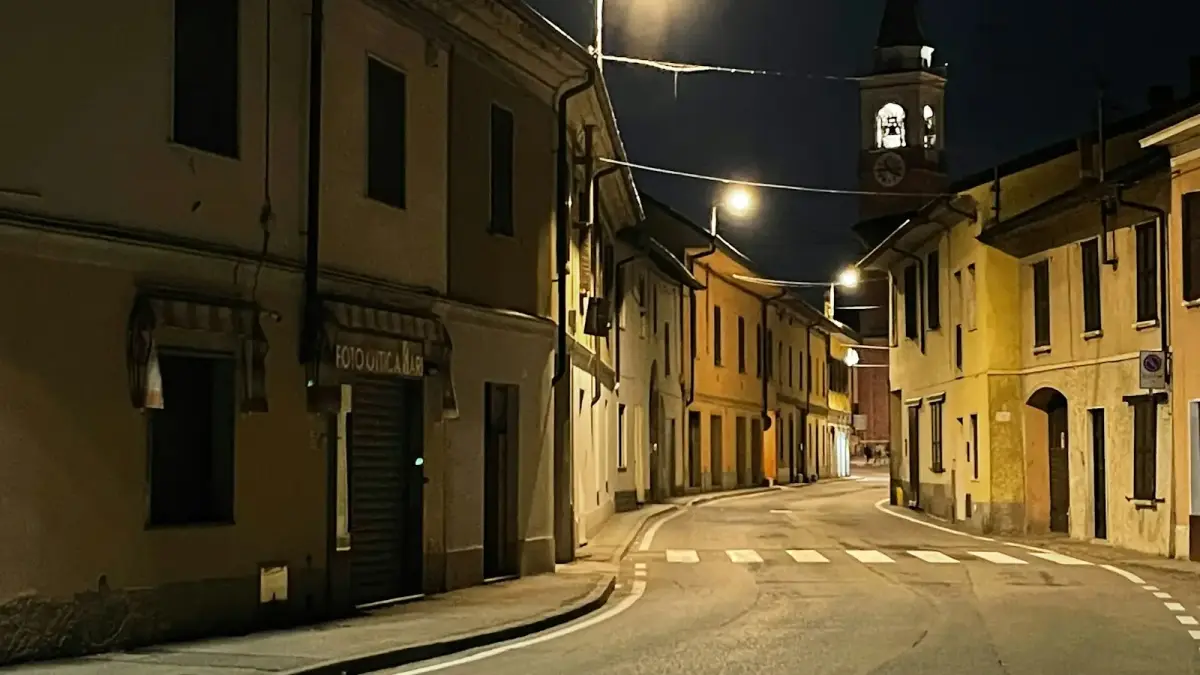
I drove through my hometown last December. I hadn’t planned to. I was on my way back from a work trip, and the GPS offered me two routes, and one of them cut through the town where I grew up. I chose it before I could think about why.
The hardware store was still there. Smaller than I remembered, which is the thing everyone says about everything when they go back, and which is true in a way that has nothing to do with square footage. The parking lot had been repaved. The sign had been updated to something cleaner, more corporate. But the bench outside was the same bench where my father used to sit with a cup of coffee on Saturday mornings while I wandered the aisles touching tools I couldn’t name.
I pulled over and sat in the car for eleven minutes. I know it was eleven because I watched the clock. I wasn’t crying. I wasn’t doing anything, really. I was just sitting in a town that used to be the entire world, realizing that it had gone on perfectly well without the boy who once believed he would never leave it.
Nobody talks about this. The grief that comes not from losing a place, but from outgrowing one.
The streets that don’t know your name
If you grew up in a small town or a mid-sized city and left - for college, for work, for a person, for a version of yourself you could only become somewhere else - then you know this particular ache. It doesn’t arrive when you leave. It arrives years later, when you go back.
You drive down streets you memorized from the back seat of your mother’s car. You pass the school where you first learned what rejection felt like. You see the field where you played until dark, and the church parking lot where you had your first kiss, and the intersection where your best friend totaled his father’s truck the summer before senior year.
Every landmark is exactly where you left it. And none of them know who you are.
The town didn’t change. That’s the part that catches you. You expected it to look different, to match the distance you feel. But the diner still serves the same coffee, and the library still has that odd overhang on the south side, and the houses on Elm Street still have those specific proportions that make them feel like they belong inside a photograph from someone else’s childhood. The town held its shape. You’re the one who became unrecognizable.
A 2019 study published in the Journal of Personality and Social Psychology examined what researchers called “place identity disruption” - the psychological experience of returning to a formative environment after significant personal change. They found that the discomfort people reported wasn’t about the place itself. It was about the gap between who they were when the place last knew them and who they had become since. The grief wasn’t spatial. It was temporal. You weren’t mourning a location. You were mourning a version of yourself that only existed inside those streets.
The people who stayed
There is a conversation that happens at every reunion, every holiday gathering, every funeral of someone’s parent in a small town. It’s the conversation between the people who left and the people who stayed. And both sides are performing a kind of careful diplomacy that neither of them would ever name.
The people who stayed talk about the new restaurant on Main Street, the school board controversy, the neighbor who finally sold the property everyone wanted. They speak in a language of shared weekdays - a language built from showing up to the same places, running into the same people, weathering the same storms. It’s a rich language. It’s full of context and shorthand and the kind of intimacy that only comes from proximity over decades.
And you can’t speak it anymore.
You nod. You ask questions. You try to match their fluency with enthusiasm, and it almost works, except that everyone in the room can feel the difference between someone who lives inside a story and someone who is visiting one. You are a tourist in the narrative of a place that raised you. You carry the accent but not the calendar.
The people who stayed don’t resent you - most of them, anyway. But there’s a distance. Not hostility. Just the quiet fact that your life happened somewhere they’ve never been, and their life happened in the only place you can’t seem to stay.
The guilt you carry quietly
Here is the part that nobody tells you about leaving.
You feel guilty. Not the kind of guilt that comes from doing something wrong, but the ambient, low-grade guilt of having wanted more than the place that made you. Of having looked around at seventeen or twenty-two or thirty and felt a pull toward something you couldn’t name - a pull that required leaving behind people who weren’t pulling at all.
Your parents might understand. They might even have encouraged it. But the understanding doesn’t erase the weight of sitting in your mother’s kitchen at Thanksgiving, watching her age in a house you grew up in but no longer sleep in, knowing that the version of you she loves most is the one who still lived down the hall.
Brene Brown has written about the experience of belonging as fundamentally tied to the willingness to be present - not just physically, but emotionally, in the daily texture of a community. She describes belonging as something that requires showing up consistently, not just at milestones. By that definition, the person who left has traded belonging for becoming. And both are necessary. And both come at a cost.
The guilt doesn’t mean you were wrong to leave. It means the leaving mattered. It means the place mattered. It means you are a person who can hold two truths at the same time - that you needed to go, and that going took something from you that you haven’t found anywhere else.
The private ritual of the drive
Men do this thing - I know because I do it, and because every man I’ve told about it has nodded without needing me to explain.
When you go back, you drive. Not to see anyone. Not to get anywhere. You drive the old routes. The road from the high school to the gas station. The road from your house to the lake. The road your father took to work every morning, the one you sat in the passenger seat of before you were old enough to see over the dashboard.
You drive it slowly, and you don’t turn on the radio, and you don’t call anyone, and if someone in the car asks where you’re going, you say you’re just taking the long way. But what you’re actually doing is something closer to prayer. You are moving through a geography that holds a version of you that nobody in your current life has ever met. The boy who hadn’t failed yet. The boy who hadn’t succeeded yet. The boy who still thought the hardware store was the largest building in the world.
A 2022 study in Frontiers in Psychology explored what researchers termed “nostalgic place return” - the act of revisiting locations tied to formative identity development. They found that participants who engaged in deliberate revisitation of childhood environments reported increased emotional processing and narrative coherence - the ability to tell a more complete story of their own life. The drive isn’t sentimental. It’s integrative. You are stitching together the chapters of a life that happened in different zip codes.
What the grief is actually telling you
The grief of outgrowing your hometown is not homesickness. Homesickness implies that you want to go back, and you don’t. Not really. You know that the version of the town you miss only existed inside the version of you who lived there. The diner isn’t the same diner if you’re not sixteen and splitting fries with someone who understood you in the effortless way that only teenagers who haven’t been betrayed yet can.
What the grief is telling you is that you became someone. That the becoming required distance. And that distance, once created, doesn’t close - it just becomes a thing you carry.
Adam Grant has described the experience of identity evolution as inherently involving a kind of loss - the recognition that every version of yourself you grow into requires releasing a version of yourself you once were. The hometown is just the physical location where the earliest version of you lived. Driving through it is like walking through a museum of someone you used to be. The exhibits are still there. The person who curated them is gone.
This is not a failure of loyalty. It is not a failure of love. It is the natural consequence of becoming a person your hometown didn’t have room for - not because the town was too small, but because the person you were becoming needed a landscape that hadn’t already been mapped by the boy you used to be.
If you know this grief - if you carry it every time you cross the county line, every time you see the water tower from the highway, every time someone asks where you’re from and you say the name of a place that is no longer yours - I want you to know something.
The ache is not a sign that you made the wrong choice. The ache is proof that the place shaped you well enough to survive leaving it. The town did its job. It raised someone who was strong enough to go.
And the boy on the bike, riding past the hardware store in the long light of a summer that will never come again - he is not gone. He is the reason you still take the long way. He is the reason the streets still matter. He is alive in the part of you that slows down at the intersection, that watches the light change, that remembers everything even though the town remembers nothing.
He is the best thing that place ever made. And you are what he became.