There is a kind of guilt that only people who outearned their parents understand, where the kitchen you renovated costs more than the house they raised you in, and every time your mother visits she touches the countertops the way people touch things in a museum - carefully, with the posture of someone who is not sure she is allowed to rest her weight on something this clean
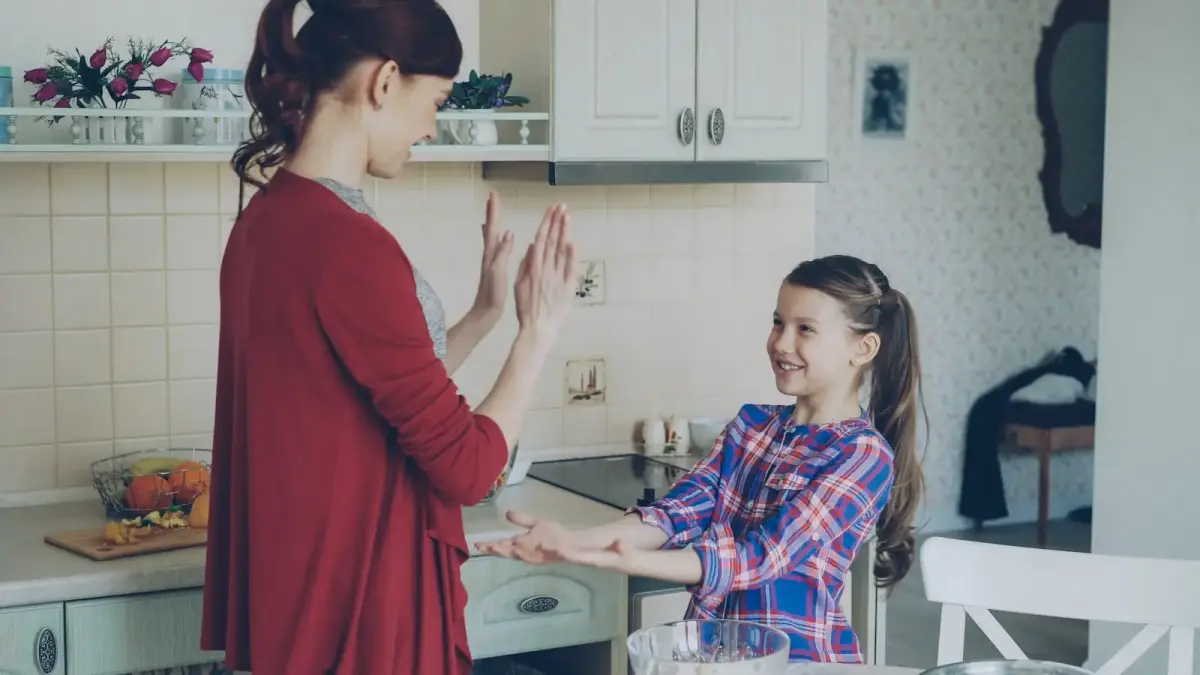
She parked at the end of the driveway
The first time my mother visited the house, she parked at the very end of the driveway. Not in front of the garage. Not next to my car. At the end, where the asphalt meets the street, the way you park when you are visiting someone else’s home and you are not sure how long you are supposed to stay.
I watched from the kitchen window as she walked up the path, and something about the way she held her purse - close, with both hands, the way you hold your things when you are in a place that is not yours - made my chest go tight in a way I could not explain to anyone.
She had raised me. She had fed me from that same body. But she walked up my front steps like a guest.
And I knew, in that terrible, wordless instant, that the distance between us was not the forty miles of highway. It was the granite countertops. It was the recessed lighting. It was the fact that my kitchen renovation cost more than the house she raised me in, and neither of us could say it out loud without one of us feeling like a failure.
The museum posture
There is a specific way people move through spaces they feel they do not belong in. You have seen it in galleries. The slightly pulled-back shoulders. The hands that touch nothing, or touch everything too lightly, as though the objects might report back.
My mother has this posture in my home.
She touches the edge of the quartz island the way you would touch a display in a store you cannot afford. Fingertips only. A brief, appreciative pressure. Then she pulls her hand back and folds her arms, and I want to scream, This is your kitchen too. But it is not. And we both know it.
She will not open the refrigerator without asking. She will not sit on the sofa until I sit first. She places her coffee cup on a coaster even though I have told her a hundred times that the table is sealed, it does not stain, it is fine. She does not believe me. Not because she thinks I am lying, but because she grew up in a house where surfaces were fragile because everything was fragile, because replacing anything was a conversation that took three paychecks.
A 2019 study published in the Journal of Personality and Social Psychology found that people who experience upward class mobility often report persistent feelings of inauthenticity in their new socioeconomic environments - not because they have not earned their place, but because the body remembers what the bank account has forgotten.
My mother’s body remembers everything.
The compliment that ends in silence
My father handles it differently. He compliments. He walks through every room and says, “This is really something.” He runs his hand along the built-in shelving. He opens and closes the soft-close cabinet drawers, impressed by the engineering, the quiet click that his own cabinets never had.
And then he goes quiet.
Not angry quiet. Not resentful quiet. A specific kind of quiet that I have come to recognize as the sound of a man measuring the distance between his life and his daughter’s and deciding, in real time, that it is too wide to comment on.
He worked forty-three years in a warehouse. He never complained. He came home smelling like cardboard and industrial cleaner and he sat in his recliner - the one with the duct tape on the armrest - and he watched the news, and he did not dream of quartz countertops because dreaming of things you will never afford is a luxury in itself.
Now his daughter has them. And he is proud. And he is quiet. And I cannot tell where the pride ends and the grief begins, because I think they live in the same room in him, the way they live in the same room in me.
You cannot enjoy what you built without grieving what it reveals
This is the part no one tells you about class mobility. They talk about the money. They talk about the opportunity. They talk about the first-generation college graduate, the bootstraps, the American story of rising.
They do not talk about the kitchen.
They do not talk about the specific, nauseating moment when you realize that the backsplash you spent three weeks choosing costs more than your mother’s monthly Social Security check. That the wine fridge - the wine fridge you did not even want but the contractor included in the package - holds bottles that cost what your father used to earn in a day.
They do not tell you that success, when it is measured against the people who made it possible, does not feel like success. It feels like evidence. Evidence of a gap that was always there but was invisible when everyone was struggling together.
Researcher Michael Kraus and his colleagues found in a 2012 study published in Psychological Science that social class shapes not just what people have, but how they see, interpret, and move through the world. Class is not a tax bracket. It is a nervous system. It is a way of entering a room. And when your nervous system was calibrated in a house where the heat got turned off in March to save money, no amount of central air conditioning will fully recalibrate it.
You just learn to live in both temperatures at once.
The things you stop mentioning
You learn, slowly and painfully, what you cannot say.
You cannot talk about the trip. Not the real version. You can say you went somewhere nice, but you cannot say you flew business class, because your parents have never flown business class, and the sentence will land in the room like a brick, and your mother will smile and say, “That sounds wonderful,” and her voice will be genuine and also a little bit broken, and you will hate yourself for bringing it up.
You cannot talk about the renovation. You can show the result, but you cannot mention the cost, because the cost is a number that would change the way they look at you, and not in the direction you want.
You cannot talk about the financial advisor, the retirement account, the college fund you started for your children when they were two. Because your parents did not have a financial advisor. They had a coffee can. They had a folded envelope in the kitchen drawer labeled “emergency” that never had more than three hundred dollars in it.
So you edit. You translate your life into a version that will not wound the people who gave you the foundation to build it. And the editing is its own kind of grief, because it means there is a version of your life that your parents will never fully know. Not because you are hiding it. Because showing it would be an act of cruelty dressed as honesty.
The guilt is not about the money
People misunderstand this guilt. They think it is about spending. They think you feel bad for having nice things. They offer advice like, “You earned it,” or “They would want you to enjoy it,” as though the problem is a permission slip you forgot to sign.
But the guilt is not about the money.
The guilt is about the distance. The money just made the distance visible.
It is about watching your mother wash her hands in your bathroom and dry them on her pants instead of the hand towel, because in her house the good towels were not for using. It is about your father asking if he should take his shoes off at the door and you saying, “Dad, of course not,” and him taking them off anyway, because he has decided your floors are nicer than his shoes and he does not want to be the one who ruins something.
It is about the fact that you grew up watching them count coins at the kitchen table - real coins, pulled from pockets and the bottom of purses - and now you have a kitchen that would make those coins feel like an insult. And you cannot say this. You cannot name it. Because naming it would mean admitting that the life you built has, in some quiet and irreversible way, made the people who built you feel like visitors in your world.
A 2021 study published in Frontiers in Psychology found that individuals from working-class backgrounds who achieve professional success frequently experience what researchers call “survivor guilt” - a persistent sense that their advancement has come at an emotional cost to the family system they left behind.
The word “left” is the one that cuts. Because you did not leave. You are right here. You call every Sunday. You drive down for every birthday. But something left. Some invisible thread of sameness that used to hold you all in the same category - the same kind of people, with the same kind of problems, sitting in the same kind of kitchen - that thread is gone, and you cannot restring it, because the instrument has changed shape.
What I want her to know
I want my mother to sit on my sofa without waiting for me to sit first.
I want her to open my refrigerator without asking. I want her to park in the middle of the driveway, right in front of the garage, the way family parks. I want her to use the hand towel. I want her to put her coffee cup directly on the table and let it leave a ring, because that ring would mean she was here, fully here, and not performing the role of careful guest in her own daughter’s home.
But I cannot say this to her. Because saying it would mean acknowledging the gap, and acknowledging the gap would mean making her feel it, and she already feels it. She feels it every time she walks through my front door and adjusts her posture, and I feel it every time I watch her do it.
So we do what families like ours have always done. We love each other across the distance. We compliment the house and do not mention what it costs. We sit at the kitchen island together and drink coffee, and I pretend not to notice when she places her cup on the edge, as far from the center as possible, as though she is trying to take up less space in a room that I built, in part, because she taught me I could.
The guilt is not that you have more than they do.
The guilt is that you cannot give them more without reminding them of what they never had. And so you sit in your beautiful kitchen, in your beautiful house, with your beautiful life, and you love them, and you ache, and you say nothing, because the silence is the only thing that fits in both of your worlds.