He's 58 and still reaches for the cheapest version of everything in the store - not because he can't afford better but because a boy who watched his father work double shifts and still worry about the electric bill learned that choosing the less expensive thing was not frugality, it was the only way he knew how to say that what earning cost his father mattered more than what spending could buy him
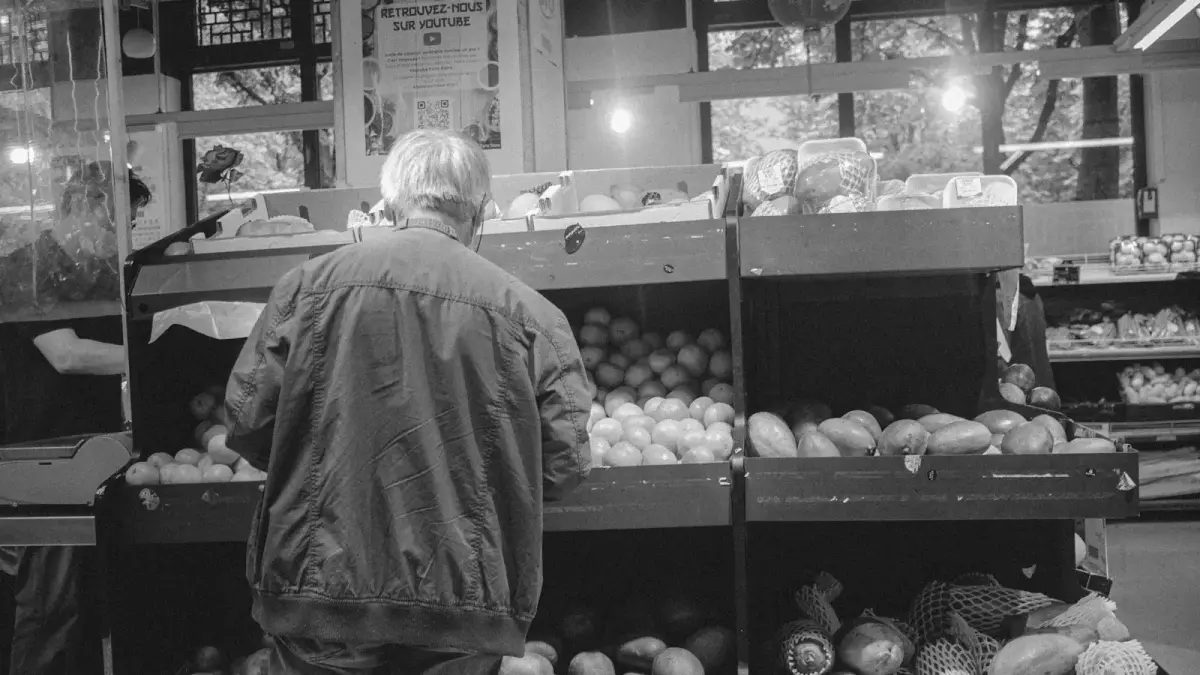
I was standing in the cereal aisle last Tuesday when my wife said something that should have been simple.
“Just get the one you actually like.”
She was pointing at the name brand - the one in the brighter box, the one that costs a dollar seventy more. And I watched my own hand hover there between the two options like it was making a decision my brain had already lost the right to weigh in on.
I picked up the store brand. I always pick up the store brand.
She didn’t say anything. She’s learned not to. But I could feel the question she’s stopped asking after twenty-three years of marriage: Why do you do that?
And the honest answer - the one I’ve only recently been able to name - is that I do it for a man who’s been dead for eleven years. I do it for my father. I do it because somewhere inside me there is still a ten-year-old boy sitting at the kitchen table watching his dad hunch over a calculator and a stack of bills, and that boy made a promise he never said out loud. The promise was: I will never waste what it costs you to keep us alive.
I’m 58. I make a good living. And I still can’t reach for the more expensive thing without feeling like I’m betraying someone.
The hand that reaches past the name brand
Here’s what it looks like from the outside: a man who prefers generic. A man with simple tastes. Maybe even a man who’s smart with money - practical, no-nonsense, the kind of guy who doesn’t need labels or luxury.
That’s the story I told myself for decades.
But preference implies a choice. And what I do in that aisle isn’t a choice. It’s a reflex. It happens before thought. My hand moves toward the cheaper option the way your hand moves toward a light switch in a room you’ve lived in for thirty years - without conscious instruction, without debate.
It’s not just cereal. It’s everything. The budget hotel when we travel. The base model when I buy a car. The shoes I wear until they split at the sole because replacing them feels like a confession that I need something.
My wife once bought me a nice jacket for Christmas - real leather, beautiful stitching. I wore it twice. It’s been in the closet for four years. Not because I don’t like it. Because wearing it makes me feel like I’m pretending to be someone who didn’t grow up counting change for the ice cream truck.
And the thing I couldn’t articulate until recently is that none of this is about money. It never was.
The kitchen table and the calculator
My father was a machinist. He worked at the same plant for twenty-seven years - first shift, then doubles when the overtime was available, which was often because he always said yes.
He’d come home smelling like cutting oil and metal shavings. His hands were rough in a way that I didn’t understand as a kid was permanent - not dry skin, but the kind of texture that comes from decades of handling steel and industrial solvents. Those hands couldn’t fully close by the time he was fifty.
But the thing I remember most isn’t the physical toll. It’s what happened after dinner.
He’d sit at the kitchen table with a yellow legal pad and a calculator that made a grinding sound when you hit the equals button. He’d write numbers. Cross them out. Write new ones. And his jaw would do this thing - this quiet clench - that I now recognize as the face of a man doing math that doesn’t work no matter how many times you run it.
The electric bill. The water bill. The car insurance. The grocery receipt my mother had folded and placed on the counter like evidence.
He never yelled about money. He never said we were poor. He just sat there, adding and subtracting, and the silence in that kitchen was louder than any argument could have been.
I’d watch him from the hallway. I don’t think he knew. And something in me - something preverbal, something that lived in the body before it ever became a thought - decided that if this is what earning costs, then spending should never be careless. Not ever. Not even a little.
The discomfort of being told you deserve more
A 2021 study published in the Journal of Personality and Social Psychology found that adults who grew up in lower socioeconomic conditions often maintain the spending behaviors of their childhood economic class regardless of their current income. The researchers called it “economic identity persistence” - the idea that your financial self-concept gets formed early and stays remarkably stable even when your circumstances change dramatically.
This tracks with something I’ve noticed in myself and in other men I grew up with. We earn differently than our fathers. But we spend like them. Or rather, we spend like we’re still watching them.
My friend Danny runs a contracting company now. Does well. Still drives a truck with 180,000 miles on it because buying a new one feels “wasteful.” His dad drove a cab six days a week. Danny can’t buy the new truck because the new truck means forgetting the cab.
There’s another layer here that nobody talks about, and it’s the discomfort that comes when someone who loves you tells you that you deserve more.
My wife says it gently. “We can afford the good one.” And every time she does, something in my chest tightens - not in anger, not in sadness exactly, but in a kind of loyalty that has no words. Because “the good one” means stepping across a line that separates me from the boy I was. And that boy is the one who loved his father most clearly. That boy is the one who understood what work really cost.
To choose the more expensive thing feels, in some irrational but bone-deep way, like saying my father’s exhaustion wasn’t worth honoring.
What the research says about inherited economic identity
Psychologist Sendhil Mullainathan, whose research on scarcity has reshaped how we understand economic behavior, describes how financial stress creates a kind of cognitive tunnel - a narrowing of attention that prioritizes immediate survival over long-term planning. But what’s less discussed is how children who witness that tunnel in their parents absorb it as a worldview.
It’s not that we learn to be frugal. It’s that we learn to read the cost of things not in dollars but in labor. In shifts. In what a body gives up to convert time into money.
When I look at a price tag, I don’t see a number. I see hours. I see my father’s hands. I see him saying yes to overtime on a Saturday when I know he wanted to watch the game. A forty-dollar shirt isn’t forty dollars - it’s half a shift of work that breaks your back and sends you home too tired to talk.
A 2019 study from researchers at the University of Virginia, published in Psychological Science, found that people who grew up in working-class households were significantly more likely to define their identity through relational and communal values - loyalty, sacrifice, interdependence - rather than individual achievement. The study suggested that economic class shapes not just what you can afford but who you understand yourself to be.
And who I understand myself to be is my father’s son. The one who noticed. The one who decided, without language, that the cheapest option was the kindest option. Not kind to myself. Kind to him.
It’s not damage - it’s devotion in the only dialect I learned
I spent a few years thinking something was wrong with me. That my inability to enjoy spending money was some kind of psychological wound I needed to heal. That I was “stuck” in a scarcity mindset and needed to “reprogram” myself to believe in abundance.
But the more I sat with it, the less that framework fit.
Because this isn’t scarcity thinking. Scarcity thinking is fear-based. It says: There won’t be enough. What I carry isn’t fear. It’s reverence. It says: Someone paid for this life with his body, and I will not be careless with what that cost.
There’s a difference between a man who’s afraid to spend and a man who can’t spend freely because every purchase is a conversation with his father’s ghost.
Brene Brown has written about how shame often hides inside the things we can’t explain about ourselves - the behaviors that feel irrational but immovable. And I think for a lot of men who grew up watching their fathers work themselves hollow, the refusal to spend on themselves looks like a quirk but functions like a sacrament. It’s the ritual we perform to stay connected to the people who sacrificed everything and named it “just providing.”
My father never called what he did sacrifice. He called it Tuesday. He called it “heading in early.” He called it “picking up a shift.” He made the extraordinary ordinary because that’s what working-class fathers do - they hide the cost so their children don’t carry the weight.
But we carried it anyway. We just carried it differently. We carried it into grocery stores and car dealerships and clothing racks, and we set it down every time we chose the cheaper thing.
The prayer in the cereal aisle
I’m not going to tell you I’ve fixed this. I haven’t. I’m not sure I want to.
Last week I stood in that same aisle and I reached for the store brand again. But this time I let myself feel the full weight of why. I let myself see the kitchen table. The calculator. The hands that couldn’t close all the way. The jaw that clenched when the numbers didn’t work.
And I let myself understand that what I’ve been doing all these years isn’t a flaw. It’s not unresolved trauma manifesting as a spending pattern. It’s not something a therapist needs to untangle.
It’s a love letter. Written in the only language a ten-year-old boy had access to.
Every time I choose the cheaper option, I am saying: Dad, I saw you. I saw what it cost. And I will never, not once, treat that lightly.
If you’re someone who does this - who reaches past the name brand without thinking, who wears the old shoes, who can’t bring yourself to upgrade even though you’ve earned the right - I want you to know something.
You’re not broken. You’re not stuck. You’re not failing to enjoy your success.
You’re being faithful to someone who worked so hard that the only way you could match their effort was by promising never to waste it.
That’s not a problem to solve. That’s a kind of love most people never learn to give.
And if your hand still reaches for the cheaper one - let it. It knows exactly what it’s doing. It’s reaching back through thirty, forty, fifty years to hold the hand of a man who came home tired every single night and never once said it was too much.
It was always too much. He just never told you.
You already knew.