He is 61 and has just realized that the reason he still rises from his chair - not all the way, not with any ceremony, just a reflexive lift from the cushion that settles back before anyone notices - every time a woman walks into the room is not manners he was taught but a reflex his body learned from watching his father push back from the kitchen table every time his mother came through the door, and the man at sixty-one whose knees protest the gesture his spine still insists on is not performing an outdated courtesy but running the only protocol for respect his body was ever given, at an age when the body remembers what the culture has already decided to forget
The Half-Inch That Contains Everything
I caught myself doing it again last Tuesday.
My wife’s friend Karen walked into the living room and my body did the thing it always does - this small, involuntary press upward from the armchair, maybe two inches of lift, maybe three, barely enough to register as movement before gravity and sixty-one-year-old knees pulled me back down. The whole event lasted less than a second. Karen didn’t notice. My wife didn’t notice. Nobody noticed.
But I noticed.
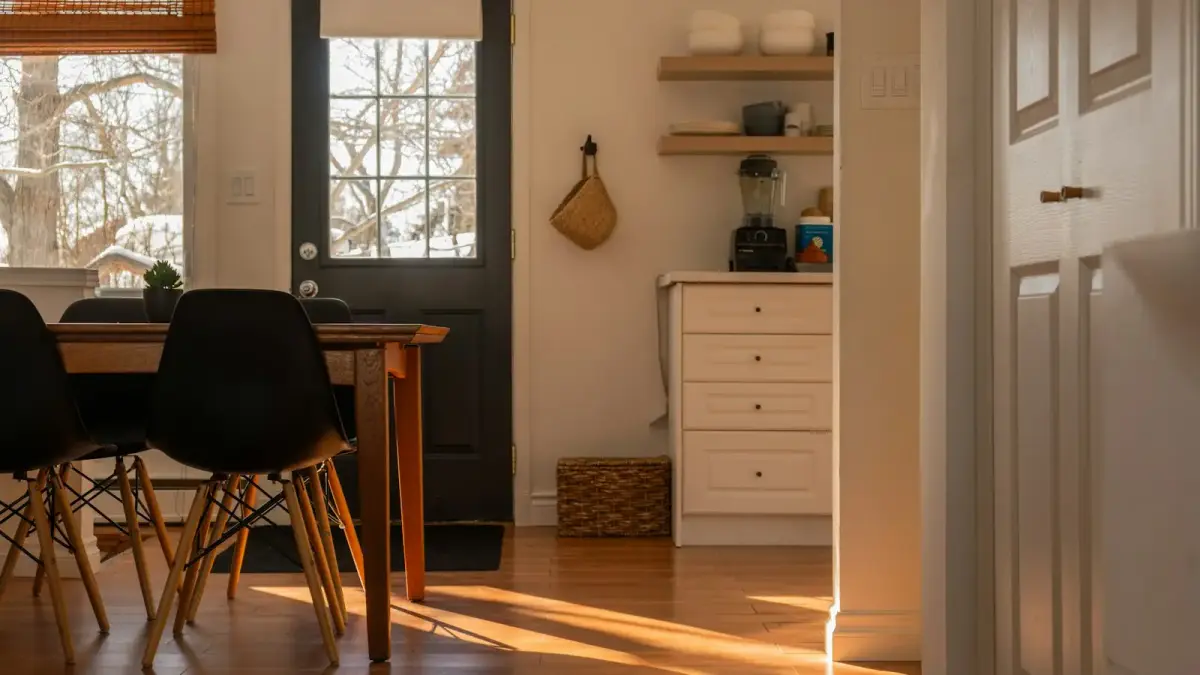
And for the first time, I didn’t just feel the movement. I saw where it came from. Not from some etiquette class I never took. Not from a conversation my father ever had with me about how men should behave. From a kitchen in 1972, where a man in a white undershirt pushed back from a formica table every single time my mother walked through the doorway carrying groceries, or laundry, or nothing at all.
He never said a word about it. He never told me to watch. But my body was taking notes the entire time.
The Lesson Nobody Delivered
Here is what I remember about my father’s relationship to chairs: he never stayed fully in one when my mother was standing.
That’s it. That’s the whole curriculum.
There was no lecture. No “son, a gentleman stands when a lady enters the room.” My father was not the kind of man who used words like gentleman or lady. He was a pipe fitter from Akron who read the paper at the kitchen table and fell asleep in his recliner by nine o’clock most nights.
But something happened in his body when my mother appeared. A straightening. A lift. Not performative, not grand - he wasn’t pulling out chairs or opening car doors with a flourish. It was smaller than that and, I think now, much larger.
His spine would lengthen. His hands would leave whatever they were holding. And there would be this momentary shift of weight, this subtle announcement that said: I register you. I acknowledge that you have entered this space. You matter enough to interrupt what my body was doing.
He did this thousands of times. Tens of thousands, probably. And I absorbed every single one without knowing I was learning anything at all.
What the Body Keeps
A 2011 study from the University of Cambridge found that children acquire social behaviors through observational learning far more efficiently than through direct instruction. The researchers called it “over-imitation” - the tendency to copy not just the functional parts of an observed behavior, but the seemingly unnecessary elements too. The ritual. The flourish. The parts that carry meaning rather than utility.
I think about this when I feel my thighs begin to press against the seat cushion in a restaurant and some woman I barely know is being led to the next table. My body doesn’t ask my permission. It doesn’t consult my politics or my understanding of modern gender dynamics. It just runs the program.
And the program is very simple: woman enters, body rises.
Not all the way. That’s the part I find most telling. I don’t stand. I haven’t fully stood for a woman entering a room since maybe my thirties, when the gesture started to feel conspicuous in ways it hadn’t before. What I do is this truncated version - this ghost of the full motion, this half-rise that contains all the intention of standing without any of the visibility.
It’s like my body is whispering something my mouth learned to stop saying out loud.
The Space Between Reflex and Performance
There is a conversation happening in the culture right now about gestures like this one, and I understand it. I do. The argument goes that standing when a woman enters a room is a relic of a time when women were treated as fragile, as requiring male acknowledgment to be fully present in a space. That the courtesy is actually a kind of condescension dressed in nice clothes.
I understand this argument because I have a daughter who has made it to me, gently, over Thanksgiving wine. And she’s not wrong. Not entirely.
But she’s also never seen what I saw in that kitchen.
She never watched a man who could not say “I love you” find another way to say it with his quadriceps. She never saw the way my father’s eyes would track my mother across a room - not with suspicion or possessiveness, but with this quiet animal alertness that said: you are the most important thing happening right now, and my body knows it even when my mouth doesn’t.
The gesture was never about fragility. It was about presence. It was the only vocabulary of tenderness my father’s generation of men were allowed to speak, and they spoke it with their bodies because nobody had given them permission to speak it with their words.
The Knees and the Spine
I have arthritis in both knees now. The left one is worse - it grinds when I take stairs, and my doctor has started using the word “replacement” in that casual way doctors have of introducing catastrophic ideas.
So the half-rise has started to cost something.
There’s a negotiation happening now between my spine and my knees that didn’t exist ten years ago. The spine says rise. The knees say you’re sixty-one, sit down. And what emerges is this even smaller gesture - less a rise than a tensing, a readiness, a muscular intention that doesn’t quite become movement anymore.
A 2019 study published in Psychological Science found that embodied cognition - the way physical postures and movements shape emotional experience - operates below conscious awareness. The researchers demonstrated that people who adopted open, upward-oriented postures experienced measurable increases in feelings of respect and social connection, even when they didn’t realize they were changing position.
I read that study and thought: my father’s body was teaching mine something about respect that his words never could have.
Because that’s the thing about watching a man stand for a woman ten thousand times during your childhood. The lesson doesn’t land in your prefrontal cortex, where it can be examined and debated and deconstructed. It lands in your hip flexors. In your lumbar spine. In the tiny stabilizing muscles that fire before conscious thought has time to arrive.
The body doesn’t forget. The body doesn’t care what the culture has decided is outdated. The body just keeps running the protocol it was given.
What My Wife Stopped Seeing
Carol and I have been married for thirty-four years. She stopped noticing the half-rise sometime around year eight, I think. Maybe year five. It became part of the background noise of our marriage - like the way I always sleep on the left side of the bed, or the way I put my hand on the small of her back when we walk through a parking lot.
These gestures become invisible to the people who receive them daily. That’s not a complaint. That’s just what happens when love becomes infrastructure instead of event.
But here’s what I wonder about sometimes: does Carol’s body notice even when Carol doesn’t? Is there some part of her nervous system that registers the micro-movement, the slight shift in the air pressure of a room when a man’s torso lifts two inches and settles back down? Is her body receiving a message that her conscious mind stopped reading years ago?
I think it might be. I think there’s a whole conversation happening between our bodies that neither of us is aware of anymore - a call and response that started with his parents and her parents and their parents before them, bodies speaking to bodies in a language that predates words.
The Translation Problem
My son is thirty-three. He does not rise when a woman enters a room. He doesn’t do the half-rise. He doesn’t do the tensing. He shows respect in other ways - ways that are probably better, more equitable, more conscious. He listens. He asks questions. He remembers details about people’s lives and brings them up months later.
I’m proud of him for this. Genuinely.
But something was lost in the translation, and I’m not sure anyone noticed it leaving.
Research on intergenerational behavioral transmission published in Frontiers in Psychology in 2022 found that physical rituals of respect and acknowledgment between family members serve a bonding function that verbal communication alone cannot replicate. The researchers described these micro-rituals as “embodied bids for connection” - small physical gestures that signal attentiveness and create what they called a “somatic sense of belonging.”
My father’s rise from the kitchen table was an embodied bid for connection. It said: I see you. I am not too comfortable or too important or too tired to let your presence change my body.
My son says the same thing differently. Maybe better. But my body doesn’t know his language, and his body doesn’t know mine, and somewhere in that gap is a kind of grief that doesn’t have a name.
Running the Old Program
Last week I was at a diner with two friends, both around my age. A waitress came to refill our coffees and all three of us did it. The same micro-rise. The same ghost of standing. Three men in their sixties, knees aching, bodies running code that was written in kitchens and living rooms fifty years ago by fathers who never said a word about what they were teaching.
We looked at each other afterward and one of them - Dave, who is sixty-three and grew up in a house very much like mine - just shook his head and laughed.
“My old man,” he said. That was the whole sentence.
And we all understood.
Because that’s what this gesture is, finally. It’s not manners. It’s not chivalry. It’s not a political statement or a relic or an anachronism. It’s a man’s body remembering his father’s body, performing the only act of reverence it was ever shown, in a language that is slowly going extinct.
The knees protest. The spine insists. And somewhere between the protest and the insistence, a sixty-one-year-old man communicates something he was never given the words for.
My father has been dead for eleven years. But every time a woman walks into a room and my body begins its small, useless, beautiful lift from the chair - he’s still teaching me something.
He’s still pushing back from the kitchen table.
And my body, which remembers everything my mouth forgot, is still taking notes.