He is 65 and has never once called in sick when he was actually sick - not through the flu that kept him awake all night, not through the migraine that turned the fluorescent lights into punishment, not through the back injury that made every step from the parking lot to the time clock feel like something inside him was tearing - because a boy who watched his father leave for the factory before dawn in a blizzard learned that a working man's body was not his own to rest, it belonged to whoever was counting on him to show up
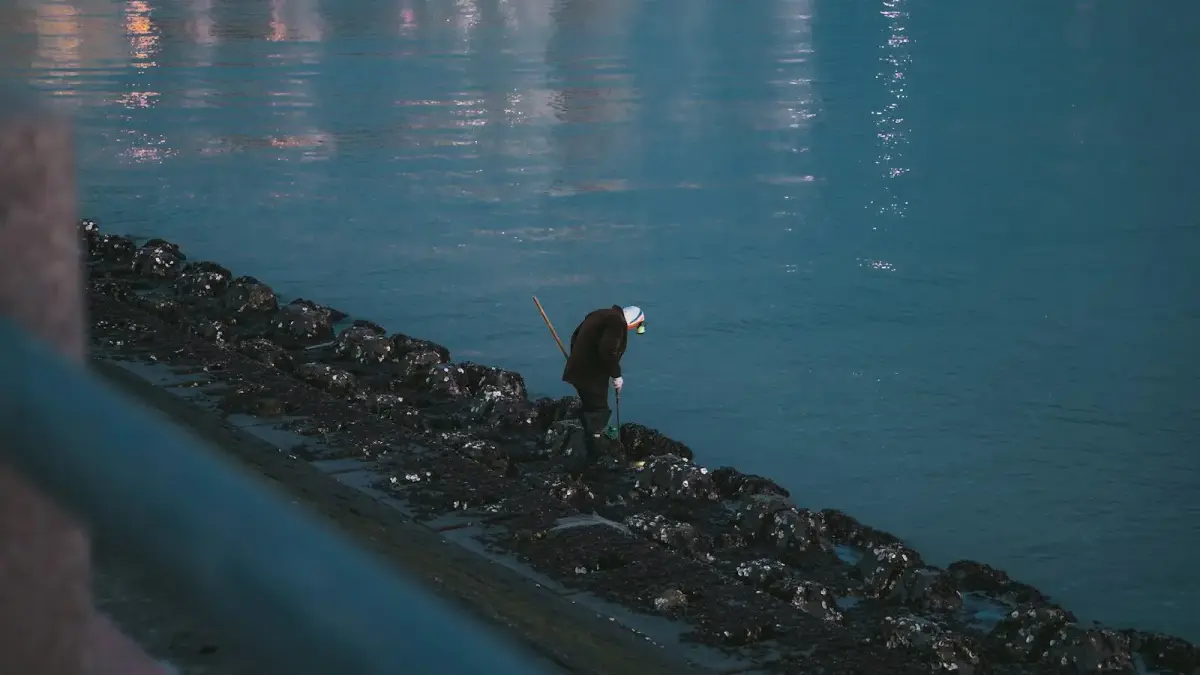
The Alarm Goes Off and His Body Says No
I know a man who set his alarm for 4:45 every morning for forty-one years. Not because he loved mornings. Not because he was ambitious. Because the shift started at six and the drive was fifty minutes and he needed time to move slowly on the days his body wouldn’t cooperate.
There were mornings his knees locked on the way to the bathroom. Mornings his head pounded so hard he had to sit on the edge of the tub and wait for the room to stop tilting. Mornings the flu had him sweating through his undershirt before he even got his work pants on.
He went anyway. Every single time.
He tells this story like it’s a badge. “Forty-one years,” he says. “Never missed a day.” And the people around him nod and smile because what else do you do when someone hands you their suffering and calls it strength.
But I’ve started hearing something else underneath that pride. Something that sounds less like discipline and more like a boy who was taught, before he had the words for it, that his body did not belong to him.
The Lesson That Didn’t Need Words
His father worked at a paper mill outside of town. The kind of place that smelled like sulfur and steam and left a yellow film on everything within a mile. His father left for that mill in the dark and came home in the dark and the only time the boy saw him in daylight was Sunday.
There was one morning he remembers more than any other. He was maybe eight or nine. A snowstorm had buried the driveway overnight and the wind was still howling and the kitchen radio was listing school closures. Everything was closed. The whole county had stopped.
But his father was already dressed. Steel-toed boots. Canvas jacket with the collar turned up. He didn’t say anything about the storm. Didn’t complain. Didn’t even seem to notice it. He just poured his coffee into the thermos, kissed the top of the boy’s head, and walked out the door into a wall of white.
The boy watched from the window as his father scraped ice off the windshield with his bare hands.
No one sat him down and said, “This is what men do.” No one had to. The lesson was the scraping. The lesson was the door closing. The lesson was the engine turning over in the cold while the rest of the world stayed in bed.
When Pride Becomes a Cage
He carried that lesson into his own working life like a stone in his pocket - always there, always heavy, always reminding him what kind of man he was supposed to be.
The flu of 1997 that left him shivering at his workstation. The migraine in 2004 that turned every overhead light into a white spike behind his eyes. The herniated disc in 2011 that made him grip the steering wheel so tight his fingers went numb because every bump in the road sent lightning up his spine.
He went to work through all of it. And every time, he added another day to his count. Another brick in the wall of his identity.
A 2016 study published in the Journal of Occupational Health Psychology found that presenteeism - going to work while sick - costs employers more in lost productivity than absenteeism does. But the study missed something important. It measured the economic cost but not the human one. It didn’t measure what happens inside a man who has made “I’ve never missed a day” the central fact of who he is.
Because here’s what nobody talks about: the pride isn’t the reward. The pride is the cage. Once you’ve gone thirty years without calling in sick, you can’t call in sick on year thirty-one. The streak becomes the identity. And the identity becomes a trap.
He didn’t go to work sick because he wanted to. He went because he no longer knew who he’d be if he didn’t.
The Body as Someone Else’s Property
There’s a class dimension to this that we don’t discuss enough.
Men in corner offices take mental health days. They work from home when they feel a cold coming on. They have the kind of jobs where absence is an inconvenience, not a crisis. Their bodies belong to them.
But for men who work with their hands - on factory floors, construction sites, loading docks, repair shops - the body is the job. You don’t bring your mind to work. You bring your back, your knees, your shoulders, your grip. And if your body doesn’t show up, you don’t get paid.
A 2019 study in the American Journal of Industrial Medicine found that blue-collar workers are significantly more likely to engage in presenteeism than white-collar workers, and that economic insecurity is the strongest predictor. Not toughness. Not grit. Fear. The fear that one missed shift becomes a missed payment becomes a missed month becomes everything falling apart.
His father didn’t go to the mill in that blizzard because he was brave. He went because the family couldn’t afford for him not to. And the boy absorbed that arithmetic before he could do long division. A working man’s body is collateral. It secures the mortgage, the groceries, the heating bill. You don’t get to rest it any more than you’d let a tool rust.
What looks like discipline from the outside is often desperation dressed in work boots.
The Woman Who Watches Him Leave
His wife knows. She’s always known.
She watched him limp to the truck on the morning his back was at its worst. She saw him grip the doorframe and close his eyes and breathe through something she couldn’t name. She said nothing.
Not because she didn’t care. Because she learned her own version of the same lesson. Her mother went to work sick too - waitressing double shifts with a fever, cashiering on a sprained ankle, because the bills didn’t care how she felt. The women in her family didn’t call it toughness. They called it “what you do.”
So she made his lunch and handed him the thermos and watched the truck pull out of the driveway and stood at the window with a feeling she could never quite name. Not anger. Not admiration. Something closer to grief for two people who never learned that their bodies were worth protecting.
They loved each other. They still do. But their love existed inside a framework where suffering was just the price of being reliable, and reliability was the highest virtue either of them knew.
The Retirement He Didn’t Know How to Want
He retired at sixty-three. His wife threw a party. His coworkers gave him a plaque. Everyone said he’d earned it.
But something happened that nobody expected, least of all him.
He didn’t know what to do with a body that suddenly had nowhere to go.
For forty-one years, his alarm had been his purpose. The drive to work, the clocking in, the physical labor, the drive home - that was the structure that told him he mattered. Not because the work was meaningful. Most days it wasn’t. But because showing up was meaningful. Because enduring was the only language of worth he’d ever been taught.
Research by psychologist Kenneth Pargament and others has explored how men whose identities are tightly bound to their occupational roles experience retirement not as freedom but as a kind of existential crisis. A 2020 study in the Journal of Men’s Studies found that men who derived their primary sense of self-worth from work performance were significantly more likely to experience depression and purposelessness after retirement.
He started waking up at 4:45 out of habit. Then lying there in the dark, staring at the ceiling, wondering what he was for.
His wife found him in the garage one Tuesday morning, reorganizing tools that were already organized. He wasn’t fixing anything. He was performing the motions of usefulness because stillness felt like dying.
What We Inherit Without Knowing It
The thing about generational lessons is that they don’t arrive as instructions. They arrive as weather. You grow up inside them and you don’t realize they’re shaping you because you’ve never known anything else.
His father didn’t teach him to ignore his body. His father taught him, by example, that a man is what a man does, and what a man does is show up. The showing up was the love. The endurance was the care. The inability to rest was the proof that you mattered to someone.
A 2017 study published in Psychology of Men and Masculinities found that working-class men are more likely to endorse what researchers call “masculine role strain” - the gap between what they believe a man should be and what their circumstances allow them to be. The strain isn’t about wanting to be tough. It’s about feeling that toughness is the only currency they have.
His father didn’t have a degree. Didn’t have connections. Didn’t have a safety net. All he had was his body and his willingness to use it, and so that’s what he gave. Every morning. In every weather. Through every sickness. Until the body itself gave out.
And the boy who watched from the kitchen window learned that this was love. This was loyalty. This was what it meant to be a man worth respecting.
He was right about the love. He was right about the loyalty. But he was wrong about the body. He was wrong that it didn’t deserve rest.
The Permission Nobody Gave Him
I think about all the men like him. The men who say “I’ve never missed a day” with a kind of quiet fire in their eyes, daring you to match it. The men who take Tylenol in the parking lot and DayQuil in the break room and push through the shift with their teeth clenched because that is what their fathers did and their fathers before them.
I think about what it would mean to tell a man like that: you were always allowed to stay home. Your worth was never contingent on your attendance record. The people who loved you would have loved you from the couch with a blanket and a bowl of soup. You didn’t have to earn their love with your pain.
But I also know that telling him that now, at sixty-five, would feel like an insult. Because you’d be asking him to unmake the thing he built his life on. You’d be asking him to look at forty-one years of showing up sick and see something other than strength.
So I won’t tell him he was wrong. I’ll tell him something his father never got to hear, and he never got to say to himself.
You did enough. You showed up enough. You earned enough.
Your body was always yours. Even when it didn’t feel that way. Even when the mortgage said otherwise. Even when the alarm went off and your knees said no and you went anyway because that was the only kind of brave you knew how to be.
You were brave. You were also hurt. Both things were true every single morning.
And if you want to sleep in tomorrow - if you want to lie there and listen to the snow fall and let someone else scrape the windshield - you are allowed. You were always allowed.
Nobody told you. But I’m telling you now.