Men over 55 who stand slightly behind their wives in every grocery store checkout line - not beside them, not ahead, but one half-step back with their hands on the cart handle or buried in their pockets - are not being polite or deferential but replaying a childhood choreography where the mother handled the counter and the boy's only job was to carry the bags to the car, because a child who learned that the transaction belonged to someone else never received the instruction that the counter was a place he could stand
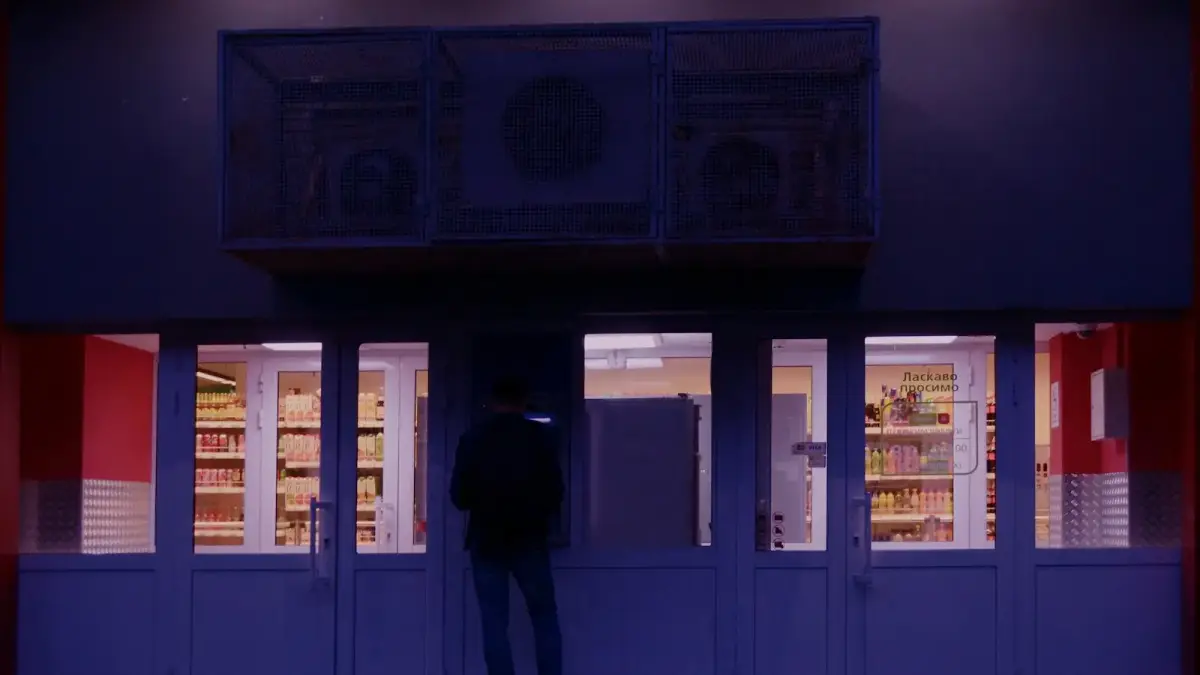
I watched my father do it for thirty years before I caught myself doing the same thing.
We were at the hardware store - not even a grocery run, just picking up a new hose nozzle - and my wife stepped up to the register. I didn’t decide to move backward. My body just reorganized itself around her, the way water moves around a rock. One half-step back. Hands finding the cart handle like it had always been waiting for them. Eyes drifting somewhere above the transaction, not watching, not participating, just present in the way a coat rack is present near the door.
I was fifty-three years old and I had never once noticed it. Not until I caught my reflection in the plexiglass divider and saw my father standing there - same posture, same slight withdrawal, same quiet hands.
That reflection has stayed with me. Not because I was ashamed of what I saw, but because I suddenly understood that my body had been carrying instructions I never consciously received. Instructions about where a man stands when money changes hands. About who owns the counter and who owns the car.
The half-step that isn’t a decision
You know the position I’m talking about if you’ve ever stood in a checkout line behind a couple where the man is over fifty-five. He is not beside his wife. He is not ahead of her. He is one half-step back, and his hands are either on the cart handle, in his jacket pockets, or clasped loosely behind his back.
He is not looking at the cashier. He might be looking at the candy rack or the magazine covers or the ceiling tiles above the conveyor belt. He is there, physically, but he has subtly removed himself from the exchange.
If you asked him why, he would not have an answer. He might say something about letting her handle it or not being in the way. But the truth is simpler and older than any reason he could articulate. He is standing where a boy stands when his mother is at the counter.
The original choreography
Think about what a grocery store looked like to you when you were seven or eight years old. The counter was a high wall. The cashier was an authority. The money was a mystery that lived in your mother’s purse and emerged according to rules you didn’t understand.
Your job was not at the counter. Your job was behind it. You held the cart handle or you stood near the bags or you pressed yourself against her hip if you were small enough. You watched the transaction happen above you and around you, but you were not a participant.
For boys especially, this positioning carried a specific weight. Your mother handled the social performance of purchasing - the greeting, the small talk, the payment, the thank you. You carried the bags to the car. These were not instructions anyone spoke out loud. They were absorbed through repetition, through thousands of checkout lines before you turned twelve.
A 2011 study published in Psychological Science by researchers Beilock and Goldin-Meadow found that our bodies store social knowledge that our conscious minds never articulate - what they called “embodied cognition.” The gestures we make, the positions we take, the spaces we occupy are not just physical habits. They are archives of learning. Your body remembers lessons your mind forgot it was taught.
The boy at the grocery store learned a spatial vocabulary. Counter means someone else. Behind means me. Transaction means watch, don’t participate. And the man at fifty-seven still speaks that vocabulary with his body every Tuesday evening at the Safeway on Route 9.
It shows up everywhere, not just the grocery store
Once you notice the half-step, you start seeing it in every setting where a transaction or a social exchange happens at a counter.
Watch a man over fifty-five at a restaurant when the check arrives. His wife picks it up, reviews it, places the card in the folder. He is looking at the far wall or finishing his water. He might have earned every dollar that’s about to be charged, but the ritual of handing money to a stranger across a surface belongs to someone else in his body’s understanding.
Watch him at the bank. At the contractor’s office when someone needs to sign paperwork. At the hotel check-in desk. There is always a slight withdrawal, a ceding of the counter space, a drift toward the periphery that looks like patience but is actually positional memory.
I do it at coffee shops. My wife orders for both of us and I stand slightly behind her left shoulder, looking at the pastry case like I’m studying it, when really I am just occupying the only position my body knows how to find in that moment. I am the boy behind the counter, carrying the bags.
The fathers who stood in the same spot
Here is what makes this pattern even deeper. The men who stand behind their wives at checkout lines had fathers who did the same thing.
My father grew up in the 1950s. His mother ran the household economy. She handled every clerk, every cashier, every transaction that involved speaking to someone across a counter and handing over money. His father stood behind her. Not because he was uninvolved or passive, but because that was the choreography of their generation - the woman managed the daily commerce of the home.
So my father learned to stand behind. And I learned to stand behind by watching him stand behind. Not through instruction. Through the silent curriculum of positioning.
Pierre Bourdieu, the French sociologist, called this “habitus” - the way social conditioning gets written into the body itself. Your posture, your gestures, your spatial preferences are not personal quirks. They are inherited social positions that feel like instinct because they were learned before language could name them. The body becomes an archive of class, gender, and generation, carrying forward behaviors that the conscious mind never chose.
The man at fifty-seven who steps back at the checkout counter is not making a choice. He is being faithful to a role that was choreographed across at least two generations of men who understood, without ever being told, that the counter was not their territory.
The moment of recognition
There comes a day, for some men, when they see it. Maybe a wife mentions it gently - “You always stand back there.” Maybe a son or daughter notices the pattern and says something. Maybe, like me, you catch your own reflection in a store divider and see your father’s posture staring back at you.
That moment is strange. It is not painful exactly, but it is disorienting. You realize that your body has been making a decision you never made. That you have been performing a role nobody assigned you - at least not with words.
A 2019 study in the journal Frontiers in Psychology found that spatial behaviors learned in childhood become automated motor programs in adulthood - running below conscious awareness and activating automatically in environments that resemble the original learning context. The grocery store checkout line is one of the most consistent environmental triggers for these stored behaviors, because its structure has barely changed in sixty years. Same counter. Same conveyor belt. Same cashier. Same position for the boy.
You have been standing in the same spot since 1974. You just never noticed until now.
Why it extends beyond the counter
The half-step backward at checkout is the most visible version of something larger. It is a spatial expression of a belief that was never spoken but was thoroughly taught: that certain kinds of social performance - the exchange of money, the navigation of service encounters, the management of domestic logistics - belong to someone other than you.
This is not about competence. Many of these men run businesses, manage teams, negotiate contracts. They are not shy or socially anxious. But there is a difference between professional transactions, where they learned their own choreography, and domestic ones, where the choreography was written before they could read.
It is the difference between a space you were trained to occupy and a space you inherited as off-limits. The office desk is yours. The checkout counter never was.
What a boy carries forward
I want to be careful here, because this is not a story about damage. The boy who learned to stand behind his mother at the grocery store was not harmed by that positioning. He was simply shaped by it.
He learned that someone else handles the front-facing work of daily exchange. He learned that his contribution comes after - carrying, loading, driving. He learned that the counter is a threshold he approaches but does not cross.
And the man he becomes carries that learning in his shoulders, in his hands, in the half-step that happens before conscious thought can intervene. This is not weakness. It is not passivity. It is fidelity to a childhood understanding that was never consciously examined and never needed to be - until the day you see yourself in the plexiglass and wonder who taught you to stand there.
It was never about the marriage
People who notice this pattern in older couples sometimes read it as a relationship dynamic. He is deferring to her. She is dominant. He is checked out. She is in control.
None of that is accurate. What you are actually watching is two people replaying complementary roles that were assigned before they ever met each other. She steps forward because she was taught that the counter is where women stand. He steps back because he was taught that the counter is where boys wait.
They found each other, in part, because their choreographies matched. And now they move through every checkout line like partners in a dance that began in their separate childhoods, in separate grocery stores, with separate mothers who handled the counter and separate boys who carried the bags.
It is not about her. It is not about him. It is about the invisible stage directions that were written into their bodies before they could understand what a transaction even was.
Standing in a spot that was chosen for you
If you are a man over fifty-five and you have just realized that you do this - that you always stand one half-step behind, that your hands always find the cart or your pockets the moment the cashier starts scanning - I want you to know something.
There is nothing wrong with the position you take. You are not broken or outdated or passive. You are standing in a spot that was chosen for you by a boy who loved his mother and learned, through years of quiet observation, exactly where he belonged in the small theater of the checkout line.
That boy did his job perfectly. He stayed out of the way. He carried the bags. He waited in exactly the right spot.
The fact that you are still standing there at fifty-seven or sixty-three or seventy-one is not a flaw. It is a kind of loyalty to a version of yourself who figured out the world the only way he could - by watching where everyone else stood and finding the space that was left.
You can step forward if you want to. But you don’t have to. The spot behind the cart was never a lesser place to stand. It was simply yours.