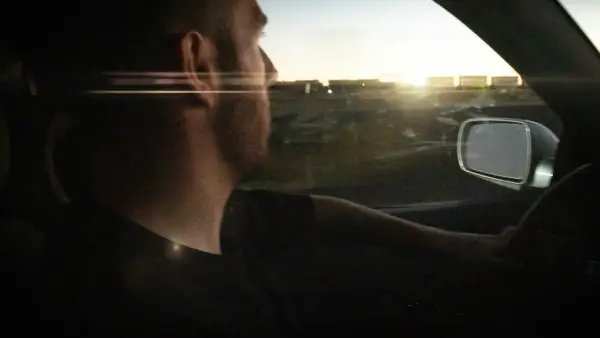
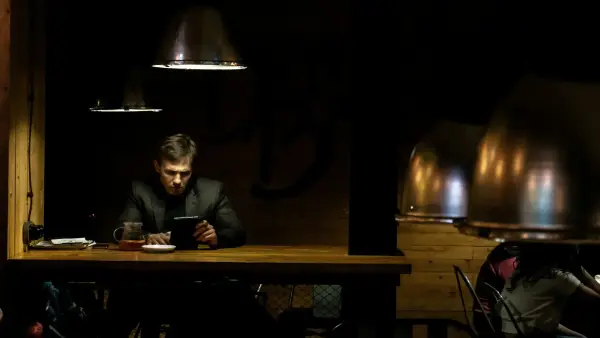
There is a particular kind of man who measures twice, holds the board against his body with his hip, and never asks another person to hold the other end - not because he is stubborn but because a boy who watched his father build alone on a Saturday learned that competence was something you performed silently, never something you asked for
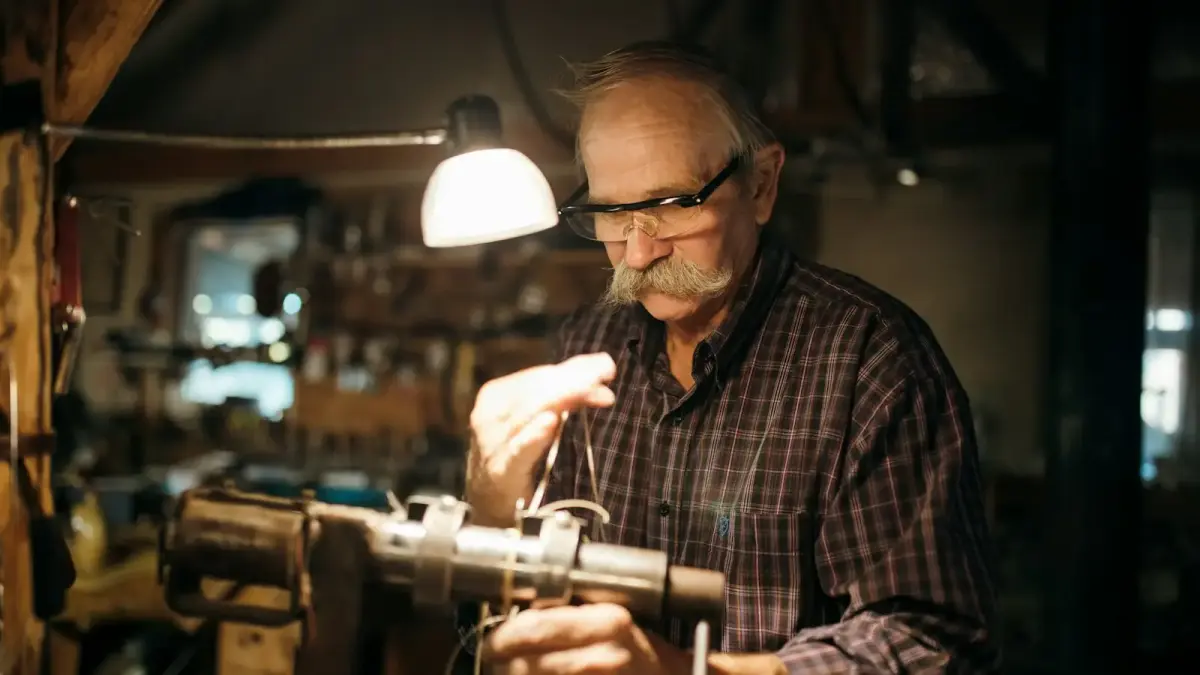
My father built a deck the summer I turned nine. I remember watching him from the kitchen window, holding a tape measure with his thumb while stretching it across a board with his free hand, bracing the lumber against his hip so it wouldn’t slide. He never called my mother outside to hold anything.
He never flagged down a neighbor. He never paused to look around for assistance.
The saw, the level, the drill - he orchestrated all of it with a physical fluency that I didn’t understand as a child but have spent my entire adult life unconsciously replicating.
I carry every grocery bag into the house in one trip. I hold flashlights between my teeth so both hands stay free. I have climbed ladders that should not be climbed alone, balanced on the third rung from the top while my wife stood below asking me to please just come down and wait for someone to help.
I don’t do these things because I’m reckless or proud. I do them because somewhere in my body - not my mind, my body - there is a physical script written in the handwriting of a man who never once asked another human being to hold the other end of anything.
The choreography nobody teaches in words
There is a choreography to male self-reliance that most people never notice because the men performing it have spent decades making it look effortless. It is not effortless.
It is practiced. It is inherited.
Watch a man carry lumber from his truck to his garage. Notice how he doesn’t stack the boards and make two trips. He loads his arms, tucks the last board under his chin, and walks the whole pile in one pass with his knees slightly bent and his jaw set.
His body has solved a problem his mouth was never permitted to ask about.
Watch him change a tire on the shoulder of the highway. He doesn’t call anyone. He kneels in the gravel, loosens the lugs with a force that comes from his whole torso, and works through the sequence alone as though it were something sacred and rehearsed.
His daughter watches from the passenger seat. She learns something she won’t be able to name for thirty years - that her father’s love was not in what he said but in what he refused to let anyone else carry for him.
This is body language, but it is not the kind that communication experts discuss on morning television. It is an inherited physical dialect - a vocabulary of lifting, gripping, stretching, bracing, and balancing that passes from one generation of men to the next without a single spoken lesson.
You don’t learn it from a book. You learn it from proximity. You learn it by watching a man’s shoulders on a Saturday morning and understanding, in your bones, what they were telling you about love.
What a boy absorbs from a Saturday morning
A 2003 study published in the American Psychologist examined why men across nearly every measurable domain - medical, psychological, practical - are significantly less likely than women to seek help. The researchers found that this reluctance is not biological. It is deeply socialized, shaped by what boys observe and internalize long before they have language for any of it.
I didn’t need a study to tell me that. I learned it in a garage.
My father didn’t lecture me about self-reliance. He never sat me down and explained that men handle things on their own. He simply handled things on his own, every Saturday, while I sat on an overturned five-gallon bucket and watched.
He changed the oil. He patched the drywall. He fixed the running toilet with a patience that bordered on ritual.
And he did all of it with a physical confidence that made asking for help look not just unnecessary but somehow beside the point. Like asking someone else to breathe for you. Like requesting assistance with your own heartbeat.
The lesson was never spoken. It was demonstrated. And what the body demonstrates, the body remembers with a loyalty that words cannot touch.
I learned that a competent man is a man who figures out how to do it himself. I learned that needing a second pair of hands is not a logistical reality but a personal shortcoming. I learned that the highest form of love a man can offer his family is to never make his difficulties their burden.
These are not lessons I chose to learn. They are lessons my skeleton absorbed from proximity, the same way a child raised near the ocean absorbs the rhythm of tides without anyone explaining what the moon does to the water.
The one-trip philosophy
There’s a running joke online about men refusing to make two trips with the groceries. It gets shared with knowing laughter and tagged with phrases like “every guy ever.” But nobody asks the question that actually matters.
Why does a man drape eight plastic bags over each forearm until the handles cut white lines into his skin? Why does he refuse to set half the bags on the porch and come back for them? Why does he walk bowlegged through the kitchen doorway, bags swaying and cans clinking, rather than admit that two trips would be simpler and less painful?
Because the second trip is not a second trip. The second trip is a confession.
It is a public acknowledgment that the load was too much. That his body was not sufficient. That the task exceeded him.
And for a man raised in the choreography of quiet competence, being exceeded by a task - any task, even carrying groceries - is not a practical problem. It is an identity problem.
A 2018 study in the Journal of Research in Personality found that men who score high on traditional masculinity measures experience measurable psychological distress when forced to ask for physical help with tasks they believe they should be able to manage alone. The distress wasn’t about the task itself. It was about what the request meant internally.
Asking for help translated, at the nervous system level, as evidence of inadequacy.
This is not fragile masculinity. It is something quieter and much sadder than that. This is a man who was taught that his usefulness was his worth, and that his worth was measured in what he could carry without setting anything down.
A body that remembers what words forgot
Psychologist Albert Bandura’s foundational research on observational learning demonstrated that children don’t simply imitate what they see. They absorb the emotional architecture behind the behavior.
A boy doesn’t just watch his father carry heavy things alone. He watches his father’s face while doing it.
He reads the set jaw. The focused eyes. The small grunt of effort that never once becomes a request for assistance.
And the boy’s body files all of it away. Not as a memory. As a posture.
This is why, forty years later, a man will stand in his garage holding a tape measure with his thumb, stretching it across a piece of plywood with his free hand, bracing the board against his workbench with his hip. He is not thinking about his father. He is not consciously remembering a specific Saturday.
His body is simply performing the only choreography of competence it has ever been taught.
The way he grips a wrench with his whole hand rather than his fingers. The way he tilts a ladder against the gutter and climbs without asking someone to hold the base. The way he lifts one end of a couch, shuffles to the other side, lifts that end too, and walks it through the doorway in a series of small rotations rather than asking his wife to grab the other side.
These movements are not practical decisions. They are physical sentences in a language his father spoke fluently and his father’s father spoke before that.
They are the body’s quiet way of declaring: I am competent. I am sufficient. I am the kind of man who does not need the other end held.
The closest he knows how to get
Here is what most people miss when they watch a man do everything by himself: he is not shutting you out.
He is performing the only version of love he was ever shown.
When his father built that deck without asking for help, he was not being cold or distant. He was absorbing difficulty so that no one else had to touch it. He was taking the full weight of the task into his own body so that his family could sit inside where it was cool and not worry about the deck or the boards or the heat.
And the boy who watched understood - wordlessly, physically, permanently - that this is what good men do. They carry things so you don’t have to.
A 2021 study published in Frontiers in Psychology found that many men who struggle with vulnerability in relationships can trace the pattern directly to paternal modeling - not to absent fathers, but to present ones whose presence was defined entirely by what they handled without complaint. These men did not lack love. They expressed it through labor, through carrying, through the muscular refusal to let the weight touch anyone else’s hands.
The man holding the board against his hip is not stubborn. He is devoted.
The man on the ladder alone is not reckless. He is repeating something his father taught him without words - a kind of physical prayer that says, I will absorb this so you don’t have to. I will figure this out alone so that you never have to wonder whether I’m capable.
He is not performing independence. He is performing intimacy - the only version his body ever learned.
If you recognize this man - if you are this man - I want you to hear something that your father’s generation was never told.
The choreography you inherited is not a flaw. It is a love letter written in the language of physical effort, passed down from men who did not know how to say “I want to take care of you” and so they showed it instead.
With their hands. With their backs. With their quiet, stubborn insistence on carrying everything in one trip.
You are allowed to set the bags down. You are allowed to ask someone to hold the other end of the tape measure.
Accepting help does not erase the competence your father modeled for you. It simply adds a new sentence to a physical language that has been waiting, for a very long time, to expand.
But also know this: the man who built alone on a Saturday morning while his son watched from an overturned bucket - that man loved you. He loved you in every board he measured, every nail he drove, every heavy thing he carried without once asking for a hand.
He just never learned the words for it. His body was the only language he had.