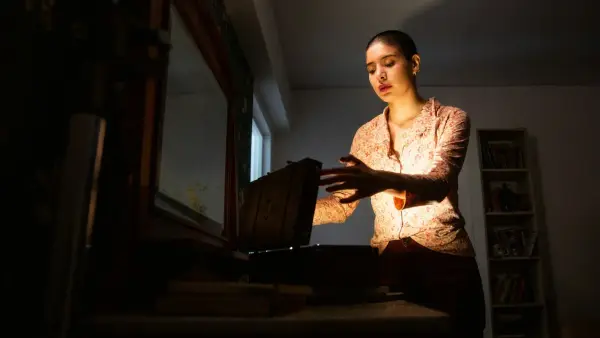
People who learned to read their entire household by the sound of the front door closing - who could tell by the weight of a footstep on the stairs whether the evening would be safe or whether everyone needed to scatter and look busy - often become adults who can walk into any room and know exactly what just happened, but have never once turned that extraordinary radar inward to ask what they themselves are actually feeling
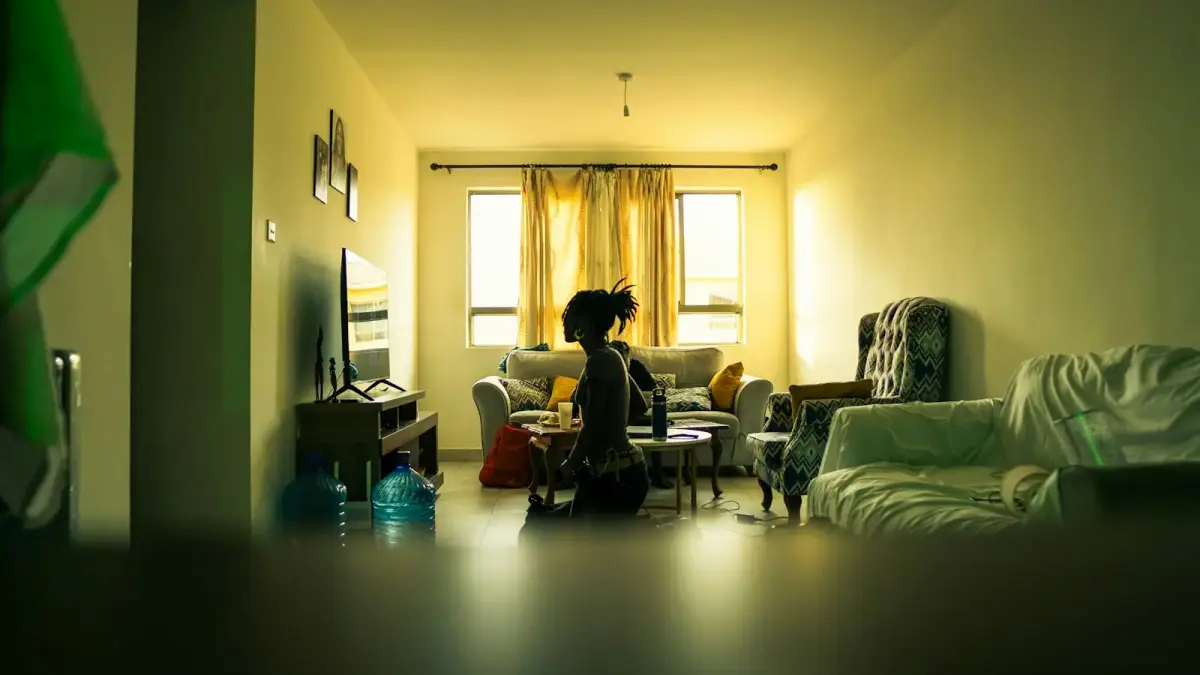
I was seven the first time I realized I could hear the difference between a good night and a bad one before anyone said a word.
The front door had two sounds. There was the click - that gentle, almost careful close that meant my father had come home in a decent mood, maybe even carrying takeout, and the evening would unspool the way evenings were supposed to. And then there was the other sound. Not a slam, exactly. Something heavier. A door meeting its frame with too much certainty. That sound meant something entirely different. That sound meant: turn the TV down, clear your plate, find a reason to be in your room, and whatever you do, do not ask questions.
I didn’t learn this skill. I absorbed it. The way you absorb a language you’re immersed in before you can read. My body learned it before my brain had any words for what was happening.
And if you recognize what I’m describing - not as a metaphor but as a literal memory, something your ears still carry - then you probably already know where this is going.
The Acoustic Map of an Unsafe Home
Every child in a volatile household builds an acoustic map. Not consciously. Not strategically. But with the precision of someone whose nervous system decided, very early on, that sound was the most reliable early warning system available.
You learned the footsteps. Heavy ones on the stairs meant anger. Light, quick ones meant distraction - which was its own kind of danger because distracted parents forgot promises and broke routines. A slow, deliberate pace meant something had already happened at work, and the energy was looking for somewhere to land.
You learned the kitchen. Cabinet doors closed with force meant the drinking had started. The particular clatter of a glass set down too hard on the counter. The fridge opening at an unusual hour.
You learned the silences. Not all silence was peaceful. Some silence was the held breath before an argument. You could feel it pressing against the walls. And then there was the silence after - thick and exhausted and somehow worse than the shouting itself because at least during the shouting you knew where everyone was.
A 2005 study published in Development and Psychopathology found that children raised in unpredictable home environments develop significantly heightened auditory processing for emotional tone - their brains literally rewire to prioritize threat detection through sound. This wasn’t a metaphor for those researchers either. They measured it. The neural pathways were different.
You learned the television. The volume going up meant one of two things: someone was trying to drown out a conversation you weren’t supposed to hear, or someone was about to start crying and didn’t want you to know. Either way, the message was the same. Stay where you are. Don’t come downstairs.
You became a human seismograph. And you were extraordinary at it.
The Adult Superpower Nobody Taught You
Fast forward twenty or thirty years. You walk into a meeting at work and within ninety seconds you know that two people at the table had a disagreement before you arrived. You can feel it in the spacing between their chairs, the way one of them is performing casual friendliness while the other has gone slightly too still.
You walk into a family gathering and you know immediately who’s been drinking more than usual, who just had an argument in the car, and who is smiling because they’re happy versus who is smiling because they’re terrified of not looking happy.
Your friends call it intuition. Your partner might call it a gift. Your coworkers say you have incredible emotional intelligence.
And you accept these compliments because they feel true. You are good at reading rooms. You are often the first person to notice when someone is struggling. You catch the micro-expressions, the shifts in posture, the tone changes that most people miss entirely.
What nobody - including you - has ever stopped to notice is the direction of the radar.
It only points outward.
The Blind Spot at the Center
Here’s the question that stops people like us cold: How are you feeling right now?
Not how is the room feeling. Not what does the person across from you need. Not what’s the emotional temperature of this conversation. How are you feeling? Right now. In your body. In your chest, your stomach, the backs of your hands.
If your first instinct is to scan the environment before answering - to check whether it’s safe to have a feeling before you identify which one you’re having - that’s the tell.
A 2019 study in Frontiers in Psychology examined adults who scored high on interpersonal emotional intelligence but low on intrapersonal emotional awareness. The researchers found a striking pattern: the majority had grown up in homes where accurately reading a caregiver’s emotional state was directly linked to physical or emotional safety. Their brains had learned that other people’s feelings were survival-critical data. Their own feelings were not.
That’s the part that gets me. It wasn’t that you chose to ignore your own emotions. It’s that your nervous system categorized them as irrelevant information. Not dangerous. Not useful. Just noise.
When you were eight years old and heard that door close the wrong way, you didn’t have time to ask yourself how you felt about it. You needed to know how he felt about it. Your feelings were a luxury. His feelings were a forecast.
What Happens When the Radar Has No Inward Frequency
The cost of this shows up in ways that don’t look like problems at first. In fact, they often look like strengths.
You’re the person everyone comes to. You’re steady in a crisis. You don’t fall apart. You hold space beautifully for other people’s pain because you’ve been doing it since you were small enough to sit on a kitchen counter.
But underneath that steadiness, something quieter is happening.
You make decisions based on what will cause the least disruption to the people around you rather than what you actually want. And you’ve done this for so long that you’re not entirely sure the distinction exists anymore.
You stay in relationships past their expiration because your radar is telling you what the other person needs and you keep responding to that signal. Your own signal - the one that says I’m unhappy here - never makes it through the noise.
You burn out. Not dramatically, but slowly. The way a candle burns down in a room where nobody’s watching. Because you never learned to check your own fuel level. You only learned to monitor the room.
Daniel Goleman’s work on emotional intelligence has been widely celebrated, and rightly so. But there’s a distinction in his framework that often gets glossed over: the difference between social awareness - the ability to read others - and self-awareness - the ability to read yourself. Most people assume these develop together. In homes like ours, they don’t. One becomes a finely tuned instrument. The other barely gets built at all.
This Is Not a Gift - It’s a Scar That Became a Skill
I want to be careful here because I’m not saying your ability to read a room is imaginary or worthless. It’s real. It’s remarkable. And in many contexts - parenting, leadership, therapy, friendship - it serves you and the people around you beautifully.
But it didn’t develop because you were born with extraordinary emotional intelligence. It developed because a child needed to predict the weather inside their own home in order to feel safe. That’s not a gift. That’s an adaptation. And there’s a difference.
A gift is something you received freely. An adaptation is something you built under pressure because the alternative was unbearable.
The scar isn’t the skill itself. The scar is the absence underneath it - the missing piece where self-awareness should have grown but couldn’t, because all the resources went to monitoring everyone else.
Gabor Mate writes about this with a precision that still catches me off guard. He describes how children in stressful environments learn to suppress their own emotional signals in order to maintain attachment with their caregivers. The child doesn’t decide to do this. The body does it automatically. Stay attached to the caregiver, even if it means losing contact with yourself.
That’s what happened. You didn’t lose touch with your feelings because you’re broken or because you’re not trying hard enough. You lost touch with them because staying connected to yourself was less important than staying connected to the person who controlled whether the evening was going to be okay.
Learning to Turn the Instrument Around
The next frontier isn’t shutting down your external radar. That ability is part of you and it serves real purposes. The next step - and it is genuinely a step, small and daily and sometimes frustrating - is learning to point the same instrument at yourself.
Not with the urgency you once brought to reading a room. Not with the survival-level alertness that made you decode footsteps and door latches. With something slower. Gentler. More patient.
You already know how to sit with someone who’s struggling and hold space without trying to fix them. You’ve been doing that for other people your entire life. The practice now is learning to do it for yourself.
What am I feeling right now? Not what should I be feeling. Not what would be convenient to feel. What is actually here?
It will feel strange at first. Like trying to use a muscle that technically exists but has never been asked to do much. You might find that when you turn the radar inward, all you get is static. That’s normal. That’s not failure. That’s the sound of an instrument being tuned to a frequency it was never calibrated for.
A 2021 study in Journal of Personality and Social Psychology found that adults who began a consistent interoceptive awareness practice - simply checking in with their own bodily sensations several times a day - showed measurable improvements in self-reported emotional clarity within eight weeks. Not years of therapy. Eight weeks of asking: what is my body telling me right now?
You spent decades perfecting the art of reading everyone else. You can learn to read yourself. Not instead of others. Alongside them.
What I Want You to Hear
If you were the child who knew everything by sound - who could decode an entire evening from the weight of a footstep, the angle of a door, the silence between sentences - I want you to know something.
That vigilance kept you safe. It was intelligent. It was necessary. And it cost you something you’re only now beginning to notice.
You are not broken because you can read a room full of strangers but go blank when someone asks what you need. You are not emotionally stunted because your own feelings arrive late, or muffled, or disguised as someone else’s. You are a person who learned, very early, that the most important data in any room was never about you.
And now, for maybe the first time, you get to decide that it is.
Not loudly. Not all at once. But with the same quiet, extraordinary attention you’ve been giving to everyone else your entire life - finally, gently, turned toward yourself.
You already have the instrument. You just haven’t heard your own frequency yet.
You will.