There are people who remember every kind thing a stranger ever did for them - the man who paid for their coffee fifteen years ago, the woman on the train who handed them a tissue without a word, the teacher who wrote 'I see you' on the back of a test in fourth grade - not because they are sentimental but because a child whose warmth was carefully rationed learned that kindness from someone who wanted nothing in return was so extraordinary it had to be memorized, and the woman at fifty-six who still remembers a stranger's umbrella on a rainy Tuesday is not holding onto a small moment but onto the first proof she ever received that care could arrive without a cost
I can tell you the exact date a stranger changed something inside me, even though I didn’t understand it at the time.
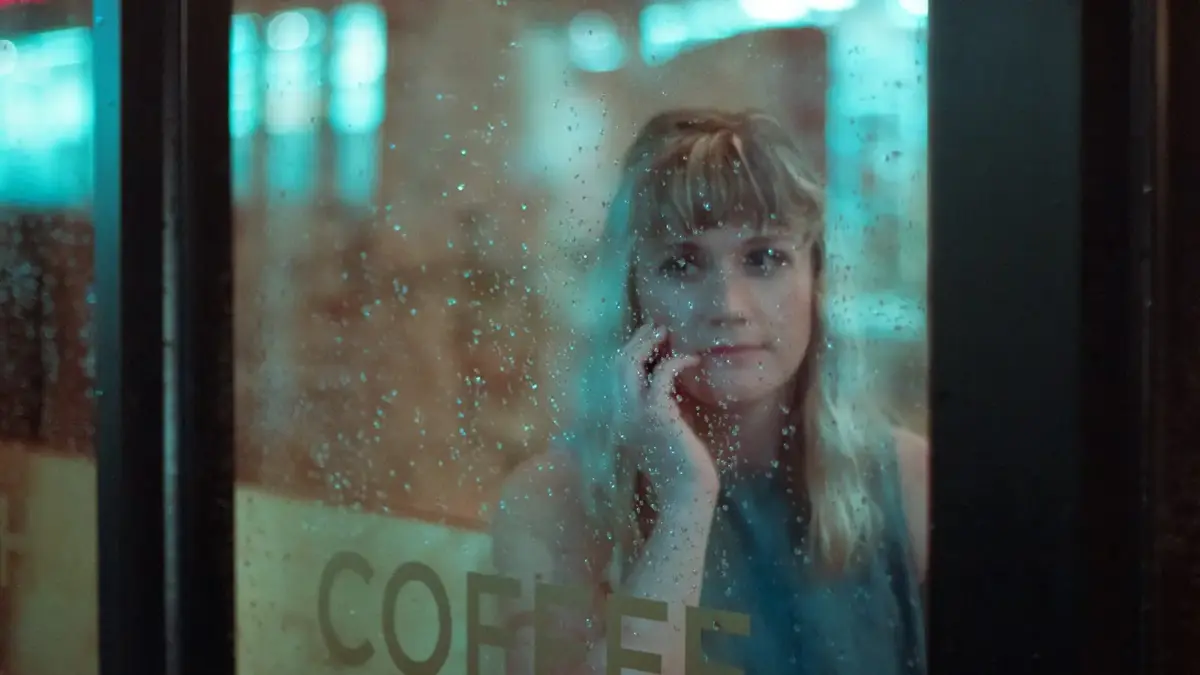
I was eleven, standing outside a convenience store in the rain because my mother was running late and I didn’t have change for the payphone. A woman I had never seen before walked out with a bag of groceries, looked at me for a long moment, went back inside, and came out with a cup of hot chocolate that she placed in my hands without saying a single word.
She got in her car and drove away. That was thirty-five years ago. I still remember the weight of the cup, the steam curling into the rain, and the fact that she didn’t ask me if I was okay or whether I needed anything - she just saw a girl standing alone and decided to do something warm about it.
I have forgotten entire relationships. I have forgotten the names of colleagues I worked with for years, the plots of movies I watched last month, the birthday presents I received at nine and ten and twelve. But I have never forgotten that hot chocolate, and I don’t think I ever will.
If you are someone who carries these moments - the small, unbidden kindnesses of strangers, filed away in some corner of your memory that nothing else seems to reach - I want to tell you what I have learned about why.
The archive that builds itself
There is a particular kind of memory that does not behave like other memories. It doesn’t fade at the edges the way vacations do, doesn’t blur into generality the way school years collapse into a handful of images. It stays sharp. Specific. Almost photographic in its insistence on being preserved.
And the thing these memories have in common, if you look at them carefully, is that they are all moments when someone was kind to you and wanted nothing in return.
The man at the gas station who noticed you were counting coins and quietly paid for your coffee. The flight attendant who crouched beside your seat during turbulence and said, “I get scared too.” The neighbor who showed up with a casserole the week your father was in the hospital - not the neighbor you knew well, but the one you had only ever waved to from across the street.
These are not big gestures. Nobody put them in a speech or wrote them in a card. They lasted, most of them, less than a minute. And yet you have kept them for decades with a fidelity that would put your wedding album to shame.
A 2017 study published in the Journal of Personality and Social Psychology found that people who reported the strongest emotional memories of prosocial behavior from strangers were disproportionately likely to have grown up in households with inconsistent emotional warmth. The researchers described this as a “scarcity encoding effect” - when a resource is experienced as rare in early life, any encounter with it later is tagged by the brain as high-priority information. The memory doesn’t just record the event. It preserves it the way a museum preserves something irreplaceable.
You are not sentimental. Your brain is simply treating kindness the way it was taught to - as something too valuable to let go of.
The rationed household
I want to be careful here, because this is not a story about bad parents. Most of the households I am describing were not cruel. They were busy. They were stretched. They were full of people doing their best with less than they needed, and the warmth that existed was real but conditional.
You could earn it by being good. You could lose it by being difficult. You could feel it in flashes - the brief hug after a good report card, the softened voice when you were sick - but you could never quite relax into it, because it never felt like something that would stay without your help.
And when you grow up in a house where love is real but expensive - where affection follows performance, where warmth is something you are given after doing something right - your nervous system learns a very specific lesson. It learns that care has terms. That nobody gives you something for nothing. That there is always an exchange happening, even when nobody names it.
So when a stranger hands you a cup of hot chocolate and walks away, or a woman on a bus gives up her seat with a smile that asks nothing back, or a man in a parking lot helps you carry your groceries and refuses the five dollars you hold out to him - something in your chest breaks open. Not because the gesture is big. Because the gesture is free.
Daniel Goleman has written about how emotional intelligence is not simply the ability to recognize feelings in others but the capacity to be changed by what you recognize. The people who remember every stranger’s kindness are not passively recording pleasant experiences. They are being changed, each time, by the evidence that warmth can exist without a transaction.
That is why the memory holds. It is not nostalgia. It is proof.
The inventory nobody asked you to keep
If I asked you right now to list the kindest things a stranger has ever done for you, I think you could do it without pausing. Not because you maintain a conscious list, but because these memories are always close to the surface, always within reach, as if your mind has decided they belong in the room where you keep the most important things you know.
Here is a partial version of mine.
A librarian who let me stay past closing because it was raining and she could see I didn’t want to go home. A boy on the school bus in seventh grade who gave me half his sandwich every day for a week after he overheard me telling someone I wasn’t hungry, which was my word for something else entirely. A doctor who, after a routine appointment when I was twenty-three, put her hand on my shoulder and said, “You seem like you’re carrying a lot,” and I remember being so startled by the observation that I couldn’t speak.
None of these people knew what they were doing. None of them understood that a thirty-second interaction was going to live inside me for decades. They were just being kind, the way kind people sometimes are - casually, instinctively, without attaching any significance to it.
But I attached significance to it. I attached a tremendous amount of significance to it, because a girl who spent her childhood measuring the temperature of every room before she entered it had learned to treat unexpected warmth the way a person lost in the desert treats water. You don’t just drink it. You remember exactly where you found it.
Why it comes with grief
Here is the part nobody talks about. These memories are beautiful, and they also hurt.
They hurt because every time you remember the stranger who was kind to you, you are also remembering, without quite naming it, that the kindness was remarkable because it was rare. That what a stranger gave you freely in thirty seconds is something you spent your childhood trying to earn.
A 2021 study in Frontiers in Psychology examined what researchers called “contrastive emotional memory” - the phenomenon in which a positive experience becomes more emotionally potent when it contrasts sharply with a person’s baseline expectations. Participants who reported childhoods with low emotional availability showed significantly stronger physiological responses to small acts of kindness from strangers, and they retained those memories with greater accuracy over time. The researchers noted that these memories functioned not just as pleasant recollections but as “corrective evidence” - data points the brain uses to challenge its original model of how the world works.
You are not just remembering the kindness. You are using it. Every warm memory you carry from a stranger is a small piece of evidence your nervous system stores against the hypothesis it formed in childhood - that you have to earn every good thing, that nothing comes free, that the only safe way to receive warmth is to pay for it first.
The stranger who handed you a tissue on the train didn’t know they were doing something radical. But for a child who grew up calculating the cost of every tender moment, a gesture with no price tag is the most radical thing there is.
What you are really holding onto
I used to feel embarrassed about how easily I could recall these moments. I thought it made me sentimental, or fragile, or too hungry for something I should have outgrown the need for. I thought adults weren’t supposed to still be moved by a stranger’s small decency.
But I understand it differently now.
The woman at fifty-six who remembers a stranger’s umbrella is not holding onto a rainy Tuesday. She is holding onto the first time she learned that someone could see her and want to help her without wanting anything back. She is holding onto evidence that contradicts everything her childhood taught her about how care works.
Brene Brown has described belonging as the experience of being accepted without having to change who you are. And for many of us, the first time we felt anything close to that wasn’t at home, where we were loved with conditions, or at school, where we were measured by performance. It was standing in the rain while a stranger bought us hot chocolate. It was sitting on a bus while someone handed us a tissue. It was reading “I see you” on the back of a test in a teacher’s handwriting and realizing, with a shock that hasn’t faded in forty years, that someone did.
You are not sentimental for remembering. You are carrying an archive of every moment the world was gentle with you when it didn’t have to be. And the fact that you can recall each one - the date, the weather, the exact weight of the cup in your hands - is not a sign that you hold on too tightly.
It is a sign that you knew, even as a child, which moments were the ones worth keeping.