There is a particular kind of person who always offers to drive - not out of generosity or preference but because somewhere in childhood, the passenger seat became the place where bad things happened, and the steering wheel became the only seat in the world where safety lived in her own hands
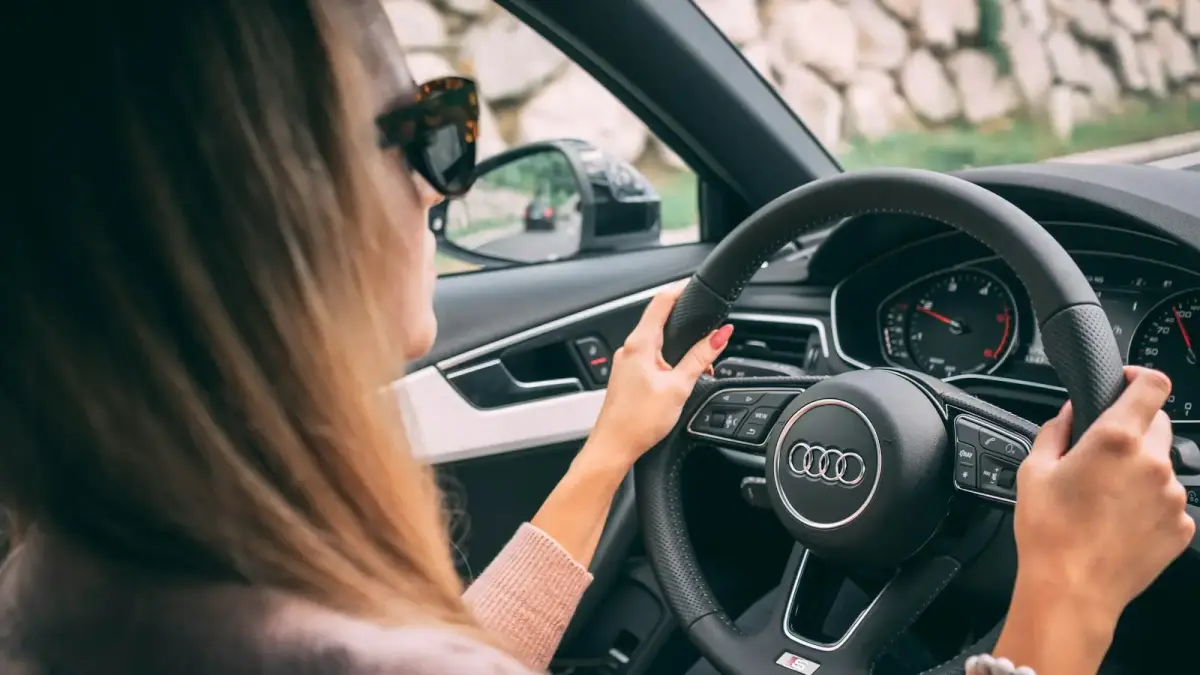
I used to think I was just particular about driving.
That was the word I gave it. Particular. Like it was a personality quirk, a small preference filed alongside the way I take my coffee or how I fold towels. I would reach for the keys at the end of a dinner party before anyone had even mentioned who was driving. I would offer my car, my gas, my time behind the wheel as though I were being generous when really what I was being was terrified.
It took me years to understand that what looked like a preference was actually a promise I had made to myself before I was old enough to name it. A promise that said: if you are the one driving, no one can take you somewhere you did not choose to go.
And I have since learned that I am not the only person carrying that particular promise in their body.
The backseat where it started
There is a geography of childhood fear that lives in the body long after the child has grown.
For some of us, it lives in the backseat of a car. In the space behind the driver’s seat where you could see the speedometer climbing but could not reach the brake. Where the argument between the front seats filled the air like weather you could not escape. Where someone drove too fast because they were angry, or too slow because they were crying, or not at all in a straight line because they had been drinking.
You were small. You were buckled in. And the car was moving in a direction you had no power to change.
A 2019 study published in the Journal of Traumatic Stress found that children exposed to frightening or unpredictable driving behaviors from caregivers often develop hypervigilant responses specifically tied to vehicle environments - responses that persist well into adulthood even when the original threat is decades gone.
The researchers called it “context-dependent threat encoding.” Your nervous system did not just record the fear. It recorded exactly where you were sitting when you felt it.
The steering wheel as the first safe place
Most people learn to drive and think of it as freedom. A license. The open road. Independence.
But for a child who spent years in the passenger seat or the backseat while the car became a container for someone else’s chaos, learning to drive was not about freedom. It was about finally having access to the brake pedal.
It was about discovering that there was a seat in the car where you could control the speed, choose the route, pull over when things felt wrong. A seat where what happened next was, for the first time in your life, up to you.
And that discovery rewired something deep. It told your nervous system: this is the safe seat. This is the one place in a moving vehicle where you are not at the mercy of someone else’s mood, someone else’s impairment, someone else’s rage.
So you stayed there. You stayed behind the wheel for twenty, thirty, forty years. And you called it a preference.
What it looks like from the outside
The person who always offers to drive is easy to misread.
From the outside, she looks generous. She is the one who says “I’ll drive, don’t worry about it” before anyone has even opened their mouth. She brings her car to every group outing. She waves off offers to take turns. She makes it look effortless, like she simply enjoys it.
Or she looks controlling. Particular. Rigid. The one who gets tense when someone else is behind the wheel. The one who presses an invisible brake pedal on the passenger side. The one who cannot stop checking the mirrors from a seat that has no mirrors to check.
But what she actually is, underneath either reading, is a person whose body remembers.
She remembers the feeling of not being able to steer. Not being able to stop what was happening. Not being able to open the door at sixty miles an hour and escape the voice, the swerving, the smell of alcohol, the sudden sharp turn that slammed her against the window.
And so she drives. Not to control the people in her car. To control whether or not she survives the ride.
The body in the passenger seat
If you are this person, you already know what happens when someone else drives.
Your hand finds the door handle within the first mile. Not consciously. Your fingers just migrate there, wrapping around it like a child gripping a railing. You are holding on to the only solid thing within reach, and some part of you is calculating whether the door could open, whether you could get out, whether there is an exit.
Your eyes track the road differently from the passenger seat. You are not watching the scenery. You are watching the distance between your car and the one ahead. You are watching the speedometer. You are reading the driver’s face for signs of irritation, distraction, fatigue - the same way you used to read your parent’s face from behind the headrest.
Your breathing changes. It gets shallower, tighter. Your shoulders climb toward your ears. You might not even notice it happening until the ride is over and your body releases with an exhale so deep it surprises you.
Dr. Bessel van der Kolk’s research on somatic memory has shown that the body stores traumatic experiences not as narrative but as sensation - as muscle tension, breathing patterns, and autonomic responses that activate in environments that resemble the original context. You do not need to consciously remember the night your father drove home drunk. Your body remembers the passenger seat. And it responds accordingly.
You cannot sleep on road trips. You have never been able to. Everyone else drifts off within an hour, heads tilted against windows, mouths open, completely surrendered to the motion of the car. And you sit there, awake, watching the road, watching the driver, watching the lane markings, because your nervous system will not allow you to close your eyes in a moving vehicle you are not steering.
That is not insomnia. That is a sentry who was never relieved of duty.
The relationships that form around the wheel
This pattern does not stay in the car.
The person who always needs to drive often becomes the person who always needs to plan. The person who organizes the group, manages the logistics, holds the itinerary. The person who volunteers for coordination not because she loves it but because coordination is another steering wheel - another way to ensure that she knows what is coming next.
She may have difficulty delegating. Not because she thinks others are incompetent, but because delegation requires the same thing the passenger seat requires: trusting that someone else will get you there safely.
A 2021 study in Frontiers in Psychology found that adults with histories of childhood exposure to unpredictable caregiver behavior showed significantly elevated needs for control in daily life, not as a personality trait but as a regulatory strategy - a way of managing anxiety that the nervous system could not otherwise contain.
This is important. The need for control is not a character flaw. It is a coping architecture. A structure your younger self built, brick by brick, to house a fear that had nowhere else to live.
And the steering wheel was the foundation.
Recognizing the pattern without shaming it
I want to be careful here, because the reflex when we identify a pattern like this is to try to fix it immediately. To say: “Now that you understand it, let someone else drive.”
But that misses the point.
The point is not that you need to stop driving. The point is that you deserve to know why you cannot stop.
You deserve to understand that the tension you feel in the passenger seat is not ridiculous. It is not an overreaction. It is a perfectly calibrated response from a nervous system that learned, through real experience, that the passenger seat was where your safety was not in your hands.
You deserve to look at your own hand gripping the door handle and recognize it not as anxiety but as loyalty - your body still trying to protect the child who could not protect herself.
And you deserve the gentleness of knowing that this pattern kept you alive. That the hypervigilance, the need to steer, the inability to surrender the wheel - all of it was your psyche’s best available strategy for surviving an environment where the adults in charge were not safe drivers, in any sense of the word.
The slow practice of the passenger seat
Healing, if it comes, does not look like suddenly being fine with someone else driving.
It looks like noticing. Like feeling your hand drift toward the door handle and thinking, with something close to tenderness: there you are again. I know why you do that.
It looks like telling a trusted person, on a short drive, on a familiar road: “I am going to try sitting in the passenger seat today, and I might be weird about it.” And letting that be enough.
It looks like understanding that the part of you that needs to drive is not the enemy. She is the architect of your survival. She built the only structure that made sense with the materials she had. And she does not need to be demolished. She needs to be thanked, and then slowly, gently shown that the car she is riding in now is not the car she grew up in.
The driver beside you is not the driver from your childhood.
The road ahead is not leading somewhere dangerous.
And the passenger seat - that seat where bad things happened, where control disappeared, where your small body was trapped inside someone else’s chaos - can become, with time and patience, just a seat.
A seat where you can rest your hands in your lap. Where you can watch the trees go by without scanning for threats. Where you can close your eyes, just for a moment, and trust that someone else will keep the car between the lines.
Not because the fear was wrong. But because you are no longer the child in the backseat.
And the only person who needs your permission to believe that is you.