Psychology says the man who always gives away the better piece - the larger steak, the less-burnt toast, the seat with the view, who serves everyone else's plate before sitting down and takes whatever is left without commentary or complaint - is not selfless in the way the word is usually meant, he is a boy who watched his father eat standing at the kitchen counter while the family sat at the table, and learned that a good man's worth was not what he consumed but what he made sure the people around him never had to go without
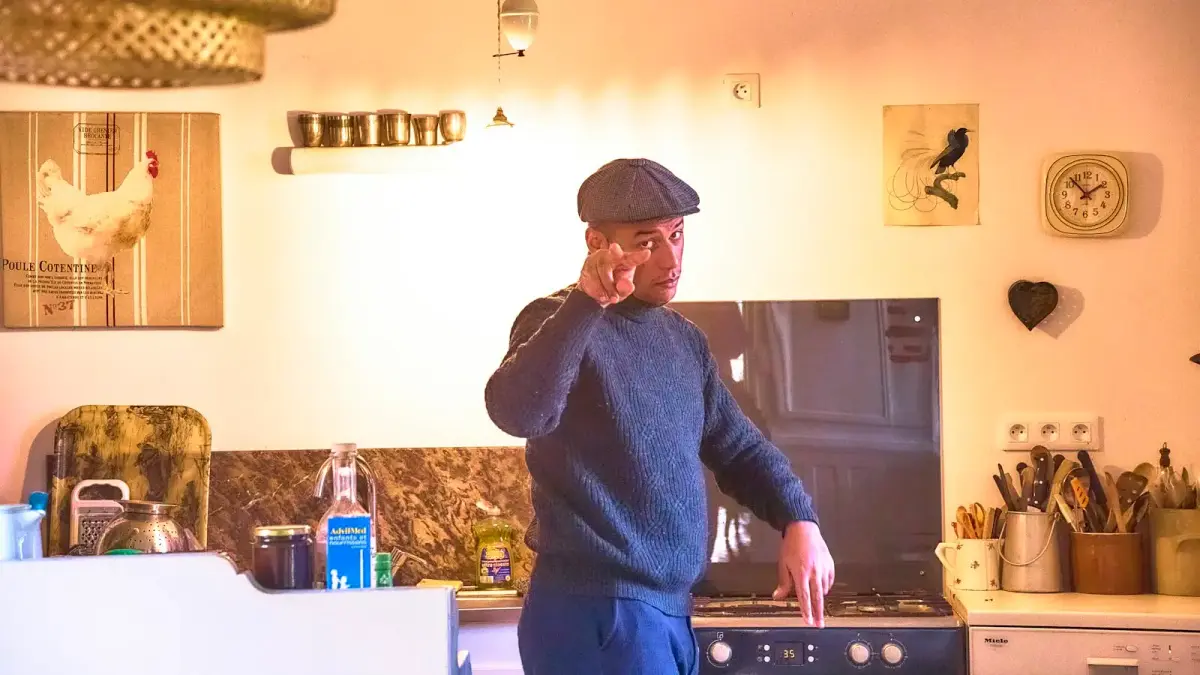
I can see my father right now if I close my eyes. He is standing at the kitchen counter with a plate balanced on the edge, eating whatever was left after the rest of us had been served. He never sat down first. He never reached across the table. He never said a single word about it.
I was maybe nine years old the first time I noticed. My mother had made pork chops - four of them, five of us. I remember watching him slide the smallest one onto his own plate, the one that was a little too dark on one side, and carry it to the counter while we ate at the table together like nothing was missing.
Nobody mentioned it. Not once. And I understood, in that wordless way that children absorb the architecture of a household, that this was what a man did. He made sure everyone else had enough, and whatever was left over - that was his.
I have done this my entire adult life.
The plate he never complained about
You know this man. Maybe you married him. Maybe you raised him. Maybe you are him.
He is the one who hands you the better piece of chicken and keeps the wing. He lets everyone else choose their seat at the restaurant and takes whatever chair is left, the one by the kitchen door or facing the wall. He pours the last of the coffee into your mug and drinks water instead.
He does not announce these choices. There is no performance in it. If you pointed it out, he would look at you like you had said something strange, because to him, this is not generosity. This is just how it works. This is the invisible contract he signed before he was old enough to understand what a contract was.
A 2019 study published in the Journal of Personality and Social Psychology found that self-sacrificing behaviors in men are strongly correlated with early household modeling - specifically, with having witnessed a father or father figure who consistently deprioritized his own needs in favor of the family unit. The researchers called it “inherited altruism,” but I think that term misses the weight of it.
This is not altruism the way a psychology textbook defines it. This is something much older and much heavier.
Where this language comes from
Working-class homes teach love differently than the culture tends to acknowledge.
When resources are limited - when there are four pork chops and five people, when the heating bill means someone’s jacket stays thin, when the car needs a repair that costs more than a week’s pay - love becomes arithmetic. Someone has to absorb the shortage. Someone has to be the one who goes without so the equation balances.
In most of those households, that someone was dad.
Not because of some noble philosophy. Not because he read a book about servant leadership. Because his father did it, and his father’s father did it, and no one in the line ever stopped to ask whether it was sustainable or healthy or right. It was simply the way a man proved he was worth the space he took up.
Sociologist Michèle Lamont spent years studying working-class men across the United States and France, and her research revealed something the professional class often fails to understand. For working-class men, moral worth is not demonstrated through achievement or status. It is demonstrated through providing, through discipline, through making sure the people who depend on you never feel the weight of what it costs.
The man eating at the counter is not performing sacrifice. He is performing worth.
The silence that holds it together
Here is the part that makes my chest tight when I think about it too long.
He does not talk about it. He will never talk about it. The silence is structural. It is load-bearing. If he named what he was doing - if he said “I am giving you the better piece because I learned that my needs come last” - the whole thing would collapse under the weight of its own sadness.
So he says nothing. He just hands you the plate.
A 2021 study in Frontiers in Psychology examined what researchers termed “silent provisioning” among men from lower socioeconomic backgrounds. They found that these men consistently scored high on measures of care and responsibility but low on measures of emotional self-disclosure. The men were not unfeeling. They were operating within a framework where love was proven through action and never through language.
This is the gap that tears at so many marriages. She says he never expresses his feelings. He cannot understand why she doesn’t see that every meal he has served her first, every time he took the burnt piece, every coat he didn’t buy himself so the kids could have new shoes - that was the expression. That was all of it, every single day, laid out on the table in front of her.
He is not emotionally unavailable. He is emotionally fluent in a dialect she was never taught to hear.
The boy who is still watching
There is a version of this story that is beautiful, and I want to honor it before I complicate it.
The father who eats standing up so his children can sit down is doing something genuinely sacred. He is absorbing discomfort so that the people he loves do not have to feel it. That is real. That matters. That deserves to be seen with the full weight of respect it has earned.
But there is also a cost.
The boy who watched his father eat at the counter learned that a good man disappears himself. Bit by bit, meal by meal, choice by choice. He learned that his preferences are irrelevant. That his comfort is a luxury the family cannot afford. That the measure of his love is the degree to which he can make himself smaller.
And then he grew up and carried that lesson into every room he entered.
Gabor Mate has written extensively about how childhood experiences of self-suppression become wired into the body, into the nervous system itself. The boy who learned to put himself last does not choose to do it as an adult. He is compelled to. The counter is inside him now. He eats there even when there is room at the table.
This is why some men cannot accept a gift without discomfort. Why they deflect compliments. Why they feel a strange guilt when they rest, or buy themselves something nice, or take the last piece of anything. The programming runs deep, and it runs silent.
What his partner needs to understand
If you love this man, know this: his self-sacrifice is not a request for praise. It will embarrass him if you make it visible. But it is slowly draining him, and he does not have the language to say so.
He needs you to serve him first sometimes. Not because he will ask for it. He won’t. He will resist it. He might even get up and try to rearrange the plates. But somewhere inside the boy who is still watching his father at the counter, something will unclench.
He needs you to notice the pattern without making it a confrontation. A hand on his back. The words “sit down, I made this for you.” A plate placed in front of him before anyone else is served.
These are not small gestures. For this man, they are revolutionary.
A 2023 study in the Journal of Research in Personality found that men who exhibited high levels of self-sacrificing behavior showed measurable decreases in stress markers when their partners engaged in what the researchers called “reciprocal prioritizing” - simply being put first, even briefly, even in small ways.
His nervous system has been braced for decades. He doesn’t need you to fix him. He needs you to hand him the better piece and watch his face when he doesn’t know what to do with it.
The inheritance we can choose to rewrite
I still do it. I still serve everyone else’s plate first. I still take the chair nobody wants and the piece that’s a little too small. I catch myself doing it and I feel my father in the motion of my hands, and I feel his father behind him, and behind him another man at another counter, eating alone while the people he loved sat together.
I am not trying to stop doing it entirely. I am not sure I could. And I am not sure I want to. There is something real and irreducible in the impulse to make sure the people you love have enough. I will not pathologize that.
But I am trying to learn the difference between love and disappearance. Between giving and erasure. Between my father’s quiet grace and the silence that kept him from ever saying he was tired, or hungry, or in need of something he could not give himself.
If you are this man, I want you to hear something no one in your family’s line may have ever said to you.
You are allowed to sit down.
You are allowed to take the piece you actually want.
You are allowed to be at the table - not behind the counter, not after everyone else, not with whatever is left.
The people who love you are not keeping score. They do not need you to be small so they can be full. They want you there. With them. Taking up space.
Your father did a beautiful, costly thing. He made sure you never went without. But the thing he could not give you - because no one ever gave it to him - was permission to receive.
You can give that to yourself now. And when you do, it is not betrayal. It is the first new sentence in a story that has been repeating for generations.
It is still love. It is just love that finally includes you.