Psychology says men who always back into parking spaces - who take the extra thirty seconds to reverse in even when pulling straight through would be easier - are not being obsessive or controlling. They are men whose earliest model of competence was a father who never parked a car he could not drive out of immediately, and the reversed sedan at fifty-four is not a preference but the posture of someone who was raised to believe that the way you love the people in the car is by always being ready to get them out.
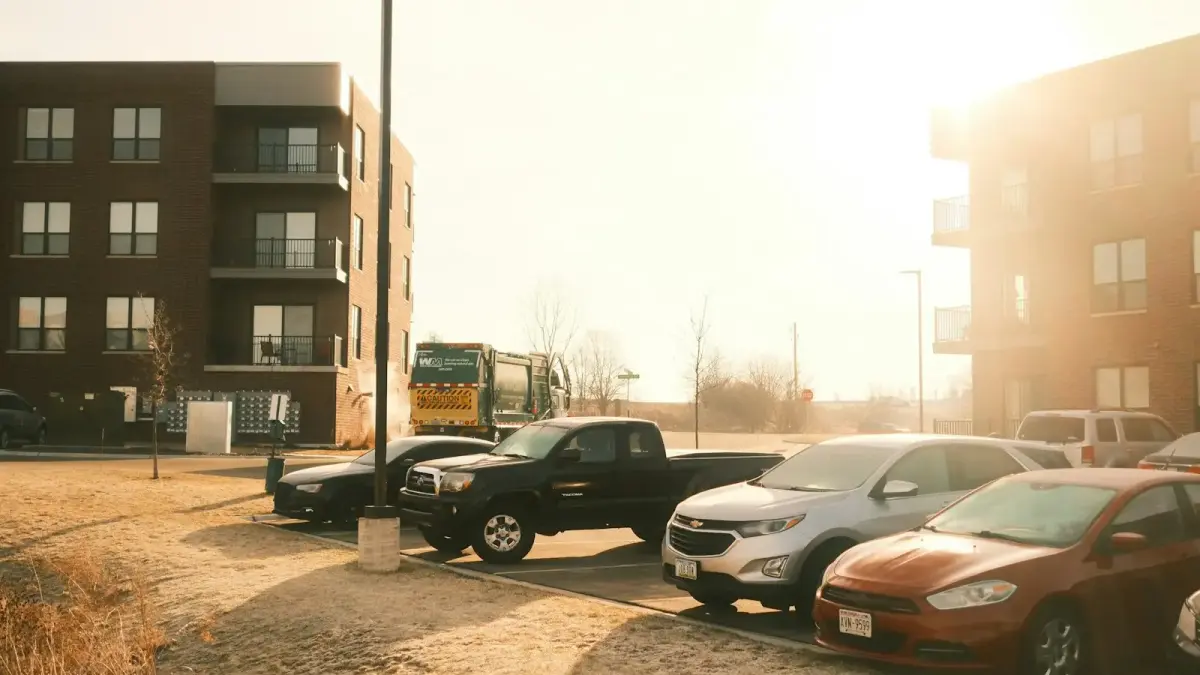
I have never once pulled straight into a parking space
I’m fifty-four years old. I’ve owned six cars in my life - two sedans, a truck I regretted, and three SUVs that got progressively more practical and less interesting. Every single one of them has been reversed into every single parking spot I’ve ever used.
Grocery store. Doctor’s office. My daughter’s school when I pick her up on Tuesdays. The driveway of my own home, where nobody is timing me and nobody would notice if I pulled in headfirst.
I back in. Every time. Without exception.
My wife mentioned it once, maybe fifteen years ago. She said it like an observation, not a complaint - “You always do that.” And I said something like, “It’s easier to leave.” Which is true. But it’s not the truth.
The truth is something I didn’t understand until much later, and it has almost nothing to do with parking.
The man who taught me to drive never said a word about why
My father was a quiet man with large hands and a blue Chevy pickup that he kept cleaner than anything else he owned. He taught me to drive the summer I turned fifteen, in the empty lot behind the church on Route 9, and the very first thing he taught me - before mirrors, before signaling, before the difference between the gas and the brake - was how to reverse.
He didn’t explain why. He just said, “You always want to be facing out.”
I remember the way he said it. Not urgent. Not emphatic. Like he was telling me that water runs downhill. Like this was a law of the physical world and not a preference.
For the next six months of driving lessons, every time we parked - the hardware store, the bank, the lot beside the VFW where he’d stop for a coffee on Saturday mornings - he reversed in. Slowly, deliberately, checking both mirrors twice. And then he’d put it in park and sit there for a second, looking out through the windshield at the clear path ahead.
I realize now that what he was looking at was the exit. And what he was feeling was something I didn’t have a name for until I was much older.
He was feeling ready.
Preparedness as the architecture of love
Here is what I’ve come to understand about men like my father, and about the version of me that still reverses into parking spaces at fifty-four without thinking about it: the behavior is not about the car. It was never about the car.
A 2018 study published in the Journal of Personality and Social Psychology found that individuals who scored high on what researchers called “protective vigilance” - the tendency to anticipate logistical needs and prepare for rapid response in everyday situations - overwhelmingly reported learning the behavior from a same-sex parent before adolescence. The pattern was not taught through instruction. It was transmitted through modeling. Children watched a parent’s small, repeated acts of readiness and absorbed them as a definition of competence.
My father never once told me that a responsible man positions himself to leave quickly. He never said the words. He didn’t need to.
What he said, without language, every single time he reversed that blue Chevy into a spot and then looked out at the clear lane ahead, was something much larger. He was saying: I am the kind of man who is always ready to get you out of here. Whatever happens. However fast we need to move. I have already done the thinking.
That is not obsession. That is not rigidity.
That is a man whose entire vocabulary of devotion lived in logistics.
The sons who inherited the posture
I know these men. I am these men. We are the ones who check the tire pressure before a road trip even though the car is brand new. We are the ones who back the car into the hotel parking spot at eleven at night in a town we’ve never visited, not because we’re planning to flee, but because something in us cannot rest until the vehicle is pointed toward open road.
We keep the gas tank above a quarter. We know where the spare tire is. We replaced the jack that came with the car with a better one, and we can’t entirely explain why, except that the factory jack felt insufficient and insufficiency felt like a failing.
A 2021 study in Frontiers in Psychology examined what the researchers termed “preparatory behavior” in men over forty and found a striking pattern: men who engaged in habitual readiness rituals - checking exits, maintaining vehicles, positioning objects for rapid access - reported significantly higher childhood exposure to a father or father figure who modeled those same behaviors. The study concluded that the rituals functioned not as anxiety responses but as identity anchors. The behavior connected them to a model of masculinity that equated competence with care.
That last phrase stopped me when I read it. Competence with care. Because that is exactly what it was.
My father didn’t say “I love you” on the phone. He didn’t write cards. He wasn’t the kind of man who put his arm around you at the table or asked how your day was with any expectation of a real answer.
But he changed the oil in my mother’s car every three thousand miles for forty-one years. He kept a flashlight in the glove box and fresh batteries in the junk drawer and a bag of salt in the trunk from October to April. And he never, not once, parked that truck in a way that would require him to back out blind if he needed to leave in a hurry.
That was the love. The whole of it. Not spoken. Positioned.
What the reversed car is actually saying
When I back into a parking space now - and I do it with the same slow deliberateness my father used, checking both mirrors, straightening the wheel, settling the car into alignment before I shift to park - I am not performing a preference. I am performing a belief.
The belief is this: that the people in the car with me deserve a man who has already thought about what happens next. That readiness is not paranoia. That the thirty seconds it takes to reverse in is not wasted time but invested time - a small, invisible deposit into a fund that says, “If something goes wrong, I’ve already started solving it.”
Daniel Goleman, in his work on emotional intelligence, writes about how competence becomes a proxy for emotional availability in men who were raised without explicit models of emotional expression. The man who cannot say “I’m worried about you” says it by checking the locks twice. The man who cannot say “I want to protect you” says it by backing the car in so that the path out is always clear.
It’s a language. It’s not a loud one. But it’s precise, and it’s consistent, and it has been running underneath every other language I’ve ever learned.
The parking lot as a quiet autobiography
I took my daughter to her first day of college last September. Drove three hours with her stuff packed into every available inch of the car. When we got to the campus, the lot was chaos - parents double-parked, kids carrying laundry baskets, everyone trying to unload at the same time.
I found a spot at the far end. I backed in. Took my time. Checked both mirrors, straightened the wheel, put it in park.
My daughter was already opening her door, but I sat there for a second, looking out through the windshield at the clear lane in front of me.
She said, “Dad, you okay?”
I was. I was completely okay. I was just doing the only thing I’ve ever known how to do for the people I love, which is making sure that the car is ready to go before I leave it. That if she called me at two in the morning and something was wrong, I could walk to the parking lot and drive straight out without a single wasted second.
She didn’t know what she was watching. She saw a man parking a car.
But what was happening - what is always happening when I reverse into a space - is that I am repeating the only prayer my father ever taught me. The prayer that says: I have already thought about how to get you home.
You are not obsessive. You are not controlling.
If you are the man who takes the extra thirty seconds, who reverses in even when it doesn’t matter, who cannot leave the car until it’s pointed toward the exit - I want you to hear something that nobody ever said to the man who taught you this.
You are not rigid. You are not paranoid. You are not wasting time.
You are carrying a definition of love that was handed to you without words by a man who probably never learned a different way to say it. The reversed car is not a habit. It is a posture. The posture of someone who was raised to believe that the most important thing you can do for the people riding with you is make sure you can always, always get them out.
Your father pointed the truck toward the exit because that was the shape his devotion took. And now you do it too. Not because you decided to. Because the lesson went deeper than decision. It went into your hands on the steering wheel, into your eyes checking the mirrors, into the small exhale you take when the car settles into position and the lane ahead is clear.
That exhale is not about parking.
It is about being the kind of man who is ready. The kind of man your father was. The kind of man the people in your car have always deserved.
And the thirty seconds it takes to reverse in is not a delay. It is the shortest, quietest, most honest love letter you know how to write.