Psychology says men who genuinely cannot think of a single thing they want when someone asks what they'd like for their birthday are not being modest or difficult - they are men who watched their fathers need nothing, want nothing, and ask for nothing, and absorbed before they could name it that the safest version of a man was the one who never asked, and the low-maintenance reputation everyone appreciates is actually a man who stopped practicing desire before he turned thirteen
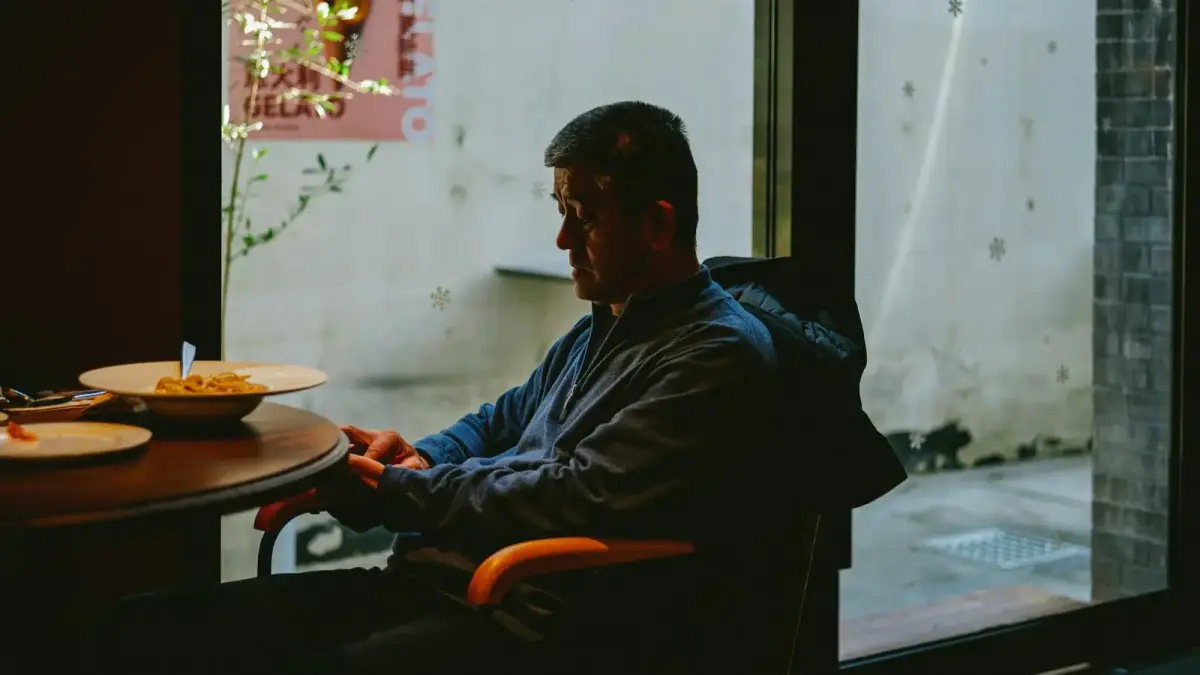
Someone asked me last week what I wanted for my birthday
I sat there for longer than I should have. My wife was across the table, coffee in hand, waiting. Not impatiently. She’s asked this question enough years in a row to know the pause is coming.
“I don’t know,” I said. “I’m good. I don’t really need anything.”
She nodded the way she always does - half acceptance, half something sadder. Like watching someone pat their pockets for keys they lost years ago.
Here’s what I want to tell you about that moment. I wasn’t being humble. I wasn’t being difficult. I wasn’t performing some masculine stoicism for points. I genuinely could not locate a want inside my own body. It was like opening a drawer I hadn’t touched in decades and finding it empty - not cleaned out, but never filled in the first place.
And if you’re a man reading this who knows exactly what I’m describing - that blank, almost peaceful absence where desire should be - I need you to hear something. That blankness isn’t maturity. It isn’t contentment. It’s the residue of something you watched before you had language for it.
You watched your father need nothing. And you learned.
The father who never wanted anything
My dad was the easiest man in the world to live with. Everyone said so. “Your father never complains,” my mother would tell people, and it sounded like a compliment. It was meant as one.
Birthdays came and went. “What do you want, Dad?” Same answer every year. A shrug. A slight smile. “I’ve got everything I need.”
Christmas was the same. He’d sit in his chair while everyone opened gifts, and the one or two things with his name on them - a new belt, a flannel shirt - he’d open quietly and say thank you and fold the wrapping paper like it could be used again. Not because he was frugal. Because the whole ritual of receiving seemed foreign to him, like a custom from a country he’d once visited but never lived in.
I didn’t think anything of it then. I thought that was what men did. I thought wanting things was something you outgrew, like training wheels or nightlights. By the time I was twelve, when someone asked what I wanted for my birthday, I was already practicing his shrug.
I didn’t know I was rehearsing. I thought I was growing up.
Wanting was the first thing we learned to put down
A 2015 study published in the Journal of Personality and Social Psychology found that boys as young as five begin suppressing emotional expression when they perceive that emotional restraint is valued by male role models. Not because someone tells them to. Because they watch. They absorb. They calibrate.
The researchers called it “observational emotional socialization” - the idea that children don’t need explicit instructions to learn which emotions are safe. They just need a living example.
Your father didn’t sit you down and say, “Son, never want anything.” He didn’t have to. He demonstrated it with every deflected birthday question, every “I’m fine,” every time he waved away the possibility of something being about him.
And what a child absorbs from that isn’t just “don’t ask for things.” It’s deeper. It’s “wanting is a vulnerability. Wanting means you’re incomplete. Wanting means you need something outside yourself, and needing something outside yourself means you can be disappointed, and disappointment means the people around you failed, and their failure becomes your burden, so the cleanest path - the path that protects everyone - is to simply stop wanting.”
All of that gets compressed into a shrug and three words: “I’m good.”
The nervous system that learned wanting was dangerous
This goes beyond habit. It becomes neurological.
Brene Brown has written extensively about the “shield of self-sufficiency” - the idea that for many men, not needing anything isn’t a personality trait but a protective strategy. The man who needs nothing can’t be let down. The man who wants nothing has removed himself from the economy of expectation entirely. He is bulletproof. He is also unreachable.
What I’ve come to understand is that desire is a muscle. And like any muscle, it atrophies when you stop using it.
A 2019 study in Frontiers in Psychology explored what researchers called “hedonic suppression” in men over forty - the measurable decline in the ability to identify personal wants, pleasures, and preferences in men who scored high on traditional masculinity norms. These men weren’t unhappy, exactly. They just couldn’t locate happiness with any specificity. Asked what brings them joy, they’d say “my family” or “a quiet evening.” Asked to get more specific - what food, what music, what experience, what moment - the answers thinned out and eventually stopped.
Not because joy was absent. Because the instrument that detects joy had been left in a drawer since childhood.
The low-maintenance reputation is a misunderstanding
Here’s what nobody tells you about being the easy one. Everyone loves it. Your partner appreciates it. Your kids think you’re laid-back. Your friends call you easygoing. And every one of those compliments reinforces the architecture that’s keeping you locked out of your own interior life.
“He never asks for anything” sounds like praise. It functions as a seal.
Because once you’ve built a reputation on needing nothing, the cost of suddenly needing something becomes enormous. You’d have to renegotiate every relationship you’re in. You’d have to watch people adjust to a version of you they’ve never met. You’d have to tolerate the awkwardness of someone trying to give you something and not knowing how to receive it.
So you don’t. You stay easy. You stay low-maintenance. You keep answering “I’m good” because the alternative isn’t just wanting - it’s disruption.
And the thing about disruption is, the man who watched his father need nothing also watched his father keep the peace. The two lessons were never separate. Needing nothing and keeping things smooth were the same curriculum.
What your father was actually teaching you
I want to be careful here, because I’m not interested in blaming fathers. My dad wasn’t withholding. He wasn’t cold. He was a man shaped by his own father, who was shaped by his. The chain doesn’t start anywhere you can point to. It just continues until someone notices it.
What your father was modeling - what my father was modeling - was a version of love that looked like disappearance. I will love you by not taking up space. I will love you by never being a problem. I will love you by requiring nothing, so that everything can go to you.
It’s a generous instinct, honestly. It comes from a real place. The problem is that a child doesn’t see the generosity. A child sees a man who doesn’t seem to want things and concludes that grown men don’t want things. A child watches his father deflect every gift and absorbs that receiving is somehow weak.
Daniel Goleman’s work on emotional intelligence has shown that children develop their emotional vocabulary primarily through observation of same-gender parents. A boy with a father who can name his wants, express his preferences, and receive with genuine pleasure develops a fundamentally different relationship with desire than a boy whose father treats every birthday like a day that’s not about him.
The second boy doesn’t lose desire all at once. He loses it like a language he stopped speaking. Slowly, and then completely.
The moment at fifty when someone asks what brings you joy
There’s a specific kind of silence that happens to men in their late forties and fifties. I know it because I’ve lived inside it.
Someone asks you what you’d do with a free Saturday. You genuinely don’t know.
Someone asks what your favorite meal is. You say whatever the family’s having.
Someone asks what you want for your birthday and you sit there - not searching through too many options, but staring at a shelf with nothing on it. And the honest feeling isn’t sadness. It’s bewilderment. Like, when did this happen? When did I stop knowing what I like?
The answer, for most of us, is that we never started. Or we started and stopped so early that the memory of wanting things feels like it belongs to someone else. A kid version of us who got overwritten.
I remember being maybe ten, wanting a specific model airplane kit. I can still see the box. Blue and white, a B-17 Flying Fortress. I wanted it with that uncomplicated childhood fire where the wanting itself is almost as good as the having.
I don’t remember when that kind of wanting stopped. I just know it did. And in its place came something quieter and more acceptable: the shrug. The “I’m fine.” The blank that everyone around me interpreted as easy and interpreted as good.
Practicing desire again is harder than it sounds
If you recognize yourself in any of this, I want you to know two things.
First: you are not broken. You are not emotionally deficient. You are not missing the part of the brain that experiences pleasure. You are a man who received very early, very consistent, very loving training in the art of not wanting, and you learned it so well that it became invisible to you.
Second: the muscle can come back. But it comes back slowly, and it comes back awkwardly, and the first few times you try to answer “what do you want?” with an actual answer, it will feel like speaking a foreign language in a room full of native speakers.
Start absurdly small. Not “what’s your dream life?” but “do you want the window seat or the aisle?” Not “what would make you happy?” but “would you rather have Thai food or Italian tonight?” And then sit with the answer long enough to notice that having a preference didn’t make the ceiling fall in.
A 2022 study in the Journal of Research in Personality found that men who practiced what the researchers called “preference articulation” - simply stating small wants out loud on a daily basis - showed measurable increases in life satisfaction over a twelve-week period. Not because they got what they wanted. Because the act of wanting itself reconnected them to a part of their inner life they’d abandoned.
You don’t have to become high-maintenance. You don’t have to become a man who needs everything. You just have to become a man who can answer a simple question without going blank.
What I’m learning to say instead of “I’m good”
I’m fifty-three years old and I’m learning, for the first time, to want things. It’s embarrassing to admit. It feels like confessing that you never learned to swim - something so basic that the not-knowing seems like it should be impossible.
Last week, my wife asked what I wanted for my birthday. And instead of the shrug, instead of “I’m good,” I sat with the question. I let it land somewhere real.
“I think I’d like a day,” I said. “Just a whole day where I do whatever I feel like doing, and I figure out what that is as I go.”
She looked at me like I’d said something extraordinary. I hadn’t. I’d said something ordinary - something any child could say. But for a man who spent forty years practicing his father’s shrug, it was the most honest sentence I’d spoken in a long time.
Your father gave you a lot of things. Steadiness. Reliability. The ability to hold a room together by never taking up too much of it. Those aren’t nothing. Those are real.
But he also gave you an empty drawer where your wants should be. And the fact that you’re reading this - the fact that something in you recognized this blankness and wanted to understand it - means the drawer isn’t locked. It never was.
You just need to start putting things in it. One small, embarrassing, completely ordinary want at a time.