Psychology says people who never leave a mess in someone else's kitchen - who wash their cup the moment they finish, who wipe the counter before anyone notices a single crumb, who leave every room cleaner than they found it - are not naturally tidy, they are adults who grew up in homes where leaving evidence of your presence was the fastest way to become someone else's problem, and the clean counter at fifty is not courtesy but a child who still believes the safest version of herself is the one who leaves no trace
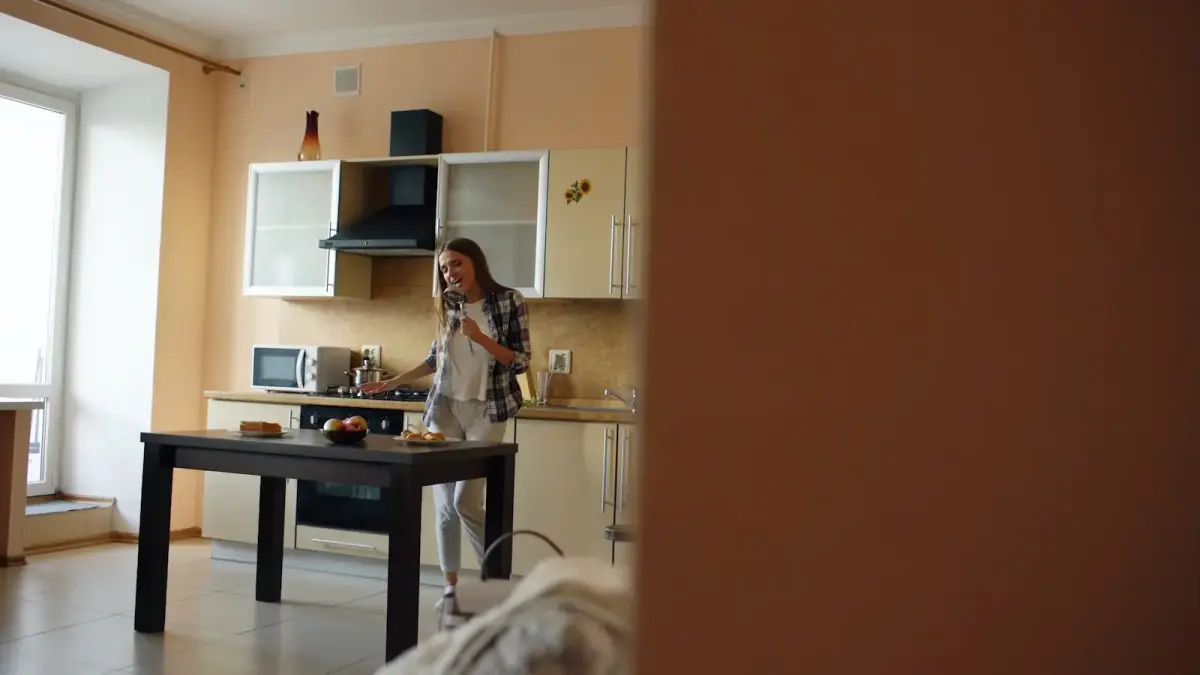
I stayed at a friend’s lake house last weekend. Four of us, three nights, a kitchen island covered in wine glasses and cheese boards and the beautiful debris of people actually enjoying themselves. By the second morning, I noticed something I’ve been doing my entire adult life but never had language for.
Everyone else left their coffee mugs on the counter and wandered to the dock. I washed mine before the water had cooled. I wiped the ring it left. I dried the spot where I’d set the sponge. And then I stood in a kitchen that held no evidence I had ever been there and felt something I mistook for satisfaction but was actually relief.
I wasn’t being polite. I was being invisible. And the difference between those two things is about forty years of practice.
If you are the person who does this - who cleans as you go, who leaves every room you borrow in better condition than you found it, who physically cannot sit down while your mess exists on someone else’s counter - I want you to hear something. This is not a personality trait. It’s a survival strategy. And it started long before you were old enough to reach the sink.
The counter is not a counter
The first thing to understand is that for people who grew up in certain kinds of homes, surfaces are not surfaces. They are evidence. A crumb on a counter is not a crumb. It is proof that you were there, that you consumed something, that you took up space and resources and left behind a record of it.
In homes where a parent’s mood could shift based on what they found when they walked into a room, every surface became a witness. A dish in the sink wasn’t a dish. It was a detonator. A jacket on the wrong chair could change the temperature of an entire evening.
A 2018 study published in the Journal of Personality and Social Psychology found that children raised in unpredictable home environments develop what researchers called “environmental monitoring” - a hyperawareness of physical spaces as emotional indicators. These children learn to read rooms the way other children learn to read books. They become fluent in the language of objects left behind and what those objects might cost them.
So you learned to leave nothing. You became the person who erased yourself from every room you entered, because the safest version of you was the one nobody could prove had been there.
The ritual is not about cleanliness
People often compliment this behavior. They say things like, “You’re such a good guest,” or “I wish everyone was as tidy as you.” And every time, something inside you flinches, because you know the truth that sits underneath the praise.
You’re not tidy. You’re terrified.
The cup you wash the moment you finish your coffee is not about hygiene. It’s about velocity. It’s about closing the gap between using something and removing the evidence that you used it, because in your childhood home, that gap was where trouble lived.
I remember being nine years old, eating cereal before school, and hearing my father’s footsteps on the stairs. The speed with which I rinsed that bowl, dried it, and put it back in the cabinet was not the speed of a child who cared about kitchens. It was the speed of a child who understood that a wet bowl in the sink was a question - who used this, when, did they use the last of the milk - and questions in that house always led somewhere I didn’t want to go.
By the time you’re forty-five, you don’t hear the footsteps anymore. But your hands still move at the same speed. The bowl still gets rinsed before you’ve swallowed the last bite.
Daniel Goleman’s work on emotional intelligence describes how early threat responses become automated behaviors - patterns so deeply encoded that they bypass conscious thought entirely. You don’t decide to clean the counter. Your nervous system decides for you, and it makes the decision in the same fraction of a second it’s been making it since you were small enough to need a step stool to reach the faucet.
What it looks like in someone else’s home
Here is where it becomes most visible, and most painful.
In your own home, you can frame it as preference. I like things clean. I’m organized. It’s just how I am. But in someone else’s home, the mask slips. Because in someone else’s home, you are not maintaining your space. You are performing your worthiness to occupy theirs.
You arrive at a dinner party and notice the exact position of everything on the counter. You register where the paper towels are. You locate the trash can within thirty seconds, not because you need it, but because knowing where it is makes you feel safe.
You cook something and you clean every surface as you go - not after, during. Your friend says, “Leave it, we’ll deal with it later.” And you smile and say, “Oh, I don’t mind.” But what you mean is: I physically cannot stop. My body will not let me exist inside a mess that someone else might have to touch.
A 2021 study in Frontiers in Psychology examined what researchers called “trace anxiety” - the distress certain individuals experience when they believe they have left behind evidence of their presence in a shared space. The study found that this anxiety was most pronounced in adults who reported childhood environments where parental approval was contingent on the child’s ability to minimize their impact on shared spaces. Participants described feeling as if leaving a dish, a crumb, or even a water ring on a table was a form of imposing on others.
You read that and your chest tightens, because you’ve spent thirty years calling this consideration when it was actually terror.
The apology you don’t say out loud
Watch yourself the next time you use someone else’s kitchen. You won’t just clean up. You’ll apologize without words.
You’ll fold the dish towel after you use it. Not just set it down - fold it. You’ll check the sink for anything you might have missed. You’ll glance at the counter from the angle of the person who owns the kitchen, trying to see what they’ll see when they walk back in, trying to ensure the answer is: nothing. She was never here.
This is not courtesy. This is a child’s apology for existing in someone else’s space.
Gabor Mate has written extensively about how children in emotionally unsafe homes develop what he calls “automatic authenticity suppression” - the habit of editing your natural impulses to match what the environment demands. For some children, this means becoming quiet. For others, it means becoming helpful. For you, it meant becoming invisible. And the kitchen counter became your canvas for disappearance.
The cruelest part is that it works. People do like you for it. You are universally considered a great guest, a thoughtful friend, an easy person to have around. And every one of those compliments lands on the same wound - because being easy to have around was never a compliment in your childhood. It was a survival requirement.
The exhaustion nobody sees
People who live this way are tired in a way that doesn’t show up in sleep schedules or step counts.
You are tired because you are running a background program every time you enter a shared space. You are scanning, calculating, monitoring. You are tracking what you’ve touched, what you’ve moved, what you’ve consumed. You are performing a constant environmental audit, and the audit never ends, because the definition of “clean enough” in your childhood home was whatever prevented the next eruption - and that target moved.
A 2020 study in Psychological Science found that adults who grew up in high-conflict homes showed elevated cortisol responses not during conflict itself, but during ambiguous social situations - moments where the rules were unclear and the consequences unpredictable. Your friend’s kitchen is one of those moments. There are no posted rules about dishes. Nobody has told you what’s expected. And that absence of explicit instruction is the exact environment your nervous system was trained to treat as dangerous.
So you default to the safest behavior you know: leave no trace. Use nothing that can’t be immediately returned to its original state. Occupy space as though you were never given permission to be there - because you weren’t. Not in the first kitchen that mattered.
Learning to leave the cup
I’m not going to tell you to stop cleaning up after yourself. That would be like telling someone to stop flinching. The behavior isn’t the problem. The belief underneath it is.
The belief is this: I am a burden. My presence costs people something. The only way to be welcome is to make sure I cost nothing.
That belief was installed by a specific person in a specific kitchen a very long time ago. And it was never true. You were a child. Children leave crumbs. Children leave cups on counters. Children take up space and make noise and use the last of the milk. That is not a failing. That is what being alive looks like.
The work is not to become messy. The work is to notice the moment your hands reach for the sponge and ask yourself: Am I doing this because I want to, or because a child inside me believes that if I don’t, I’ll become someone’s problem?
You were never someone’s problem. You were someone’s child. And those should never have been the same thing.
The clean counter at fifty is beautiful, in its way. But it shouldn’t be the price of your peace. You are allowed to finish your coffee, set the mug down, and walk to the dock with everyone else. The ring it leaves on the counter is not evidence of a crime.
It’s evidence that you were there. And that was always, always enough.