Psychology says people who apologize for things that are clearly not their fault are not insecure - they grew up in homes where someone else's mood was always their responsibility, and the reflex to say sorry before anyone has accused them of anything is not weakness but a nervous system still trying to prevent a consequence that stopped being possible twenty years ago
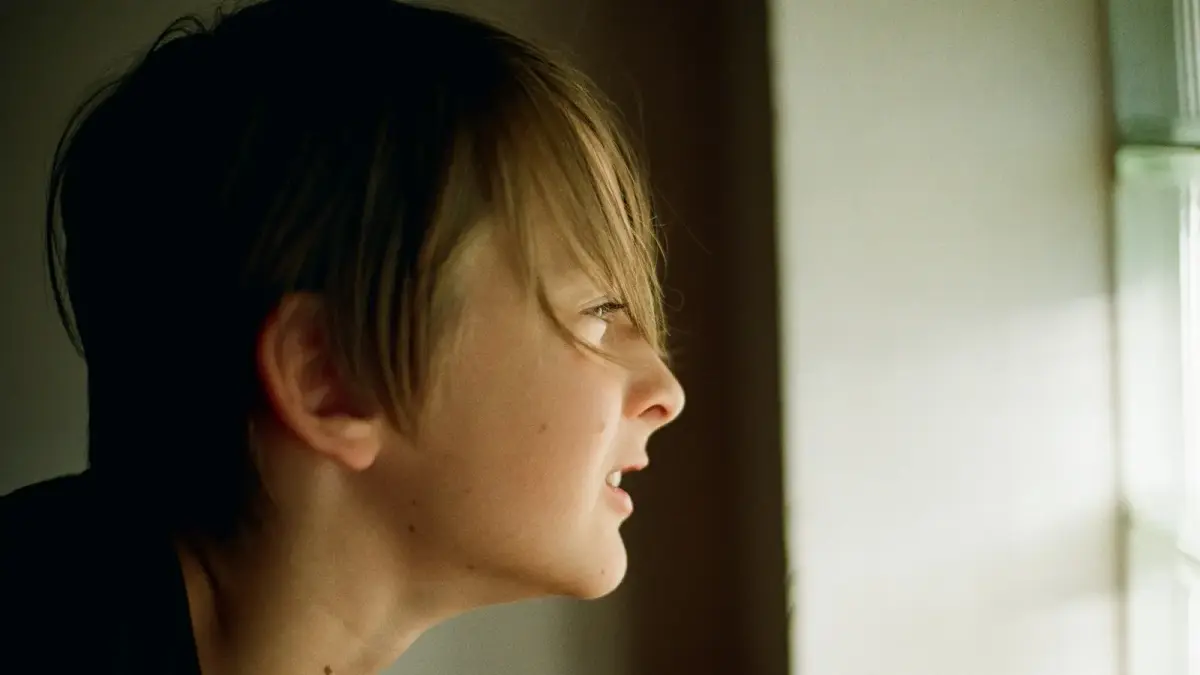
I apologized to a chair last Tuesday.
Not metaphorically. I was walking through a coffee shop, my bag clipped the back of an empty chair, and the word left my mouth before my brain had time to register that there was no one sitting in it. Sorry. Quick, automatic, aimed at a piece of furniture that did not care and could not hear me.
The barista looked at me. I looked at the chair. And then I laughed - the kind of laugh that covers something you’re not quite ready to examine in public.
I know what I look like when I do this. I look like someone who is excessively polite, maybe a little nervous, maybe lacking confidence.
People have told me as much. “You apologize too much.” “Stop saying sorry.” “You don’t need to apologize for existing.” And I have nodded at every one of those observations, agreed with them completely, and then apologized for agreeing too quickly.
But here is what I have learned after years of studying why people do the things they do, especially the things they cannot seem to stop doing no matter how much they want to.
The compulsive apology is not what it looks like from the outside. It is not insecurity. It is not low self-esteem.
It is something much older, much smarter, and much more deserving of your respect.
The geography of the automatic sorry
You know the shape of it even if you’ve never mapped it out loud.
Someone drops something and you say sorry. Someone bumps into you and you say sorry. Your friend cancels plans and you find yourself apologizing - for what?
For being the kind of person someone might need to cancel on? For taking up space in their calendar?
The apology arrives before the thought does. It is faster than logic, faster than reason, faster than any conscious decision you could make about whether the situation actually calls for remorse.
This isn’t a language habit. It isn’t Canadian politeness or Midwestern niceness or whatever cultural shorthand people use to dismiss it.
It is a reflex. And reflexes don’t come from nowhere.
A 2019 study published in the Journal of Personality and Social Psychology found that individuals who engage in what researchers call “excessive apologizing” - saying sorry in situations where no wrongdoing occurred - consistently scored higher on measures of interpersonal sensitivity and emotional vigilance. Not lower on self-esteem. Higher on awareness.
The people who apologize the most are not the ones who think the least of themselves. They are the ones who are paying the most attention to everyone else in the room.
That distinction matters. Because the story most people tell about compulsive apologizers is that they need to grow a backbone. The actual story is that their backbone was forged in a specific kind of fire, and the apology is what it produced.
The house where moods were assignments
Let me describe a childhood, and you tell me if it sounds familiar.
There was a person in your home - a parent, a caregiver, an older sibling - whose emotional state determined the weather for everyone else. When they were happy, the house was safe. When they were upset, the atmosphere shifted, and every person in the house felt it in their body before anyone said a word.
You learned to read that weather. Not because you were precocious or emotionally gifted, though you were both of those things. You learned because you had to.
Because in that house, someone else’s bad mood was not just their experience. It was your assignment.
If they were angry, it was your job to figure out why. If they were sad, it was your job to fix it. If they were quiet in that specific, heavy way that meant something was wrong, it was your job to tiptoe, to adjust, to make yourself smaller or funnier or more helpful until the pressure lifted.
And if you couldn’t fix it - if the mood landed anyway, if the yelling started or the silence deepened - then it was, somehow, your fault. Not because anyone said those exact words. Sometimes they did.
But often it was subtler than that. A look. A sigh. A withdrawal of warmth that taught you, in the language a child’s body understands before their mind catches up, that you were responsible for something you never had the power to control.
Psychologist and author Gabor Mate has written extensively about what happens when children grow up in environments where emotional responsibility is inverted - where the child manages the parent’s feelings instead of the other way around. The child doesn’t just learn to be helpful. The child’s entire nervous system reorganizes around a single imperative: prevent the consequence.
The apology is how you prevent it.
What the sorry actually does
Here is the part most people miss, including the people who tell you to stop.
When you say sorry for bumping a chair or existing in someone’s walking path or taking a moment too long to answer a text, you are not expressing remorse. You are not even really communicating with the other person. You are running a subroutine that was installed decades ago, and the purpose of that subroutine is de-escalation.
The sorry is a preemptive offering. It says: I know something might be wrong. I don’t know what it is yet, but I am already taking responsibility for it.
Please don’t escalate. Please stay calm. I will carry this so you don’t have to.
In a childhood where someone else’s displeasure could reshape the entire household, this was brilliant strategy. The child who apologized first was the child who defused the tension before it became dangerous.
The sorry bought time. It bought safety. It was a white flag raised before the battle started, and in many cases, it worked.
The mood softened. The anger redirected. The child learned that the fastest way to restore peace was to take the blame - for anything, for everything, for things that had nothing to do with them - because the cost of a false apology was always less than the cost of someone else’s unmanaged emotion.
You are still doing this. Not because you are weak. Because the strategy worked so well that your nervous system never received the memo that the emergency is over.
What the research says about the fawn response
In clinical psychology, there is a term for this pattern that has gained significant traction over the last several years. It is called the fawn response.
You have probably heard of fight, flight, and freeze - the three classic stress responses. The fawn response is the fourth, identified and named by therapist Pete Walker in his work on complex trauma.
It describes the survival strategy of moving toward the threat rather than away from it. Not to confront. To appease.
The fawn response looks like people-pleasing. It looks like over-accommodation. It looks like a person who cannot say no, who reads every room as a potential minefield, who calibrates their behavior in real time to the emotional state of whoever holds the most power in any given situation.
And it looks, very often, like someone who says sorry forty times a day for things that are not their fault.
A 2021 study published in Frontiers in Psychology examined what researchers called “appeasement behaviors” in adults with histories of childhood emotional unpredictability. The findings were striking.
Participants who grew up in homes with high emotional volatility - not necessarily abuse, but unpredictability, inconsistency, environments where the rules kept changing - showed significantly elevated rates of preemptive conciliation in social interactions. They apologized more. They deferred more.
They agreed with things they didn’t actually believe. And the key finding: these behaviors were not correlated with low self-esteem. They were correlated with high threat sensitivity.
The participants were not people who thought poorly of themselves. They were people whose nervous systems were exquisitely tuned to the possibility of conflict, and who had developed a sophisticated, automatic strategy for preventing it.
This is not a character flaw. This is an adaptation. A remarkably intelligent one.
The reframe you deserve
I want to be careful here, because I am not saying the compulsive apology is something you should keep doing forever without examination. If it causes you pain, if it makes you feel invisible, if it allows people to treat you as though everything is always your fault - those are real costs, and they deserve your attention.
But I am saying this: before you try to fix the behavior, you need to understand what it was for.
You were not raised in a home where it was safe to simply exist without monitoring the emotional temperature of every person around you. So you developed a tool. An elegant, instantaneous, remarkably effective tool that kept you safe during a period of your life when safety was not guaranteed.
The sorry was not submission. It was strategy. It was your child-self’s version of diplomacy, performed under conditions that no child should have to navigate but that you navigated anyway, with more skill and grace than most adults could manage.
Brene Brown has talked about the way we pathologize the very behaviors that kept us alive, turning survival into shame. The compulsive apology is a perfect example.
The world looks at it and sees weakness. But if you trace it back to its origin - if you follow the thread from the sorry you said to the barista all the way back to the first time you learned that someone else’s mood was your responsibility - what you find is not weakness at all.
What you find is a child who was paying attention. A child who was working harder than anyone in the house to keep the peace. A child who figured out, without anyone teaching them, that words could be shields, that taking blame could be armor, that the fastest route to safety ran directly through the phrase I’m sorry.
That child was not broken. That child was extraordinary.
You don’t need to stop - you need to understand
A 2022 study in the Journal of Research in Personality found something that I think about often. Researchers discovered that when individuals who engaged in compulsive apologizing were helped to understand the developmental origins of the behavior - when they could trace the reflex back to its source - the frequency of unnecessary apologies decreased naturally over time.
Not because they forced themselves to stop. But because understanding the why loosened the grip of the automatic.
You don’t need to white-knuckle your way out of saying sorry. You don’t need to slap your own hand every time the word leaves your mouth. You don’t need another person telling you to stop apologizing, which, if we’re being honest, has never once made you apologize less and has always made you feel like something is wrong with you for not being able to control it.
What you need is to see the reflex for what it is. A message from a younger version of you. A version who learned that the world was safer when they took responsibility for everything, including things that were never theirs to carry.
The next time you catch yourself saying sorry to an empty chair, or to someone who stepped on your foot, or to a coworker for having a question - you don’t have to judge it. You can just notice it. You can let the recognition settle without turning it into another thing you need to fix about yourself.
That nervous system of yours has been working overtime for decades. Not because it’s broken. Because it learned its job in a house where the stakes were real, and it has been faithfully, relentlessly, exhaustingly performing that job ever since.
You are allowed to let it rest. Not all at once. Not by force.
But gently, the way you’d tell a child who has been standing guard all night that the sun is up now, the house is quiet, and they can finally, finally put the shield down.
You were never weak. You were the strongest person in the room. You just happened to express that strength in a way the room didn’t recognize.