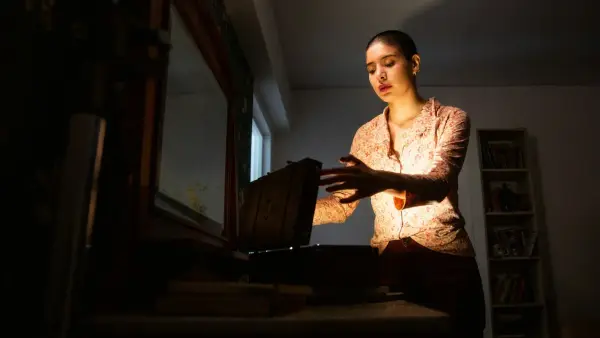
Psychology says people who feel physically exhausted after making a simple decision like choosing a restaurant or picking a paint color are not overthinking - they were children who learned that the wrong choice could change the mood of the entire house, and their brain still treats every decision as if someone's emotional safety depends on getting it right
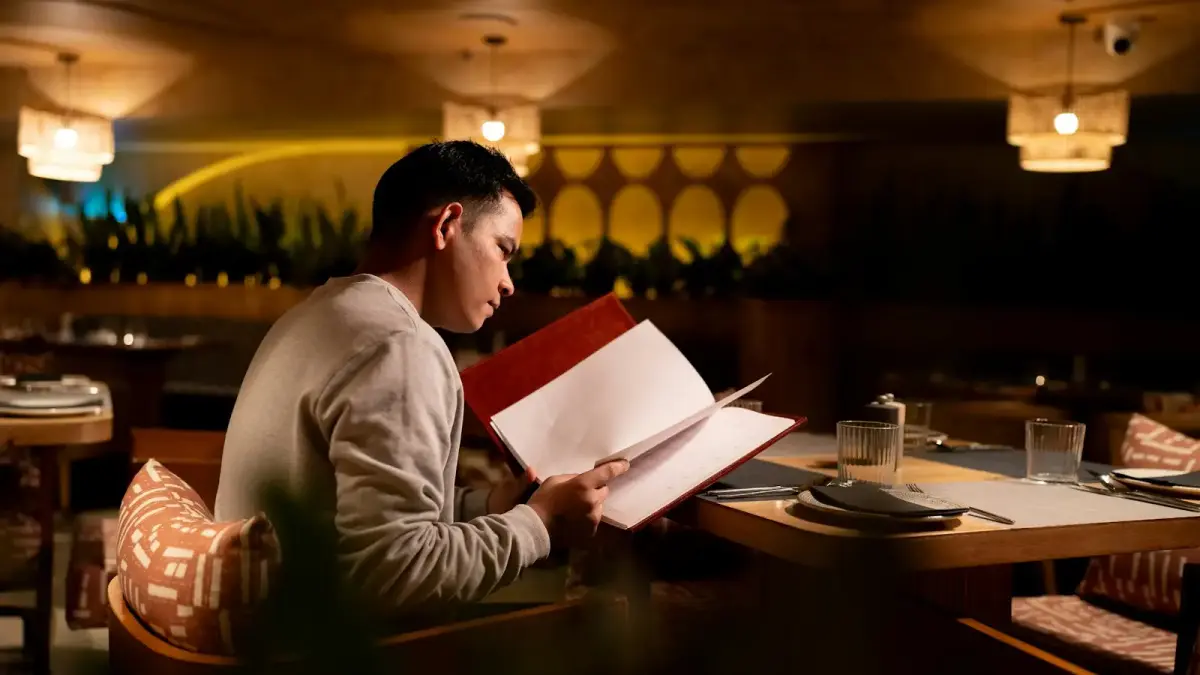
The ten-minute cereal aisle
Last Tuesday I stood in the grocery store staring at two nearly identical boxes of pasta for so long that a stock clerk asked me if I needed help finding something.
I didn’t need help finding anything. I needed help choosing.
Not because I cared deeply about rigatoni versus penne. But because somewhere in my nervous system, a quiet alarm was sounding. A feeling I couldn’t name. Something that whispered: if you pick the wrong one, something bad will happen.
I know how ridiculous that sounds. It’s pasta. Nobody’s life changes based on the shape of the noodle.
But my body didn’t get that memo. My body was tired afterward - genuinely, physically tired - as if I’d just navigated a conflict instead of a dinner ingredient.
If that feeling sounds familiar to you - the strange heaviness that settles after choosing a restaurant, picking a paint color, or answering the question “where do you want to eat?” - I want you to know something that took me years to understand.
You’re not indecisive. You’re not overthinking. And there is nothing wrong with your brain.
What’s happening is older than you think, and it makes more sense than you’d expect.
When choosing felt like a test you couldn’t afford to fail
There’s a particular kind of childhood that teaches you this. It doesn’t require anything dramatic. No raised voices necessary, no obvious trauma that a therapist would immediately flag.
It just required a home where moods shifted based on choices.
You suggested a restaurant and watched your mother’s face fall, just slightly. You picked the wrong movie and felt your father’s silence fill the room like weather. You said “let’s go to the park” and something in the air changed - not violently, but unmistakably.
You learned, without anyone teaching you directly, that your choices had consequences beyond the choice itself. That picking a restaurant wasn’t about food. It was about managing the emotional temperature of the people around you.
A 2012 study published in the Journal of Personality and Social Psychology found that decision-making draws on the same mental resources as emotional regulation. The researchers discovered that people who spent more energy managing emotions throughout the day showed significantly more decision fatigue - even on tasks that had nothing to do with relationships.
For children who grew up scanning their environment for emotional shifts, every decision became an emotional regulation task. Not “what do I want?” but “what will keep everyone okay?”
That’s an entirely different cognitive operation. And it’s exhausting in a way that other people simply don’t experience.
Your brain is running a program that used to keep you safe
Here’s what I need you to understand: this response isn’t a flaw. It’s an adaptation.
Your developing brain did something remarkably intelligent. It noticed that choices carried weight in your household. That the wrong answer could produce coldness, irritation, disappointment, or that particular silence that felt worse than yelling.
So it started treating every decision as a high-stakes emotional calculation. It built a program that runs automatically now - scanning for the “safest” option, the one least likely to produce a negative reaction from anyone in the room.
The problem isn’t the program. The problem is that the program is still running in situations where the stakes are genuinely low.
You’re standing in a hardware store choosing between two nearly identical shades of gray, and your nervous system is behaving as if someone’s emotional wellbeing hangs in the balance. Because for a long time, it did.
Dr. Gabor Mate has written extensively about how childhood adaptations - the strategies we develop to maintain connection with our caregivers - become the source of our difficulties in adulthood. The very thing that helped you survive your household is now making it nearly impossible to enjoy something as simple as picking where to eat on a Friday night.
This is not a personality defect. This is your loyalty to a survival strategy that worked.
The weight that other people don’t feel
I think one of the loneliest parts of this experience is how invisible it is.
You’re at dinner with friends and someone says “I don’t care, you pick.” And they mean it as kindness. They’re being easy, flexible, generous.
But inside your body, something clenches. Because “you pick” doesn’t register as freedom. It registers as responsibility. As a test. As the moment where you become accountable for everyone’s experience.
So you say “no, really, you choose.” And they laugh and say “I honestly don’t mind.” And now you’re caught in a loop that feels absurd from the outside but unbearable from the inside.
The people around you choose restaurants in thirty seconds. They pick paint colors on instinct. They answer “what should we have for dinner?” without their heart rate changing.
You are not those people. Not because you’re broken, but because you were trained in a different school. You graduated from the school of “every choice is an emotional event,” and that education doesn’t just disappear because you moved out of your parents’ house.
A 2019 study in Frontiers in Psychology examined how early emotional environments shape decision-making patterns in adulthood. Researchers found that adults who reported higher levels of childhood emotional unpredictability showed measurably more cognitive load during routine decision tasks - their brains were literally working harder to make choices that other participants processed almost automatically.
Your exhaustion is real. It’s not laziness. It’s not a character flaw. Your brain is doing more work than the person next to you, on every single small decision, all day long.
The dread of “it doesn’t matter”
There’s a specific phrase that tends to land hardest for people who carry this pattern. Someone says “it doesn’t matter, just pick something.”
And you want to believe them. You want to feel the lightness of a choice that genuinely doesn’t matter.
But your body remembers all the times it was supposed to not matter and then it did. The restaurant that was “fine” until your parent spent the whole meal making comments about the menu. The movie that was “whatever you want” until you picked the wrong one and spent the rest of the evening next to someone who was quietly unhappy.
“It doesn’t matter” became one of the least trustworthy phrases in your vocabulary. Because in your house, it almost always mattered.
So now when someone says those words, you don’t feel relieved. You feel more vigilant. More careful. More determined to find the “right” answer to a question that supposedly has no right answer.
This is what hypervigilance looks like when it’s wearing casual clothes. It doesn’t always look like scanning a room for exits. Sometimes it looks like agonizing over a text message for fifteen minutes, rewriting it four times, because you need the tone to be exactly right.
Sometimes it looks like exhaustion after a Saturday of running errands, not because the errands were hard, but because each one required dozens of tiny choices and each tiny choice demanded the same emotional processing that bigger decisions require.
The real cost is invisible
The thing about this kind of fatigue is that it doesn’t announce itself. You don’t collapse after choosing a restaurant. You just feel a little more drained by evening than seems reasonable.
You start avoiding decisions without realizing it. You say “I’m easy, whatever you want” not because you don’t have preferences, but because having preferences feels dangerous. Because stating what you want opens the door to the possibility that your want was wrong.
Susan Cain, in her research on temperament and overstimulation, has explored how certain nervous systems process stimuli more deeply than others. People with these sensitive processing styles don’t just notice more - they weigh more. Every input gets run through additional filters, additional calculations, additional what-if scenarios.
For people whose childhood taught them that choices carry emotional consequences, this deeper processing gets amplified. You’re not just choosing between two restaurants. You’re unconsciously calculating which option is least likely to make anyone uncomfortable, which one signals the right thing about you as a person, and whether you’ll need to manage someone’s reaction afterward.
That’s not picking a restaurant. That’s performing emotional labor disguised as a dinner plan.
What your exhaustion is actually telling you
Here’s the reframe I want to offer you, because I think you need to hear it clearly.
Your decision fatigue is not evidence that something is wrong with you. It’s evidence that something happened to you.
You learned, very young, to carry a weight that wasn’t yours. The emotional climate of your household was placed on your small shoulders, and you bore it by becoming exquisitely careful. By making yourself into the kind of person who never picks the wrong thing, because the wrong thing had real costs.
That child was brilliant. That child was paying attention. That child was doing everything they could to keep the peace in a home where peace was conditional.
The adult you’ve become still carries that child’s operating system. And it’s time - gently, slowly - to let your nervous system learn what it never got to learn back then.
Some choices genuinely don’t matter. Some wrong answers are just funny stories later. Some people in your life really, truly don’t care where you eat, and their love for you will not shift based on whether you choose Thai or Italian.
You were never just picking a restaurant
I still stand in grocery aisles longer than I need to sometimes. I still feel that flicker of dread when someone says “you decide.”
But I understand it now. I understand that my hesitation isn’t weakness. It’s the echo of a child who was trying, so hard, to get it right. To keep everyone okay. To make the safe choice in a home where safety was never guaranteed.
If you’re someone who feels genuinely tired after making decisions that other people make without thinking, I want you to sit with this for a moment.
You are not high-maintenance. You are not difficult. You are not broken.
You are someone who learned that choices carry weight. And you’ve been carrying that weight in every grocery store, every restaurant, every small moment of your adult life - quietly, invisibly, without anyone noticing how hard you’re working.
That’s not a flaw. That’s a form of caring so deep it exhausted you before you even knew what was happening.
And the fact that you’re tired? That makes perfect sense. You’ve been doing the hardest version of the simplest things for your entire life. Anyone would be exhausted.