Psychology says people who grew up without money and now over-thank the waiter, apologize for requesting the table they reserved, and keep saying "if that's okay" at restaurants where it was always going to be okay are not being polite, they are a grown adult's nervous system still paying an entrance fee it learned, at seven years old, was the only reason a room like this would let them stay
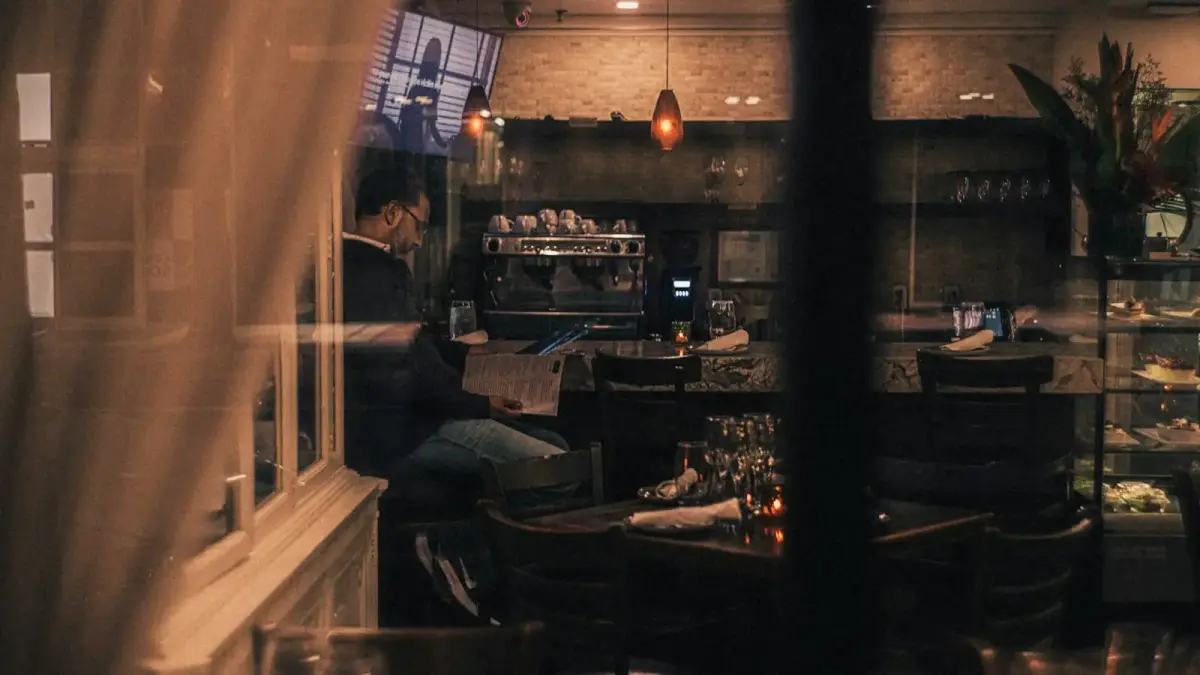
Last Friday my husband and I were at a steakhouse with low lighting and heavy cloth napkins, the kind of place where the butter comes out soft in a little ceramic dish and nobody hurries you. He ordered first. He said “I’ll do the New York strip, medium rare, and another glass of the cabernet,” like a person who has never once been asked to leave a room.
Then it was my turn.
I opened my mouth and what came out was this: “Hi, sorry, is it okay if I get the ribeye? Medium rare, if that’s not too much trouble. And - only if it’s easy - maybe a side salad? Whatever’s simplest. Thank you so much.”
The waiter paused. Just for a second. Long enough for me to feel the back of my neck get warm. My husband looked at me the way he has looked at me a hundred times before, with a small, tender amusement, and said, after the waiter walked away, “Honey. You reserved the table. You’re allowed to have a steak.”
I laughed. I made a joke about being Midwestern. I picked up the bread.
But I knew what had just happened, because I have known it for a long time, and I have never quite known how to say it until now. I wasn’t being polite. I wasn’t being humble. I was seven years old, sitting in a booth in a restaurant my parents had saved up to take us to, watching my father say “thank you, thank you, thank you” to a waitress who had only put down water glasses. I was paying an entrance fee my nervous system still thinks is due.
The posture I learned before I learned to read
You don’t remember learning this. That’s the thing about it. By the time you could tell the story about it, it was already part of the way you held your shoulders.
What I remember is this. The diner on Route 9 when my dad got a bonus, which wasn’t often. The Red Lobster for my sister’s graduation. The one steakhouse, once, when my grandmother died and my uncle insisted on paying and my mother cried quietly into the menu because she didn’t know what “au poivre” meant and didn’t want to ask.
I remember my father becoming a different person when the waiter came over. Softer. Smaller. A lot of “sir” and “no rush at all” and “whatever’s easiest for you.” I remember my mother folding and refolding her napkin during the check moment, her knuckles going white around it, as if bracing for something. I remember the language in the car on the way home being different from the language inside. Inside, everyone was careful. Outside, everyone exhaled.
I didn’t know I was being taught anything. I thought I was just eating chicken fingers.
But I was learning the posture. I was learning that a room like that was a room you had to earn your way into twice. Once with money at the door. And then again, moment by moment, with a constant low hum of gratitude and apology, so the people who worked there - and, more importantly, the people at the other tables - would let you stay.
What the body keeps when the bank account changes
The French sociologist Pierre Bourdieu had a word for this. He called it habitus. The way class gets stored in the body. Not in your wallet, not in your job title, but in how you walk into a room, how you hold your fork, whether you know without thinking that the small fork is the one you start with. He noticed something almost cruel about it: the body remembers where it came from long after the circumstances change. You can earn a new income and still carry the old posture.
Keith Payne, the psychologist who wrote The Broken Ladder, has been making a similar point for years with American data. Growing up in scarcity, he argues, doesn’t just shape your finances. It shapes your threat monitoring. Kids raised near the edge learn to read rooms faster than kids raised in the middle. They learn to notice who is tense, who is in charge, who might ask them to leave. That vigilance does not turn off when the income goes up. It just finds new things to scan for.
And Bruce McEwen, before he died, spent decades describing something he called allostatic load - the physiological wear and tear on a body that lived, early and long, in low-grade stress. Children who grew up watching adults brace for a check, for a bill, for a rent increase, for a look from a manager, carry that bracing in their nervous systems. It doesn’t matter, really, that the check is now easy to pay. The bracing is a muscle that learned to fire.
When I over-thank the waiter at a steakhouse in 2026, that muscle is firing. My adult bank account is not the one answering the phone. A much younger version of me is. And she is trying to make sure this nice lady in the apron doesn’t look at us and know.
The exact behaviors, because I know you have them too
I want to name the specific things, because I think part of what keeps this feeling like a private embarrassment is that nobody ever names them out loud.
The over-thanking. You say thank you when the waiter brings the water. You say thank you when they bring the bread. You say thank you when they tell you the specials. You say thank you when they set down your fork. By the end of the meal you have said thank you more times than there were courses.
The apologizing for the reservation. You walk up to the host stand, having booked the table weeks ago, and you say “hi, sorry, I think we might have a reservation? Under Vance? Sorry if I’m saying the wrong name.” As if you might be making it up.
The diminutives. You shrink every order. “Just a small salad, if that’s easy.” “Just a house red, whatever’s open.” “Only if it’s not too much trouble.” The word “just” comes out of your mouth before you notice it. You make your requests smaller than they are, so the room doesn’t feel imposed upon by them.
The “take your time.” You have already waited twenty minutes for someone to bring you water. When they finally arrive, you say “no rush at all.” You have made their lateness into a favor they did you.
The tip. You leave 22 or 25 percent when 20 is standard, because 20 feels like a kind of withholding, and withholding feels like something a person with unearned confidence would do, and you are not ever going to be a person with unearned confidence.
None of these things are wrong. Every single one of them is, on its own, a decent human gesture. The trouble is not that you do them. The trouble is that you cannot not do them, and something in your chest tightens when you even try, and your spouse has gently started to tease you about it, and you can’t explain, because the explanation is a seven year old in a booth on Route 9 trying to help her parents keep the peace with a waitress whose name she never learned.
The room is not going to evict you
Here is what I want you to hear, because I have had to say it to myself a lot, and it has only started to work in the last couple of years.
You are not embarrassing. You are not “too much.” You are not being weirdly servile in a way your friends from nicer backgrounds find quaint. You are a person whose nervous system learned, very early, that belonging in a certain kind of room was conditional, and that the condition was a steady performance of gratitude.
That performance kept something real at bay for your family. It kept your parents from being looked at sideways. It kept your mother from crying in the parking lot. It kept the waitress from remembering you as the table that didn’t know. It was, in its own way, an act of protection, and you learned it by watching people you loved.
The reason you can’t stop doing it now is not that you are broken. It’s that your body is still being kind to that child. It is still trying to protect someone who sat very still in a booth and tried to be good, because being good was how the evening stayed okay.
The behavior is not a deficiency. It’s evidence. It’s a record of what you had to pay attention to when other kids were paying attention to cartoons. The fact that your shoulders know the shape of a “nice” restaurant before your mind does is not a flaw in your adult self. It is a memorial to a small person who was doing her job beautifully, with a kind of social intelligence most adults never develop, because she had to.
You can thank her for that, quietly, the next time your face goes warm after you say “if that’s okay” about the ribeye.
A gentler way to sit down
You are allowed to order like someone who belongs. Not because you have the money now, although you do. Because belonging in that room was never actually about money. It was about a story your child self told you, in the absence of any other information, about what kept you safe.
The room is not going to evict you. It was never going to. The hostess is not standing by the door with a clipboard of people who grew up in houses where eating out was a bonus day. The waiter does not care whether you say thank you three times or once. He has a job, and he is doing it, and he would like you to enjoy the steak.
Your “thank you so much” is a beautiful sentence. It just doesn’t need to be said four times.
You can let the napkin lie flat on your lap. You can ask for the ribeye medium rare without the apology on either end. You can tell the waiter “medium rare, please,” and then stop talking, and the silence after it will not be rude. It will just be the quiet of a person who trusts that the room has agreed to have her.
The entrance fee has long since been paid. It was paid by a seven year old in a booth a long time ago, who watched very carefully, and learned to be soft in the right places, and kept her family steady through more meals than anyone ever thanked her for. You can tell her, if you want, that she can put the job down now. You can tell her the check is handled. You can tell her the nice lady in the apron already likes her.
And then you can pick up your fork, the correct one or any one, and have the kind of dinner she was trying, all those years ago, to help you get to.