She's 55 and has never told anyone about the money in the coat she only wears in January - not because she plans to leave, but because a girl who watched financial dependence reshape her mother's posture learned that the distance between choosing to stay and having no choice was a hundred dollars in a place nobody thought to look
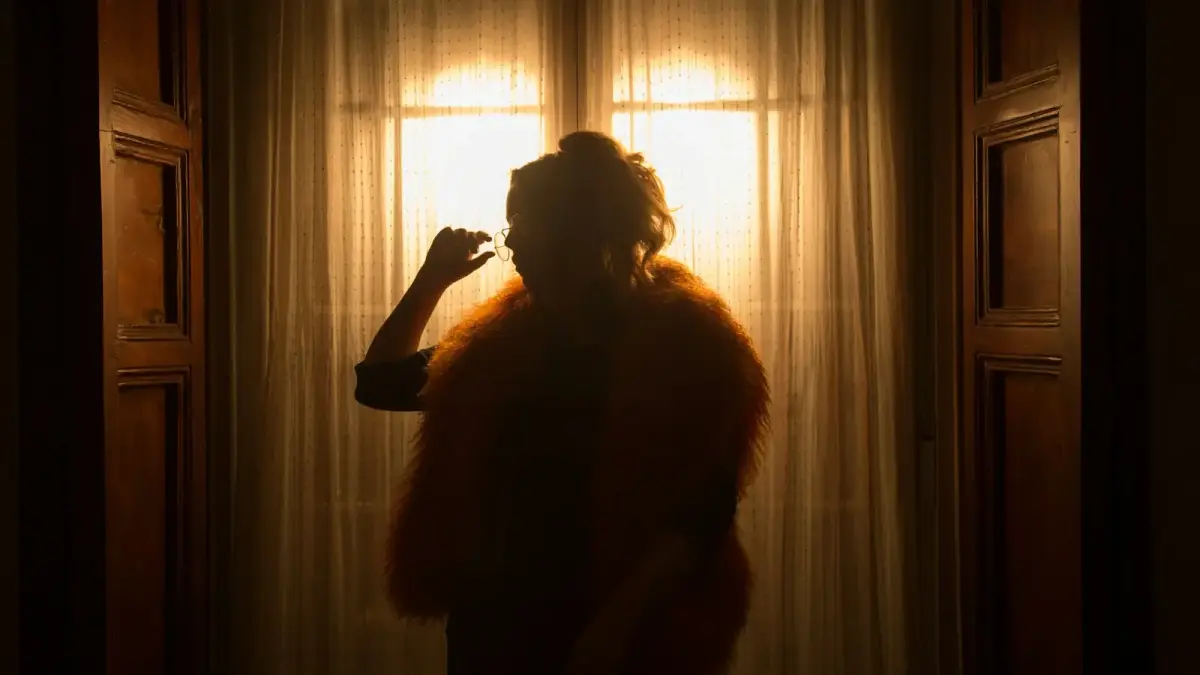
There is an envelope in the inside pocket of a wool coat that hangs in the back of my aunt’s closet. She wears the coat maybe twice a year - January, sometimes February if it stays cold long enough. The rest of the year it hangs behind lighter jackets and a raincoat that’s seen better days, and nobody thinks about it.
Inside that pocket is four hundred dollars in twenties, folded tightly, wrapped in a piece of wax paper she replaced sometime around 2019.
She didn’t tell me about it. I found out by accident when I was fourteen and she asked me to grab her gloves. I pulled out the envelope and stared at it, and she crossed the room faster than I’d ever seen her move.
“Put that back,” she said. Not angry. Something else. Something closer to fear.
I didn’t understand it then. I do now.
Because my aunt is not the only woman I know who keeps money hidden in her house. And the reason she keeps it has almost nothing to do with the marriage she’s been in for thirty-one years - and almost everything to do with the one her mother couldn’t leave.
The envelope is never about the marriage
Here is what most people assume when they hear about a woman who hides cash: she’s planning to leave. She’s unhappy. She doesn’t trust her husband. Something is wrong.
And sometimes that’s true. But far more often, the money has nothing to do with the person she married.
It has to do with the person she watched growing up.
A mother who had to ask before buying new shoes for the kids. A grandmother who didn’t have a bank account in her own name until she was forty-seven. An aunt who stayed in a house she should have left because she had eleven dollars and nowhere that eleven dollars could take her.
The hidden cash is not a plan. It’s a reflex. It’s the promise a girl makes to herself when she’s old enough to understand what she’s watching but too young to do anything about it - the promise that she will never, ever be without a way out.
A 2019 study published in the Journal of Family and Economic Issues found that women who witnessed financial control or economic abuse in childhood were significantly more likely to engage in what researchers call “financial safety behaviors” in adulthood - maintaining hidden accounts, keeping cash reserves, or insisting on financial independence even within stable partnerships.
The researchers framed it as a trauma response. But I think that misses something. It’s not just a response. It’s a kept promise.
What she learned before she had language for it
Nobody sat her down and explained economic abuse. Nobody used the word “coercive control.” She was eight, maybe nine, and what she noticed was posture.
Her mother stood differently when asking for money. Her shoulders came forward. Her voice changed - not louder, not softer, but careful. Measured. The voice of someone constructing a sentence that couldn’t be turned against her later.
She watched her mother rehearse a grocery list in the car before going inside. Not because the list was complicated. Because the total had to be defensible.
She watched her mother wear the same winter boots for six years. She watched her father buy a new set of golf clubs without mentioning it to anyone.
She didn’t call it unfair at the time. She called it normal. That’s how it works in houses where money moves in one direction - the unfairness becomes the wallpaper. You stop seeing it because it’s everywhere.
But her body kept score. Her nervous system filed every one of those moments under a category she wouldn’t name until her thirties: the category of what happens when you don’t have your own money.
Lundy Bancroft, whose work on coercive control has shaped how we understand domestic power dynamics, has written extensively about how financial restriction doesn’t require shouting or visible cruelty. It requires only that one person controls the resources and the other person knows it.
The girl who watches this learns something very specific. She learns that love and dependence can look identical from the outside. And she decides, somewhere deep and quiet, that she will find a way to know the difference.
The promise at thirteen
It crystallizes around puberty. That’s what I’ve noticed in the women I’ve talked to - the women who keep hidden money, who maintain a bank account their partner doesn’t monitor, who quietly redirect small amounts into a place only they can reach.
The promise happens around thirteen, maybe fourteen. Old enough to understand what’s happening. Old enough to imagine a different life. Still young enough that the promise feels enormous and sacred, the way promises do when you’re making them to yourself for the first time.
“I will never need to ask permission to leave.”
That’s what it comes down to. Not “I will leave.” Not “I expect to be mistreated.” Just: I will never be in a position where the answer to “can I go?” depends on someone else’s wallet.
A 2022 study in Psychological Science explored the concept of “anticipated autonomy threats” - the way early exposure to environments where autonomy was restricted creates a lifelong sensitivity to situations that might restrict it again. The researchers found that this sensitivity wasn’t pathological. It was adaptive. People who developed it were more likely to maintain personal resources, establish boundaries, and recognize early signs of controlling behavior in relationships.
The hidden cash is this sensitivity made physical. It’s the promise with a dollar amount.
The arithmetic of safety
Four hundred dollars. Sometimes three hundred. Sometimes eight hundred if she’s been quietly adding to it for years.
It’s never a fortune. It doesn’t need to be.
It needs to be enough for a tank of gas and two nights in a motel. Enough for a bus ticket. Enough for groceries for a week if the accounts get frozen. Enough for the gap between the moment you decide to go and the moment someone can help you.
She knows this arithmetic because she ran it in her head at thirteen, even though she didn’t know what motels cost or how far a tank of gas would take her. The numbers were approximate, but the principle was exact: have enough to get through the door.
And here is the part that breaks my heart a little - she keeps the money even when her marriage is good. Even when she loves him. Even when he has never once controlled a dollar or questioned a purchase or made her feel small for spending.
Because the money was never about him.
It was about her. The version of her that’s still thirteen and still watching and still promising.
She is not the only one
I started asking about this carefully, the way you ask about things women keep private. Not in surveys. Not in interviews. Just in conversations that turned honest late at night or over a second cup of coffee on a quiet morning.
The numbers are staggering. Not the dollar amounts - the frequency.
Women who keep cash in tampon boxes because nobody looks there. Twenties folded inside a Bible on the top shelf. An envelope taped to the underside of a dresser drawer. Bills tucked into the pocket of a coat that doesn’t get worn.
Judith Herman, whose research on trauma and recovery remains foundational, described how survival strategies persist long after the original threat has passed. The brain doesn’t distinguish between a threat that exists now and a threat that existed at a formative age. If the template says “money equals safety,” then money will always equal safety, regardless of current circumstances.
These women aren’t paranoid. They’re not distrustful. They’re honoring something they learned before they had words for it.
And many of them have never told anyone. Not their husbands. Not their daughters. Not their closest friends. The secrecy isn’t shame. It’s protection - of the money, yes, but also of the promise itself. Telling someone about it feels like giving them the power to take it away.
What this is really about
This is about class. Let me say that directly, because it’s the part that gets softened in psychology articles.
Women who grew up in financially secure households where money was shared equitably are far less likely to keep hidden cash. Not because they’re more trusting. Because they never learned the arithmetic of safety. They never needed to.
The hidden envelope is a class marker. It’s a scar from a specific kind of childhood - the kind where you understood, before you understood algebra, that money was not a resource but a lever. That the person who held it could move the whole house.
And it’s gendered. Men who grew up watching financial control sometimes develop their own version - an obsessive need to earn, to accumulate, to never be without. But the hidden cash, the secret envelope, the folded bills in the coat pocket - that is overwhelmingly a woman’s strategy. Because the threat was gendered too. The person without money in those childhood kitchens was almost always a woman.
This is not a pathology to be treated. This is an intelligent response to an observed reality. The girl who watches her mother unable to leave and decides to always have enough to leave is not damaged. She’s paying attention.
The coat in January
My aunt is sixty-two now. She’s been married for thirty-one years to a man who, by every measure I can see, is kind and generous and has never once made her ask permission for anything.
She still has the envelope.
Last winter, I visited and she asked me to get something from the hall closet. I moved the coat and I heard the paper crinkle. I didn’t say anything. She saw me notice it, and for a moment we just looked at each other.
“It’s not about him,” she said quietly.
“I know,” I said.
And I did know. I knew it was about a kitchen in 1977 where a woman stood with her shoulders forward, calculating whether she could ask for twenty dollars for a school trip without the evening turning cold. I knew it was about a girl at the table doing her homework and absorbing every word she wasn’t supposed to hear.
I knew the envelope was a letter, in a way. A letter from a thirteen-year-old girl to her future self. And the message was simple and fierce and had never needed updating:
You will always have a way out. You will always be able to choose.
If you recognize yourself in this - if there’s an envelope or a jar or a fold of bills somewhere in your house that nobody knows about - I want you to understand something.
You are not being secretive. You are not being distrustful. You are keeping a promise that a very young version of you made during a time when she had no power and no money and no voice, and the only thing she could do was decide that someday she would.
That promise kept her going. It keeps you going still.
And the fact that you may never need that money - that you may live your whole life without reaching for it - doesn’t make it pointless. It makes it the most successful safety plan ever written. The one that worked so well it never had to be used.
The coat hangs in the closet. January will come again. And the money will be there, the same way it’s always been there.
Not because she’s leaving. Because she chose to stay. And she wants to know, every single day, that it was a choice.