She is 58 and has just realized that the reason she reads the back of every cereal box, every shampoo bottle, every label within arm's reach when she is sitting still is not boredom or habit but a girl who grew up in a house with twelve books and no money for more discovered that a bathroom was a library and a cereal box was a newspaper and the back of a detergent bottle was an essay, and the woman who still reads the nutritional panel on a jar of peanut butter while eating lunch alone is not killing time but practicing the only form of reading that never cost her family a cent and never reminded anyone that she wanted more than what the shelf could hold
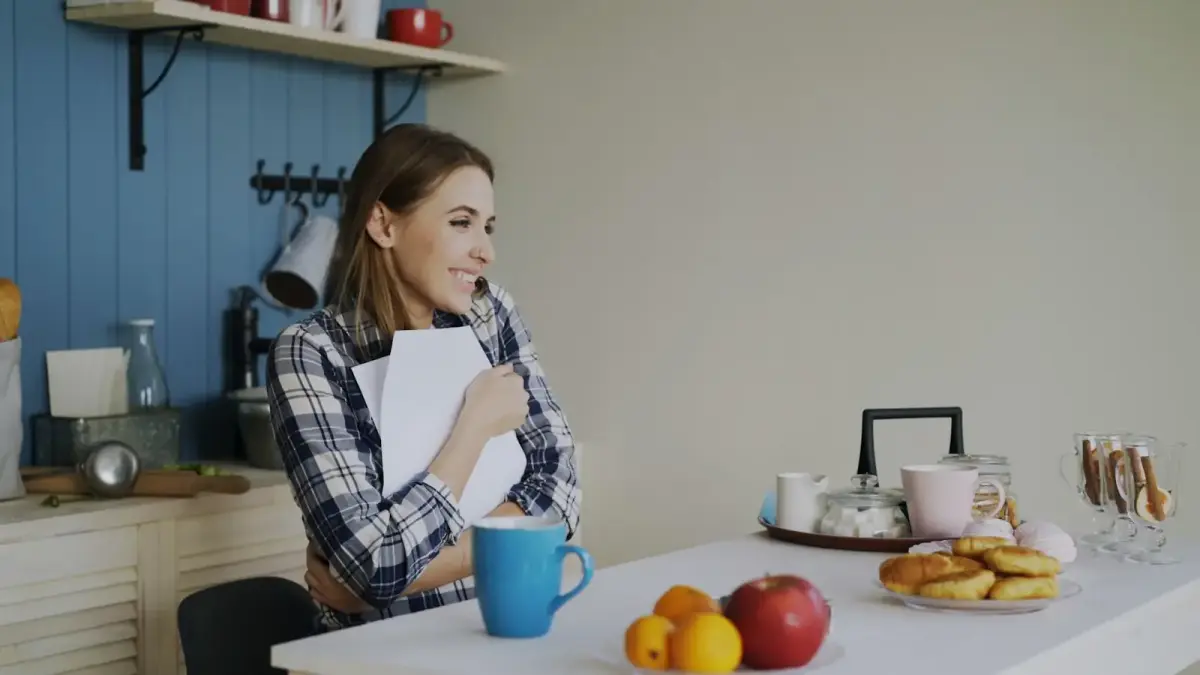
I caught myself doing it again last Tuesday. Sitting at my kitchen table with a bowl of oatmeal, reading the back of the canister. Not the recipe - I already know the recipe. The ingredients list. The allergen warning. The little paragraph about the company’s commitment to sustainable farming that I have now read perhaps forty times.
My husband walked through and said what he always says. “You know that by heart.” He was smiling. He thinks it’s a quirk. Something charming and slightly strange about a woman who cannot sit in front of a product without reading every word printed on it.
I smiled back. But something cracked open in me that morning, quiet and slow, the way understanding sometimes arrives decades after the experience that planted it. I wasn’t reading that oatmeal canister out of habit. I was reading it out of hunger. And the hunger didn’t start at fifty-eight. It started in a kitchen with twelve books and a mother who could not afford a thirteenth.
The house with twelve books
I can still count them. A Bible with a cracked spine. A cookbook from my grandmother, half the pages stained beyond reading. Two paperback romances my aunt left behind after a visit in 1974. A dictionary missing everything after the letter R. A phone book - does that count? I counted it then.
There were twelve books in our house, and I read every one of them before I turned nine. Some of them twice. Some of them five times. The dictionary was my favorite because it kept going, page after page of words I had never heard spoken aloud in any room I had ever been inside.
When I finished the twelfth book, I did not ask for more. I understood - in the way children understand things they are never told directly - that books cost money. And that wanting books cost something else entirely.
It cost my mother a look. A tightening around her mouth that I learned to recognize as the face she made when one of her children needed something she could not provide. I saw that look when my brother needed new shoes. When the furnace needed repair. When I asked if we could go to the bookstore in town.
I asked once. I remember the look. I did not ask again.
The bathroom library
But a girl who is hungry for words does not stop being hungry. She finds words in other places.
The bathroom was my first discovery. I was maybe seven, sitting on the edge of the tub while my sister took a bath, and I picked up the shampoo bottle. Suave. Green apple. And on the back, a paragraph. Directions for use, yes. But also a description of the scent, a promise about what the product would do for your hair, a sentence about botanical extracts that I did not understand but read three times anyway because the word “botanical” felt like a door opening.
I read the conditioner next. Then the bar of soap. Then the toothpaste tube, twisting it to follow the tiny print around the curve. Then the back of the aspirin bottle, where I learned the word “analgesic” and carried it in my mouth for a week like a hard candy.
A 2019 study published in the Journal of Research in Personality found that children with high verbal curiosity - what researchers call “need for cognition” - will seek out text compulsively when deprived of traditional reading material. They do not stop wanting to read. They simply redefine what counts as reading.
I redefined everything. The bathroom became a library. The cabinet under the sink became the reference section. And I became a girl who could tell you the active ingredients in Pepto-Bismol before she could name all fifty states.
The cereal box as morning newspaper
Breakfast was the best time. The cereal box sat on the table like a broadsheet, and I read every surface of it while I ate.
The front - bright colors, a cartoon character, a tagline. The side panel - the nutritional information, which I studied the way other children studied baseball cards. Calories. Sodium. Riboflavin. I did not know what riboflavin was, but I liked that it was measured in percentages.
The back was the richest territory. Puzzles. Word searches. Mazes. Little facts about animals or space or the human body. “Did you know that an octopus has three hearts?” I learned that from a box of Froot Loops in 1976. I have never forgotten it.
Sometimes there were contests. Send in three proofs of purchase and receive a decoder ring. I never sent away for anything - we didn’t have stamps to spare. But I read the rules carefully. Every line. The official entry period. The void-where-prohibited clause. The fine print that said “no purchase necessary” in letters so small they seemed embarrassed by their own generosity.
My mother watched me read cereal boxes without comment. I think she understood what I was doing. I think she was relieved that I had found a way to feed myself that did not require her to feel the weight of what the shelf could not hold.
The appetite that never had a name
The thing about growing up with very little to read is that you develop an appetite that has no off switch. You do not learn to read selectively. You learn to read everything, because everything might be the last thing available.
I read junk mail the way other people read the morning paper. I read the backs of VHS tapes at the rental store. I read the instructions inside board games, not to learn the rules but because instructions were paragraphs and paragraphs were sustenance. I read the pamphlets in the doctor’s waiting room - every word about diabetes management, every brochure about quitting smoking - not because I needed the information but because the words were there and free and no one would notice me taking them.
Psychologist Keith Stanovich’s research on what he calls “print exposure” - the sheer volume of text a person encounters across a lifetime - shows that voracious readers develop larger vocabularies, stronger reasoning skills, and deeper general knowledge regardless of the source material. A 2021 study in Frontiers in Psychology confirmed that the cognitive benefits of reading are not limited to books. They extend to any sustained engagement with written text, including labels, manuals, and everyday printed material.
The girl reading the back of a detergent bottle was not wasting time. She was building the same neural architecture that another child was building with a shelf full of novels. She was just building it from different lumber.
The cost of wanting more
Here is the part that still makes my chest tight.
It was not just that books cost money. It was that wanting books - visibly wanting them, asking for them, making the desire known - was itself a kind of expense. It cost my parents something to see their child want what they couldn’t give. And I learned very young that the kindest thing I could do was stop making my hunger visible.
A 2018 study in the Journal of Personality and Social Psychology found that children from lower-income households often develop what researchers call “self-silencing” around their intellectual needs. They learn to suppress curiosity not because they lack it but because expressing it creates discomfort in caregivers who cannot meet it. The children are not less curious. They are more careful about where they let the curiosity show.
I let mine show in the bathroom. At the breakfast table. In the grocery store, where I would stand in the cereal aisle and read boxes I knew we wouldn’t buy, absorbing every word on the back of the granola we couldn’t afford while my mother compared prices two shelves down.
No one needed to know I was reading. That was the beauty of it. A girl holding a shampoo bottle looks like she’s deciding whether to use it. A girl staring at a cereal box looks like she’s eating breakfast. A girl reading the fine print on a parking meter looks like she’s figuring out how much time she has.
She has all the time in the world. She is reading.
The woman at the kitchen table
I am fifty-eight years old, and my house has more books than I can count. Shelves in the living room. Stacks on the nightstand. A pile on the bathroom floor that my husband steps over with practiced grace.
I have enough books now. More than enough. I have a library card and a reading app on my phone and a subscription to a literary magazine that arrives every month in a brown envelope that feels like a gift every single time.
And still, I read the back of the oatmeal canister.
Still, I read the shampoo bottle in the shower. Still, I turn the hot sauce around and read the ingredient list while my eggs get cold. Still, I pick up the TV remote and read the tiny text on the battery compartment cover - the warnings about polarity and disposal and keeping away from small children.
I cannot stop. I don’t want to stop. But I didn’t understand why until that morning last Tuesday, when my husband said “you know that by heart” and something in me answered, silently: Yes. I know everything by heart. That was always the point.
The library that was already there
Here is what I want to say to the girl I was.
You were not deprived of reading. You were a reader who was briefly deprived of books. And in the absence of books, you did something remarkable. You turned every surface into a page. Every label into a paragraph. Every product on every shelf into a text worth studying.
You didn’t settle for less. You found more in less. There is a difference, and it matters.
The woman you became - the one who reads junk mail with genuine interest, who studies instruction manuals like literature, who cannot sit in a waiting room without reading the poster on the wall, all six paragraphs of it, including the copyright notice at the bottom - that woman is not quirky. She is not bored. She is not killing time.
She is the living proof that appetite survives scarcity. That a mind determined to read will read the world itself if no one hands it a book.
And the reading was never the problem. The reading was always the answer. The girl in the bathroom with the shampoo bottle in her hands was not making do. She was doing something braver than that. She was feeding herself in a house that could not feed that particular hunger, and she was doing it so quietly that no one ever had to feel the weight of what she needed.
That is not a small thing. That is not a quirk to smile at over breakfast.
That is a woman who built a library out of whatever the house already had. And the library is still open. It has been open for fifty years. And every cereal box, every shampoo bottle, every label within arm’s reach is a book on its shelves.
You are not killing time. You are reading. You always were.