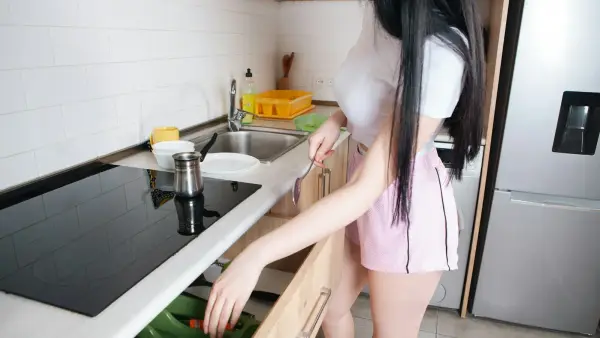
She's 61 and has quietly realized the reason she tips 30 percent at every restaurant is not generosity - it is that the girl who waited tables for twelve years and counted her cash tips in the parking lot before driving home never left the booth, and the woman who pays now is still, in some quiet corner of her body, the one who depended on strangers to decide whether she could make rent
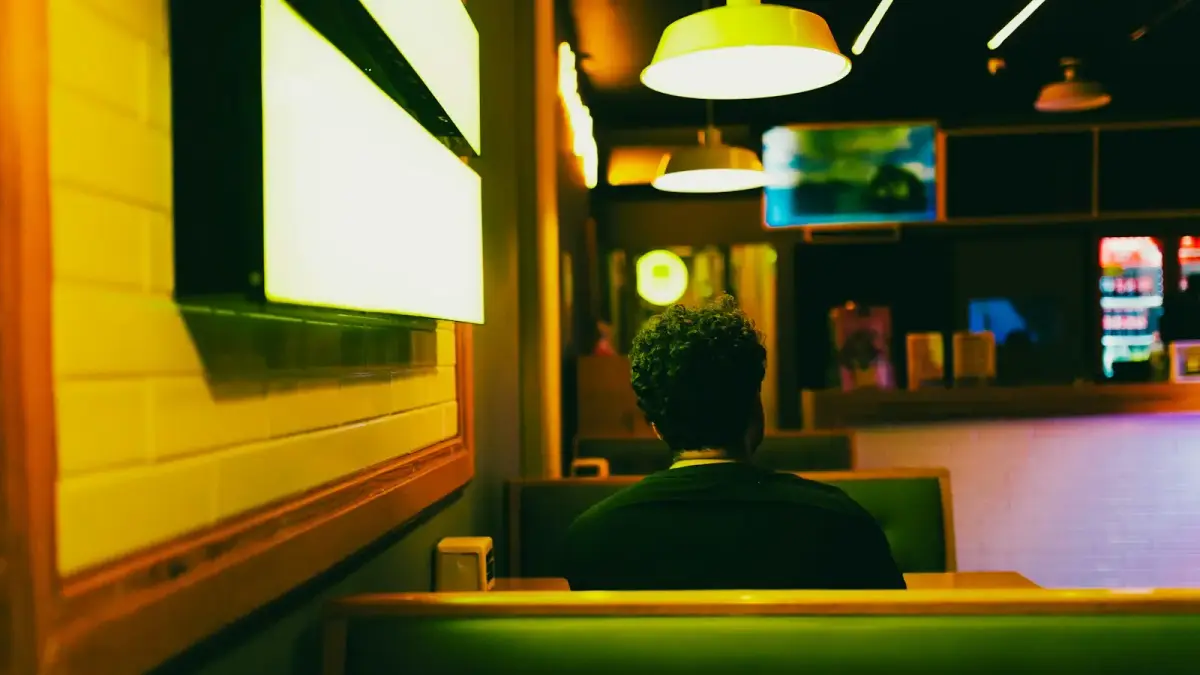
I was nineteen the first time I realized that whether I ate dinner depended on whether a man at table six liked the way I poured his coffee.
I don’t mean that metaphorically. I mean I was living in a studio apartment above a dry cleaner, the fumes drifting up through the floorboards every morning, and my rent was four hundred and sixty dollars a month. My base pay was two dollars and thirteen cents an hour, and the distance between those two numbers was filled entirely by the mood of strangers.
That was 1984. I waited tables for the next twelve years.
I am sixty-one now. I have a career, a retirement account, a kitchen with a dishwasher. I still tip thirty percent at every restaurant I walk into.
Every one. My husband calls it generous. My daughter calls it excessive.
But it is neither of those things, and I have only recently understood what it actually is.
The parking lot arithmetic
There was a ritual. Every night after close, I would sit in my car in the parking lot with the engine off and count my tips before I drove home.
Not at the table, not inside - always in the car, alone, with the overhead light casting a yellow circle across my hands.
I sorted the bills by denomination. Ones on the left, fives in the middle, the occasional ten or twenty on the right like a small miracle.
Then I counted twice, because the first number was never the one I wanted it to be, and counting again gave me one more chance for the math to change. It never changed. But the ritual mattered.
Because what I was really doing in that parking lot was not counting money. I was measuring how visible I had been that night. Every dollar was a verdict.
Every empty line on a credit card receipt where the tip should have been was a sentence about my worth, delivered by someone who would never know they’d written it.
A 2020 study published in the Journal of Personality and Social Psychology found that women who worked in tip-dependent service roles during early adulthood showed lasting changes in their relationship to financial security. Not in how much they earned later, but in how they experienced earning itself. The researchers described it as “contingent income identity” - the internalized belief that your economic survival depends not on your labor but on how others perceive your labor.
The work is never enough on its own. Someone has to decide it was worth rewarding.
I left the restaurant industry in 1996. I have not waited a table in thirty years. But that girl in the parking lot, the one with the yellow overhead light and the sorted bills - she is still counting.
The performance of warmth
Here is something nobody tells you about waitressing for over a decade. It teaches you to be warm on command.
Not fake warm - you can’t sustain fake warm for twelve years. It teaches you to access genuine warmth strategically, to produce real feeling because the alternative is not getting paid.
I learned to read a table within thirty seconds of approaching it. Couple on a date - sit back a little, give them space, be invisible but attentive. Family with kids - crouch down, talk to the child first, make the mother feel like she can relax.
I was good at it. I was very good at it. And the cost of being good at it was that I could never be sure, afterward, whether my warmth toward anyone was genuine or strategic.
Whether I smiled because I was happy to see someone or because my nervous system had learned, over ten thousand shifts, that smiling is how you survive.
At sixty-one, I still catch myself performing warmth in situations where nothing is at stake. A grocery store clerk. A receptionist at the dentist’s office.
I smile, I make small talk, I make sure they feel seen, and some part of me is still calculating whether the interaction went well enough to guarantee my safety.
My daughter once said, “Mom, you’re so nice to everyone.” And I wanted to say: that’s not niceness, sweetheart. That’s twelve years of understanding that niceness is currency, and currency is how you keep the lights on.
What the body remembers about scarcity
My hands know things my mind has filed away.
They know the weight of a full tray - the particular distribution of four dinner plates with the heaviest in the back, the way your shoulder absorbs the imbalance. They know how to open a wine bottle without looking at it.
They know the exact motion of sliding a check onto a table with the total facing down, because turning it face-up felt aggressive, and aggressive meant a smaller tip.
A 2018 study in Frontiers in Psychology examined what the researchers called “embodied economic memory” - the way physical labor during periods of financial precarity leaves traces in the body that persist long after the labor ends. They found that former service workers showed heightened physiological responses to hospitality environments decades later.
Elevated heart rate. Increased cortisol. Subtle postural shifts that mirrored their former working posture.
I confirmed this for myself last year, at a restaurant in the city where my daughter was treating me to dinner. A server dropped a glass somewhere behind me and I pivoted in my chair, scanning for where the broom was, calculating whether anyone needed to move.
Before I remembered I was a customer. I was seated. Nobody needed me to clean anything.
But my body didn’t know that. My body heard breaking glass and deployed a twenty-six-year-old waitress who had been trained to move before thinking, because hesitation cost time and time cost money and money was rent.
The rent question
There is a specific kind of fear that belongs to people whose income depends on the discretion of others. It is not the fear of poverty in the abstract. It is the fear of a particular Tuesday when the restaurant is slow and your section only turns twice and you walk out with thirty-two dollars and your rent is due on Friday.
I remember those Tuesdays. My body remembers them even more precisely than my mind does. The way my stomach would tighten around eight o’clock when I realized no more tables were coming.
The way I would wipe down the same stretch of counter three times because standing still felt like accepting what was happening.
And then driving home. The counting already done in the parking lot, the number already known. The math already running in the background - if I add tonight to what I have in the envelope under the mattress, is it enough?
And if it isn’t, which bill do I push? The phone? The electric?
Can I eat rice for five days straight again, or will my body start doing that shaking thing it did last month?
This is what I carry into every restaurant I enter now. Not the memory of those nights. The feeling of them.
When I leave thirty percent on a table, I am not being generous to the server. I am refusing to be one more variable in someone’s rent equation. I am removing myself as a source of that particular Tuesday-night dread.
Because I know what it feels like to sit in a car at eleven-thirty at night and realize that a stranger’s decision about a number on a receipt has just determined whether your life works this month.
The girl who never left
My therapist told me something last year that I haven’t stopped thinking about. She said, “The adaptations you made at nineteen are still running your nervous system at sixty-one.”
She was right. They were brilliant solutions to a real problem. The problem is they don’t know the problem is over.
I have not depended on tips for thirty years. I have not sorted ones and fives under a parking lot light since Bill Clinton was in his first term. I have not done the Tuesday-night math in decades.
But the girl who did that math - she is still here. She lives in my hands when I pick up a check. She lives in my throat when I hear a server apologize for something that wasn’t their fault.
She lives in the way I always, always check the tip line on a receipt before I sign it. Not to verify my own generosity but because leaving that line blank is, in her economy, an act of violence.
A 2022 study published in Psychological Science found that people who experienced economic precarity during their formative years often develop what the researchers called “phantom financial anxiety.” A persistent, low-level stress response around money that continues even after financial stability has been achieved.
The anxiety is not about current resources. It is about a past self who lives in the nervous system and does not receive the memo that things got better.
I am sixty-one years old and I have enough money. I know this intellectually the way I know the earth orbits the sun - as a fact that has no bearing on what my body feels when the bill arrives.
She is still in every booth
I thought, for a long time, that tipping well was something I chose. A value I held.
But it is also something older and less voluntary than any of that. It is a girl in a parking lot in 1984, sorting crumpled bills under a dome light that flickered, doing math that would determine whether she ate that week.
It is that girl watching me from inside every restaurant booth I sit in, waiting to see what I do with the check, waiting to see if I remember her.
I always remember her. I could not forget her if I tried. She is the reason I overtip, the reason I flinch when someone undertips, the reason I cannot watch a server clear a table without feeling something heavy settle in my chest.
She is not a wound I need to heal. She is a person I carry. And the thirty percent is not generosity and it is not guilt and it is not habit.
It is the only language she and I share - a language made of dollar bills left on tables, saying the same thing over and over to every server who will never know what it means.
I see you. I was you. And the parking lot gets warmer when someone remembers.