There are women who still iron everything - the pillowcases, the dish towels, the undershirts nobody will ever see - not because they are vain or old-fashioned but because a girl who watched her mother press the creases out of secondhand clothes until they looked new learned that the iron was not an appliance but a wand that could turn charity into dignity, and the woman at fifty-seven who irons her husband's t-shirts before folding them into a drawer is not fussy but performing the only alchemy her mother ever taught her
I iron my pillowcases. I know how that sounds. I know it marks me as something - fussy, maybe, or old-fashioned, or the kind of woman who has too much time and not enough perspective.
But here is the thing nobody outside my childhood would understand. When I press the iron across a pillowcase, I am not smoothing cotton. I am watching my mother’s hands again - her knuckles red, her wrist flicking the spray bottle she refilled with tap water because the store-bought starch was a luxury we could not justify.
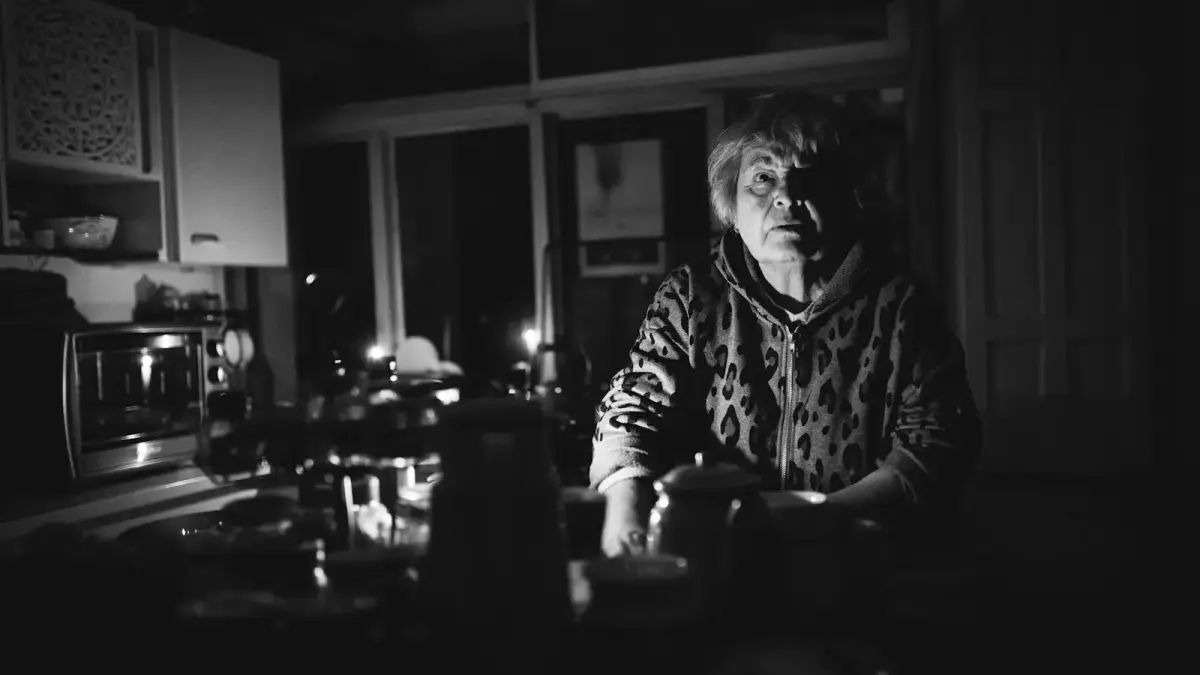
She ironed on Sunday nights. Every Sunday, without exception. The board went up in the kitchen because we did not have a laundry room, and the kitchen was the only place with an outlet that did not flicker. She ironed our school clothes - all four kids’ worth - and she ironed them like she was preparing evidence for a trial. As if on Monday morning, a jury of teachers and classmates would examine our collars, our hems, the line down the front of our pants, and render a verdict about what kind of family we were.
She was not wrong. They did.
The Alchemy of Having Less
There is a particular kind of labor that poor mothers perform, and it has nothing to do with cleaning. It is the labor of disguise. The labor of pressing charity-bin jeans until the knees do not sag. Of folding towels so precisely that they look like they came from a department store and not from the church donation table. Of scrubbing shoes with a toothbrush on Saturday night so they gleam on Sunday morning.
This is not housekeeping. This is class performance at its most intimate, and the stage is your child’s body walking through the school doors.
Pierre Bourdieu wrote about cultural capital - the invisible currency of knowing which fork to use, how to stand in a room, how to speak without apology. But he did not write enough about the women who manufactured that capital from nothing. Who took secondhand fabric and turned it into something that could pass. Who understood, without ever reading sociology, that presentation was the only passport their children had.
A 2019 study in the Journal of Research in Personality found that childhood socioeconomic status shapes adult habits and routines decades later - not through conscious choice but through deeply embedded behavioral patterns that become automatic, almost ritualistic. The researchers called it “habitual persistence.” The women I am describing would call it something simpler. They would call it just how you do things.
The Crease That Means You Belong
My mother could look at a shirt and know which parts the world would see. The collar, always. The front panel. The cuffs, if the sleeves were rolled. She ironed those sections with the care of a surgeon, and then she ironed the parts nobody would see - the back panel, the underside of the placket, the inside seam - because she believed that dignity was not about what others noticed. It was about what you knew was true underneath.
That idea lodged in me before I had language for it. That there is a crease you press for the world, and a crease you press for yourself, and the second one matters more because it is proof that you are not performing for approval. You are performing because this is the standard you hold, regardless of audience.
I watched her iron my brother’s undershirts. White cotton tees he wore beneath his school uniform. Nobody on earth would see those shirts. But she pressed them flat, folded them into thirds, and stacked them in his drawer like they were dress shirts. When I asked her why, she looked at me as if I had asked why we breathe.
“Because wrinkled things look like nobody cares about them,” she said. “And somebody cares about your brother.”
The Inheritance Nobody Talks About
When people discuss what parents leave their children, they talk about money, values, trauma. They rarely talk about the small physical liturgies - the way a woman folds a towel, the direction she stirs a pot, the particular motion of running an iron across a collar. These are not habits. They are scripture. And they are passed down with the same force as eye color.
I fold my towels the way my mother folded hers. In thirds, then in half, then in half again, so the edges are tucked and invisible. I did not decide to do this. I did not learn it from a magazine or a home organization account. I simply stood beside her at seven years old and absorbed the geometry of how a poor woman makes a linen closet look intentional.
Research from a 2021 study published in Frontiers in Psychology examined how domestic routines function as a form of emotional regulation and identity maintenance. The researchers found that for individuals who grew up in economically unstable households, the repetition of household rituals - particularly those related to order and cleanliness - served as a psychological anchor. The ritual itself became a source of stability in a world that had offered very little of it.
This explains why I cannot stop ironing even though I can now afford to buy new shirts when the old ones wrinkle. The ironing was never about the wrinkles. It was about control - the small, quiet, unglamorous kind of control that a woman with no money could still exercise.
The Things We Polish, Mend, and Keep
It is not just the iron. It is every object a mother touched with the intention of making less look like enough.
It is the shoes. My mother polished our shoes every week. Not the way you see it in movies, with a gentleman’s kit and a brush. She used a rag and whatever she had - Vaseline if there was nothing else. She buffed the toes of our school shoes until they shone, and we walked into the building looking like children who were cared for. That was the word she used. Not clean. Not neat. Cared for.
It is the mending. She could fix a hem in three minutes, by hand, with a needle she kept in a pin cushion shaped like a tomato. She never threw away a garment with a loose button or a small tear. She fixed it, because to her, replacing things was what rich people did. We fixed things. That was our economy.
It is the way she kept the kitchen. Not just clean but arranged. Cans facing forward. Dish towels folded and hung over the oven handle at the same angle. A house that looked, to anyone who walked in, like a house where things were under control. Even when the electricity was two weeks from being shut off. Even when dinner was rice and whatever vegetables were on sale.
Adam Grant has written about how the environments we grow up in shape not just our beliefs but our definitions of competence - what it means to be good at life. For daughters of mothers who performed this particular alchemy, competence forever feels like presentation. You are good at life when things are pressed, polished, folded, arranged. You are falling apart when the towels are bunched in the closet and the shoes are scuffed.
What Nobody Calls It
Nobody calls this love. That is the quiet tragedy of it.
When a woman stands at an ironing board on a Sunday evening, pressing her husband’s undershirts that he will wear beneath a flannel to mow the lawn, the world sees a woman wasting time. An artifact of a generation that did not know better. A woman who has not updated her understanding of what matters.
What the world does not see is the girl inside that woman, the one who watched her mother’s hands move across fabric with the precision and tenderness of someone writing a letter. Who absorbed the lesson that love is not always spoken. It is sometimes pressed into cloth. It is sometimes the act of making a thing beautiful when beauty is the only currency you have left.
A 2022 study published in the Journal of Personality and Social Psychology examined what the researchers called “invisible labor” - the maintenance work that keeps households running but goes unrecognized and unappreciated. What struck me was their finding that the people most likely to perform invisible labor were those who had witnessed it in childhood. Not because they were conditioned to be servile, but because they had seen it work. They had seen a mother transform a chaotic household into something that felt safe, and they internalized the belief that this transformation was possible, necessary, and entirely their responsibility.
The Iron Is Not an Appliance
I am fifty-three years old. I own a house. I have a closet full of clothes I bought new, with tags, at full price. I have never stood in line at a church clothing drive. I have never had to decide between the light bill and new shoes for my children.
And yet.
Every Sunday evening, I set up the ironing board. I fill the steam chamber. I start with the pillowcases because that is how my mother started. I work through the dish towels, the napkins, my husband’s work shirts, my blouses. I iron things I know do not need ironing. I iron things that will wrinkle again in the drawer.
I am not performing a chore. I am holding a conversation with a woman who has been gone for eleven years. I am saying, with my hands, that I remember what she taught me. That I absorbed her lesson - not the practical one about wrinkles, but the deeper one about what it means to refuse to let the world see you as less than.
The iron is not an appliance. It never was.
It is the only wand my mother ever owned, and with it she performed the only magic available to a woman with four children, a husband who worked doubles, and a pride so fierce it kept her standing at that board for hours every week.
She turned secondhand into sharp. She turned charity into belonging. She turned our poverty into something that, from the outside, looked a lot like enough.
And her daughter, standing at her own board decades later in a kitchen that never loses power, presses the iron down and feels the closest thing to prayer she has ever known.
Not because the clothes need it. Because the love does.