There is a reason a song you have not heard in thirty years can find you in a grocery store and fill your eyes before you have finished the first chorus - not because you miss being young but because your brain stored that melody alongside the exact quality of afternoon light through a bedroom window you will never open again, the smell of someone's jacket you used to reach for, and the particular ache of wanting something you could not yet name at sixteen, and music is the only language fluent enough to carry you back without asking whether you are ready to go
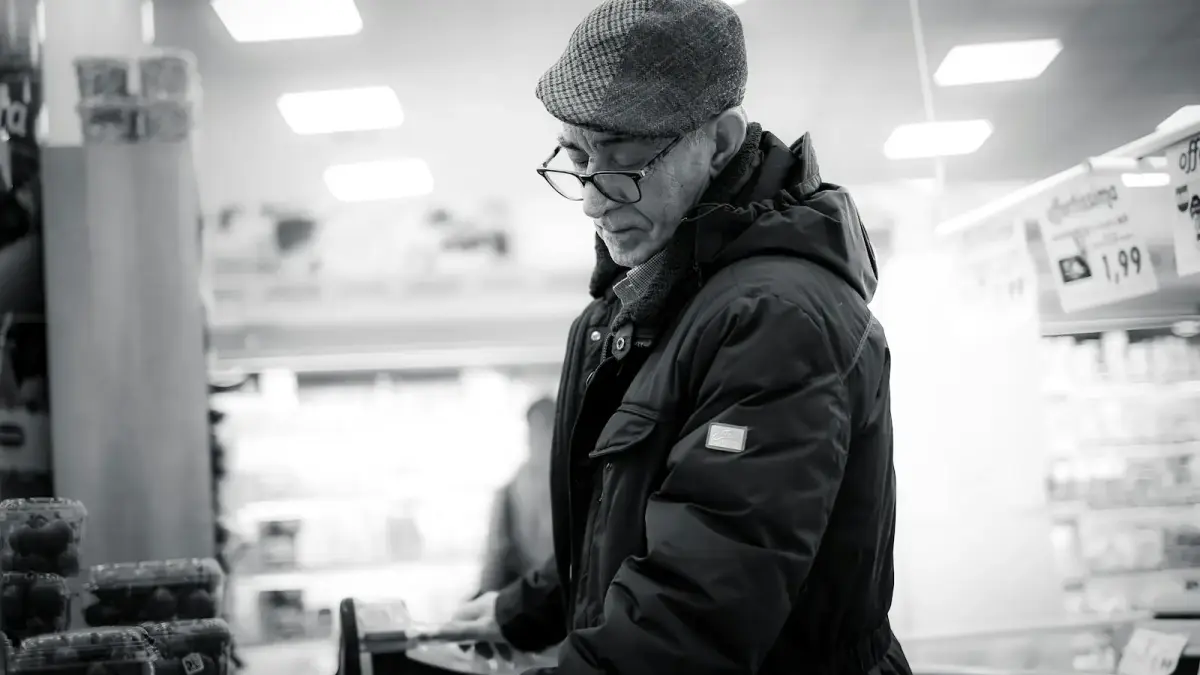
It happened on a Tuesday, between the cereal and the canned tomatoes
I was not thinking about anything important. I was comparing unit prices on pasta sauce and half-listening to the store’s overhead speakers the way you do - the way we all do - treating the music as furniture, as background hum, as nothing.
And then a song started. Something from 1993 or 1994. I couldn’t have told you the title if you’d asked. I hadn’t thought about it in decades. I’m not even sure I ever liked it that much.
But my body recognized it before my brain did. My chest tightened. My breath caught in a way that felt involuntary, almost medical. And then my eyes filled - not slowly, not with warning, but all at once, the way a glass overfills when you’ve been pouring without looking.
I stood there in the aisle holding a jar of marinara sauce with tears running down my face, and I could not have explained to a single person walking past me what was wrong. Because nothing was wrong. Everything was wrong. I was sixteen again and I was fifty-three and I was both at exactly the same time, and the distance between those two people was the most brutal thing I had ever been asked to hold.
Your brain did something extraordinary when you were young, and it never told you
Here is what happened, and here is why it still has the power to level you without warning.
Between the ages of roughly fifteen and twenty-five, your brain was doing something it would never do again with quite the same intensity. It was encoding experiences - not just the events themselves, but the entire sensory atmosphere surrounding them.
Researchers call this the “reminiscence bump.” A 2010 study published in Psychological Science confirmed what memory researchers had suspected for years: we disproportionately remember events from our adolescence and early adulthood, and we remember them with a vividness that later decades can never quite match.
But it’s not just that we remember more from those years. It’s how we remember it.
Your brain at sixteen was not filing away facts. It was archiving whole rooms. The temperature of the air. The grain of the carpet under your bare feet. The way someone laughed in the next room. The quality of light coming through a window at four in the afternoon in October.
And it was binding all of that - every texture, every scent, every unnamed feeling - to whatever song was playing.
Not because the song was important. Because the song was present. Because your brain needed a container for an emotional state it didn’t have words for yet, and a three-minute melody was the perfect vessel.
Music enters through a door that language cannot find
There is a reason music does this and almost nothing else can. Not photographs. Not places. Not even smells, though smells come close.
In 2009, neuroscientist Petr Janata at UC Davis published a study in Cerebral Cortex that mapped what happens in the brain when a familiar song triggers an autobiographical memory. What he found was remarkable. Music activates the medial prefrontal cortex - a region that sits at the intersection of memory, emotion, and self-awareness. It’s a neural hub where who you are meets who you were.
But here is the part that matters most. This activation happens fast. Faster than conscious thought. Faster than you can decide whether you want to go back.
Your prefrontal cortex - the part that keeps you composed in public, that reminds you that you are an adult with a grocery list and a car payment and a reasonable handle on your emotions - doesn’t get a vote. The music bypasses it entirely. It speaks directly to the limbic system, to the amygdala, to the parts of you that never agreed to grow up.
This is why the tears come before the thought. This is why you’re crying before you even know what you’re crying about. Your body is already there - in that room, in that car, in that particular shade of heartbreak - while your conscious mind is still standing in aisle seven trying to understand why it can’t breathe.
The song didn’t take you back. It proved you never left.
I think most of us assume that memory works like a filing cabinet. Experiences go in, we close the drawer, and occasionally we open it on purpose and take something out to look at.
But music reveals that this is not how it works at all.
The memories that music unlocks were never filed away. They were woven into you. They became part of your neural architecture. The song from 1994 isn’t retrieving a memory from storage - it’s reactivating a pattern that has been quietly humming in the background of your nervous system for thirty years.
Researchers studying involuntary musical imagery - the phenomenon of songs appearing in your mind without invitation - have found that these musical memories are among the most emotionally potent experiences the brain can produce. More vivid than visual memories. More immediate than verbal recall. They don’t feel like remembering. They feel like being there.
And that is what makes them so devastating.
Because when a song pulls you back to sixteen, you don’t observe your younger self from a safe distance. You become her. For three seconds or thirty seconds or however long it takes before your adult mind reasserts itself, you are feeling what she felt with her nerve endings, her hunger, her confusion.
You are wanting what she wanted. And the fact that you now know how the story turned out doesn’t protect you from the wanting. If anything, it makes it worse.
What you are actually grieving in that moment
Let me be honest about what those tears are.
They are not nostalgia. Nostalgia is soft. Nostalgia is choosing to look at old photographs and feeling a gentle warmth. Nostalgia has a sweetness to it because it’s voluntary. You opted in. You can close the album.
What happens when a song ambushes you in public is something else entirely. It is involuntary time travel, and it carries a specific kind of grief that most people never learn to name.
You are grieving the version of yourself who didn’t know yet. Who hadn’t been through the divorce, the diagnosis, the loss, the slow accumulation of compromises that turned into a life. You are grieving the openness of her, the unbearable tenderness of a person who still believed that wanting something badly enough might be enough to get it.
You are grieving rooms you will never stand in again. Not because the buildings were torn down - maybe they were, maybe they weren’t - but because the person who made those rooms feel like that is someone you can no longer be.
And you are grieving the sheer aliveness of it. The intensity of feeling that was your normal at sixteen and that you have spent the last three decades carefully managing, muting, organizing into something more sustainable. The song reminds you that you used to feel everything at full volume, and some part of you misses the sound.
The people around you have no idea what just happened
This is the part that makes it loneliest.
You are standing in a public place - a grocery store, a restaurant, a waiting room, your own car at a stoplight - and you have just been transported across decades in a matter of seconds. Your entire emotional landscape has shifted. You are holding thirty years of living in your chest, and the person next to you is checking their phone.
No one can see it. The experience is radically private. You can’t explain it even to the people who love you most, because by the time you’ve found the words, the feeling has already receded, leaving behind only its residue - a faint ache, a heaviness in the throat, the vague sense that something important just happened and you couldn’t hold on to it.
This is one of the quieter loneliness of being human past a certain age. You are carrying entire worlds inside you - complete with their own weather, their own light, their own soundtrack - and there is no way to show them to anyone.
The person you were at sixteen is not a memory. She is a passenger. She has been riding with you this entire time, quiet and patient, and every once in a while a song comes on that she recognizes, and she reaches forward and puts her hand on your shoulder, and for a moment you are both here.
Why your brain refuses to let go of those years
It would be easier, in some ways, if the brain just let go. If the memories from fifteen to twenty-five faded the way memories from last Tuesday fade - softening at the edges, losing detail, eventually becoming nothing more than a vague impression.
But the reminiscence bump exists for a reason. Those years are when you were becoming yourself. First love, first loss, first time you realized your parents were human, first time you understood that the world was not going to arrange itself around your comfort. Your brain encoded those experiences with extra intensity because they were, neurologically speaking, the most important learning you would ever do.
The music that was playing during those years got caught in the crossfire. It became part of the lesson. Part of the identity formation. Part of the answer to the question your brain was working on constantly during that period: Who am I? What do I feel? What does it mean to be alive in this body?
That’s why a song from 1987 or 1994 or 2001 can still reach you in ways that a song from last year cannot. It’s not about the quality of the music. It’s about the fact that the music became fused with the construction of your self, and hearing it again rattles the foundation just enough for something to come loose.
The tears are not a malfunction
I want to tell you something, because I think you need to hear it.
Those moments in the grocery store, in the car, at the kitchen sink when a song catches you off guard and your eyes fill before you’ve had a single conscious thought - those moments are not weakness. They are not sentimentality. They are not a sign that you are fragile or stuck or unable to move on.
They are proof that you lived fully. That you were once so open to experience that your brain encoded not just what happened but how the air felt while it was happening. They are evidence of a nervous system that was paying exquisite attention during the years that mattered most.
A 2020 study published in the Journal of Personality and Social Psychology found that people who experience strong emotional responses to music also tend to score higher in empathy, emotional depth, and what researchers call “openness to experience.” The tears are not a flaw in the system. They are the system working exactly as it should.
You feel the song so intensely because you felt your life so intensely. And the fact that you can still be reached - that decades of carefully constructed adulthood cannot fully insulate you from the raw, unfiltered feeling of being young and alive and aching for something you couldn’t name - that is not something to be embarrassed about.
That is something to be proud of.
She is still in there, the person you were when that song was new
The next time it happens - and it will happen, because your brain has no intention of letting those years go quietly - I want you to let it.
Don’t fight the tears. Don’t look around to see if anyone noticed. Don’t rush to compose yourself.
Just stand there for a moment, in the aisle, in the car, wherever the song found you. Let the chorus finish. Let your sixteen-year-old self have her thirty seconds.
She is not haunting you. She is reminding you. That before the mortgages and the medications and the careful way you learned to hold your face in meetings, there was a person who felt everything and apologized for none of it. A person who heard a song and let it fill every room inside her without checking first to see if the feeling was convenient.
She is still in there. She has always been in there.
And every now and then, when the right song comes on in the right grocery store at the right moment, she taps you on the shoulder just to say: I’m still here. I still feel everything. And I’m so glad you do too.