There is a particular kind of man who backs into every parking space with mirror-checking precision and quiet concentration, and if you watch him long enough you will recognize a boy who watched his father reverse a truck into tight spaces with calm authority and learned that a man who positions himself to leave quickly has never stopped preparing for something he might need to walk away from
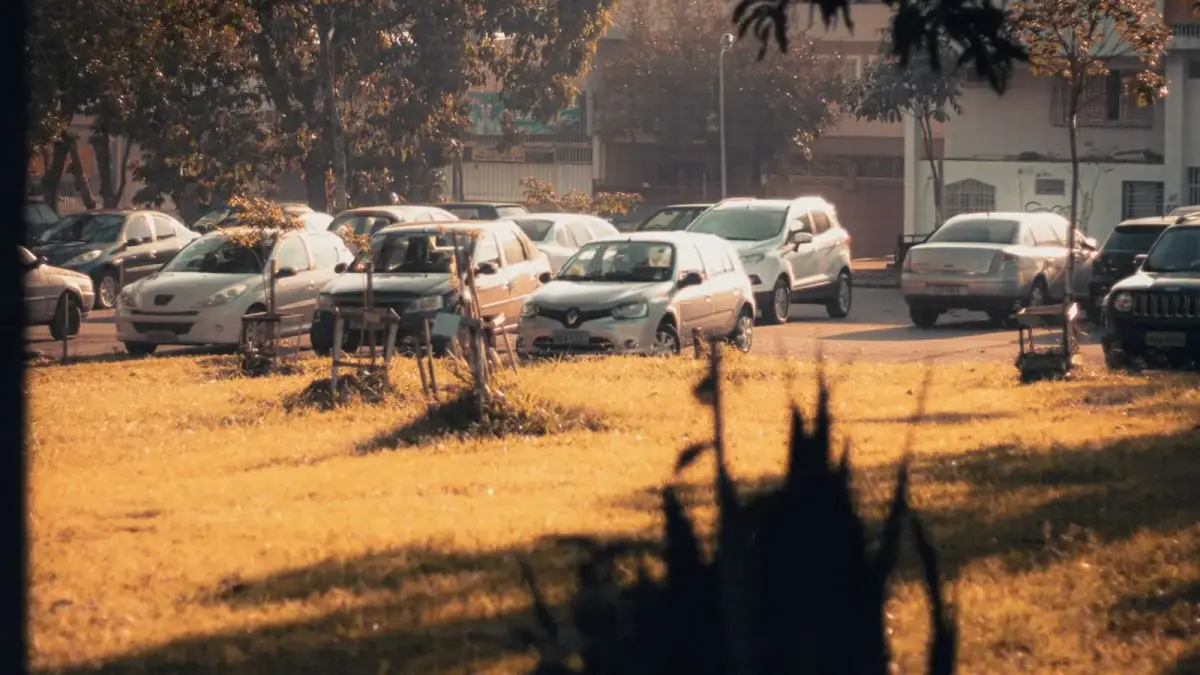
My father never pulled into a parking space forward. Not once. Not at the grocery store, not at church, not at the hospital the night my mother broke her wrist falling off the porch steps.
He would slow the truck, check both mirrors, then swing the wheel with a kind of patient geometry that made the whole maneuver look choreographed. The backup lights would blink on. The tires would arc. And the truck would slide into place like a hand into a glove, perfectly centered between the lines.
I sat in the passenger seat watching this hundreds of times before I understood what I was really seeing.
He wasn’t parking. He was preparing to leave.
And by the time I was old enough to drive, I was doing it too - backing into every spot with that same quiet precision, that same mirror-checking ritual, that same refusal to park the way everyone else did. I didn’t learn it. I absorbed it. The way sons absorb the things their fathers never explain.
The ritual nobody talks about
You know this man. You have probably parked next to him.
He pulls past the open space, stops, checks the mirror on his left, then the one on his right. He puts one arm over the back of the seat or grips the wheel at twelve o’clock. And he reverses in with a smoothness that looks effortless but is actually the product of thousands of repetitions.
He does not think about why he does this. If you ask him, he will tell you it is safer. He will mention exit speed, or visibility, or how it is easier to pull out into traffic when you are facing forward.
These are reasonable answers. They are also not the real answer.
The real answer lives somewhere deeper - in a place most men do not have the vocabulary to reach. It lives in the body, in muscle memory, in the way a boy watches his father’s hands on the steering wheel and files the image away as a definition of competence.
A 2019 study published in the Journal of Research in Personality found that men are significantly more likely than women to engage in what researchers called “preparatory exit behaviors” - small, habitual actions designed to ensure a quick departure from any given situation. The study linked these behaviors not to anxiety, but to a deeply internalized model of responsibility. The men who scored highest weren’t nervous. They were vigilant.
What the parking lot is really about
There is a particular kind of masculinity that never announces itself. It doesn’t flex. It doesn’t argue. It positions.
Backing into a parking space is one of those small, daily performances of positioning. It says: I have already thought about how this ends. I have already planned my way out. Not because I am afraid, but because I was taught that a man who hasn’t considered the exit is a man who isn’t paying attention.
This is the masculinity of preparation. Of readiness. Of scanning a room when you walk in - not because you expect danger, but because someone, a long time ago, made you understand that awareness is a form of care.
My father was not a military man. He was not in law enforcement. He installed kitchen cabinets for thirty-two years and came home most nights with sawdust in his hair and a quietness that filled the house like weather.
But he backed into every parking space like a man who understood that the world does not always give you time to turn around.
The inheritance nobody names
Daniel Goleman’s work on emotional modeling suggests that children learn their deepest behavioral patterns not from what parents say, but from what parents do in moments of low-stakes routine. Not the crisis. Not the lecture. The parking lot.
The way a father adjusts his mirrors. The way he rests his wrist on the gear shift. The way he checks the rearview one more time before cutting the engine - these are the gestures that write themselves into a son’s nervous system without either of them knowing it happened.
I didn’t decide to back into parking spaces. I just started doing it the week I got my license. The way I started crossing my arms the same way he did. The way I started checking the locks twice before bed.
These are not conscious choices. They are inheritances.
And they carry more weight than we give them credit for. Because when a boy watches his father reverse a truck into a tight space with calm authority, he is not learning a parking technique. He is learning what control looks like. He is learning that competence is quiet. He is learning that readiness is a form of love that never uses the word.
A 2021 study in Frontiers in Psychology found that sons who reported high levels of behavioral modeling from their fathers - not verbal instruction, but observed physical habits - showed significantly higher levels of what the researchers called “ambient preparedness.” A baseline state of readiness that was not triggered by threat, but maintained as a default. Like a pilot who runs through a preflight checklist not because the plane is broken, but because the checklist is how you prove you care about the people behind you.
The exit that never comes
Here is the part nobody talks about.
Most of the men who back into parking spaces will never need to leave in a hurry. They will walk out of the store carrying bags, load the trunk, sit in the driver’s seat for a minute checking their phone, and pull out into a half-empty lot where the direction they are facing makes no practical difference.
The preparation was never about the exit. It was about the preparing.
It was about the three seconds of focused attention - mirrors, angle, correction - that let a man feel, briefly, like he has accounted for something. Like the world is a series of small problems he can solve with spatial awareness and patience.
This is not pathological. This is not anxious. This is what it looks like when a man takes the only language of care he was given and practices it every single day in a concrete rectangle painted with white lines.
Susan Cain has written about the way quiet people build rituals of control around themselves - not because they are rigid, but because the ritual creates a zone of competence where they feel most like themselves. Backing into a parking space is one of those rituals. It is small and daily and completely invisible to anyone who isn’t looking.
But if you are looking, you will see a man replaying his father’s hands on the wheel. You will see a boy who learned that love is not spoken. It is positioned.
The language of the body
We talk a lot about the things men don’t say. The emotions they swallow. The conversations they avoid.
But we rarely talk about the things men do instead.
The way a man walks through a parking lot slightly ahead of his wife, not because he thinks she can’t handle it, but because his father walked slightly ahead of his mother, and the behavior coded itself as protection before he had a word for it.
The way a man checks the tire pressure on his daughter’s car without being asked. The way he arrives fifteen minutes early to everything. The way he backs into the driveway at night so the car is ready to go in the morning, aimed at the street, prepared for whatever the next day holds.
These are not personality quirks. They are a body language of devotion that has been passed down through generations of men who were taught to show up but never taught to speak up.
A 2022 study in Psychological Science examined what researchers called “nonverbal caretaking behaviors” in men over 50 and found that these habitual, physical acts of preparation - checking exits, maintaining vehicles, positioning objects for quick access - were strongly correlated with secure attachment styles. The men who did these things the most were not the most anxious. They were the most bonded.
They had simply learned to say I love you with a rearview mirror.
What the boy remembers
I am in my forties now, and I still back into every parking space.
My wife notices. She has stopped commenting on it. My son, who is nine, watches me from the backseat the way I once watched my father - not with curiosity exactly, but with that quiet, recording attention children give to the things adults do without explanation.
He will do it too, eventually. Not because I taught him. Because he watched.
And years from now, when someone asks him why he always reverses in, he will say something about safety or convenience or habit. He will give the reasonable answer.
But somewhere inside him, there will be an image he can’t quite name. A man in a truck, checking both mirrors, swinging the wheel with calm authority. A parking lot that felt, for three focused seconds, like the safest place in the world.
Not because the car was pointed at the exit.
Because his father’s hands were steady on the wheel.