There is a particular kind of person who never lets the gas tank drop below half - who fills it the moment the needle touches the midpoint, who knows every gas station between home and work the way other people know landmarks - because a child who sat in the backseat of a car that coasted to a stop on the shoulder of a highway learned that empty is not a number on a gauge but a feeling in your chest, and she has spent her entire adult life making sure she never feels it again
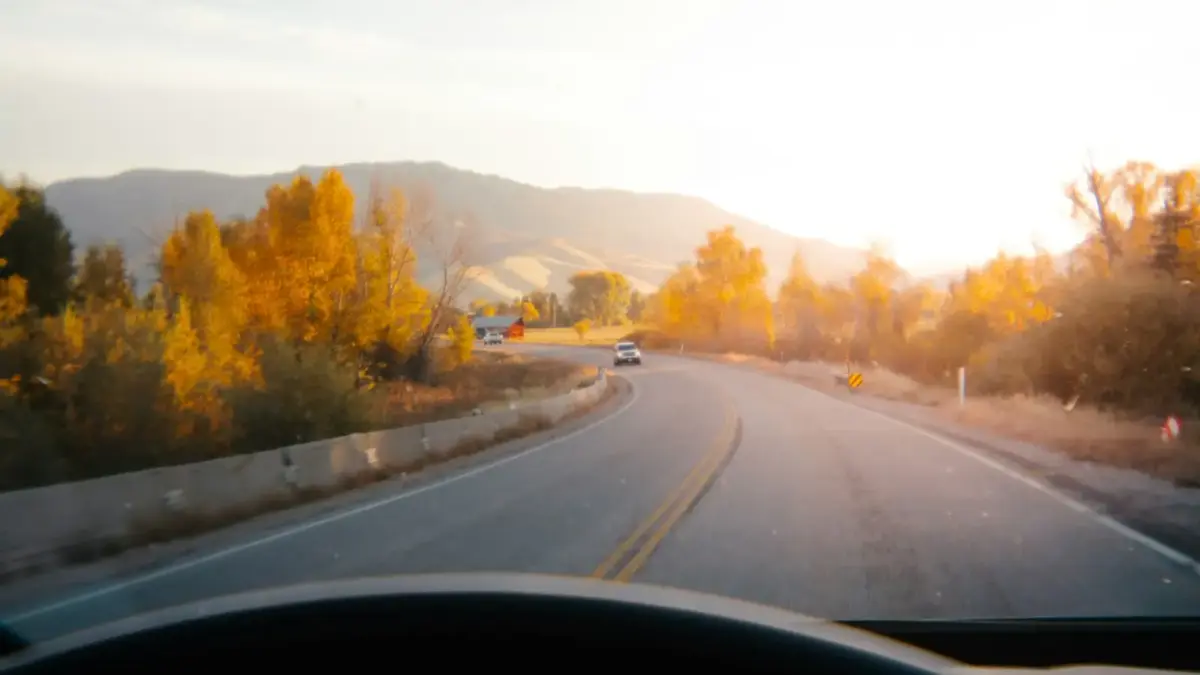
I fill up my car when the gauge hits the halfway mark. Every single time. I have done this for so long that I forgot it was unusual until a friend got in my passenger seat, watched me pull into a gas station, and said, “You still have half a tank.” She said it like I’d made a mistake. Like I’d misread the needle.
I hadn’t misread anything. I was reading something she couldn’t see.
There is a memory I carry that has nothing to do with gasoline and everything to do with it. I was maybe eight, sitting behind my mother in a car that was slowing down in a way that cars are not supposed to slow down on a highway. She didn’t say anything. She just gripped the wheel tighter, put on the hazard lights, and guided us to the shoulder while the engine went quiet. The silence was the worst part. Not the trucks shaking our car as they passed. Not the heat. The silence where the engine used to be.
That silence lives in my body now. And I have spent decades making sure I never hear it again.
The architecture of the half-tank rule
If you are a person who fills up at three-quarters of a tank, you already know this is not about gas. It was never about gas. The fuel gauge is just the most visible version of a much deeper monitoring system that runs constantly in the background of your life - one you built so early and so thoroughly that you sometimes forget it’s even there.
You know every gas station on your commute. Not because you planned to memorize them, but because your nervous system cataloged them automatically, the way a swimmer notes the location of every life preserver on the pool deck.
You probably do some version of this with everything. You know exactly what’s in your checking account right now - not a rough estimate, but the number, to the dollar. You keep the pantry stocked in a way that other people might call excessive but that you experience as the bare minimum of safety. You notice when the shampoo bottle is three-quarters empty. You replace things before they run out, always, because running out is not an inconvenience to you. It is an emergency.
A 2015 study published in Psychological Science found that people who experienced childhood economic instability showed heightened attention to resource depletion cues well into adulthood - even when they were financially secure. The researchers called it “scarcity monitoring.” I call it the thing that makes me check the gas gauge four times during a forty-minute drive.
What the child in the backseat actually learned
Here is what happens when you are eight years old and your mother’s car runs out of gas on the highway. You don’t learn that gas is important. You learn something much more fundamental and much harder to unlearn.
You learn that the adults in your life are not in control.
You learn that the world can go quiet without warning. That motion can become stillness. That the thing carrying you forward can simply stop, and when it does, there is no one coming to fix it. Not quickly. Not easily. Not without a phone call made from a gas station payphone with quarters your mother had to dig out of the console.
You learn that empty doesn’t happen all at once. It happens slowly, and the people around you might not notice, or might notice and not be able to do anything about it. You learn that the distance between “enough” and “nothing” is shorter than anyone told you. And you decide, in that wordless way children decide things, that you will never be caught in that distance again.
This is not a conscious decision. It is a reorganization of the nervous system. The child doesn’t think “I will always keep my gas tank full.” The child’s body simply begins tracking resources with a vigilance that will outlast every other lesson from childhood.
The pantry, the account balance, and the freezer full of food
A friend once opened my freezer and laughed. “Are you preparing for a siege?” she asked. I laughed too, because what else do you do when someone accidentally identifies your survival architecture?
The freezer is full because the freezer cannot be empty. The pantry has duplicates of everything because running out of olive oil is not, for me, a trip to the store. It is a tiny replication of the feeling I had on that highway shoulder - the feeling of a resource reaching zero while I sit powerless.
If you grew up in a household where money was tight - not necessarily poverty, but the kind of tight where your parents’ voices changed in the last week of the month - you likely recognize some version of this. The checking account that you monitor the way a nurse monitors a heart rate. The inability to spend the last twenty percent of anything without a spike of adrenaline. The way a “low balance” notification doesn’t just inform you but activates you, like a fire alarm in a building you thought was safe.
Gabor Mate has written extensively about how early experiences of insecurity reshape the body’s stress response systems. What he describes is not damage exactly but adaptation. Your nervous system learned that resources are unreliable, so it built a monitoring station. It staffed that station twenty-four hours a day. And it never approved the budget to shut it down, even after the emergency passed, even after you grew up, even after you could afford to fill the tank ten times over.
The people who don’t understand why you can’t just relax
There is a particular loneliness in being told you’re “too careful.” In having a partner who doesn’t understand why you need to stop for gas right now, when there’s still a quarter tank. In hearing “you worry too much” from someone who never sat in a car that went silent.
They’re not wrong that the tank has enough gas to get home. They’re just measuring something different than you are. They’re measuring fuel. You’re measuring safety. And those are not the same units.
A 2021 study in the Journal of Personality and Social Psychology found that adults who grew up in economically unstable households continued to exhibit resource-hoarding behaviors even after achieving financial stability - and that these behaviors were driven not by cognitive beliefs about scarcity but by automatic emotional responses. In other words, you might know with your thinking brain that you have enough. Your body doesn’t care what your thinking brain knows.
This is the part that’s hardest to explain to people who didn’t grow up this way. It’s not a belief you can reason yourself out of. It’s a feeling that lives below the level of reason, in the part of you that was formed before you had words for what was happening. The part that learned its lessons not through language but through sensation. Through silence. Through the feeling of a car losing momentum on a highway shoulder.
The ritual that keeps the world turning
Here is what I want you to know if you recognize yourself in any of this. What you are doing is not irrational. It was never irrational.
You built a system. You were a child, and the world demonstrated that it could not be trusted to keep the tank full, the pantry stocked, the lights on. So you took over that job yourself. You appointed yourself the minister of resource management for your own life, and you have been faithfully executing that role for thirty or forty or fifty years.
The half-tank fill-up is not anxiety. It is a ritual of competence. It is you, telling the child in the backseat that this car will not go silent. Not today. Not on your watch.
Research by developmental psychologist Susan Cain has explored how early experiences of environmental unpredictability shape what she calls “quiet vigilance” - the tendency to scan for and prevent problems before they occur. It’s a trait often mistaken for worry, but it’s actually something closer to stewardship. You are not afraid. You are responsible. You took responsibility before anyone asked you to, because no one else was going to.
And yes, it is tiring. Monitoring everything is tiring. Knowing exactly how much toilet paper is left, how many days until the electric bill, how far you can drive before the next gas station - this kind of knowing costs something. It takes up cognitive and emotional bandwidth that other people get to use for leisure, for daydreaming, for the luxury of not thinking about the gas gauge at all.
The softness of enough
You might never fully stop checking. And that is okay.
The goal isn’t to cure yourself of vigilance. The goal isn’t to let the tank hit empty just to prove you can survive it. You already proved that. You survived it when you were eight, in the backseat, with no say in the matter.
The goal, if there is one, is to let yourself notice what you’re doing. To fill the tank at the halfway mark and also to say, gently, to yourself, “I know why I do this. I know where this comes from. And it’s okay that I still need to do it.”
Because the person who fills up at half a tank is not being paranoid. She is being faithful. Faithful to a promise she made to herself on a highway shoulder a long time ago - a promise that she would never again sit in a car that couldn’t move, never again listen to that silence, never again feel the specific helplessness of a child watching a gauge she couldn’t reach drop to a number that meant the world was about to get very uncertain.
You are not broken for checking. You are not anxious for stocking. You are not excessive for monitoring.
You are a person who learned early that the world does not always keep its promises about having enough. And so you keep that promise yourself. Every tank. Every time. With the same quiet, stubborn, beautiful devotion that has kept you moving forward your entire life.
The tank is half full. You’re pulling into the station.
And the child in the backseat can finally breathe.