There are women who carry their mother's sewing machine from house to house, setting it up in rooms they never use - not because they sew but because a daughter who watched her mother turn clearance fabric into something that looked like it cost ten times what it did understood that the machine was never about clothing but about the distance between what you could afford and what you refused to accept
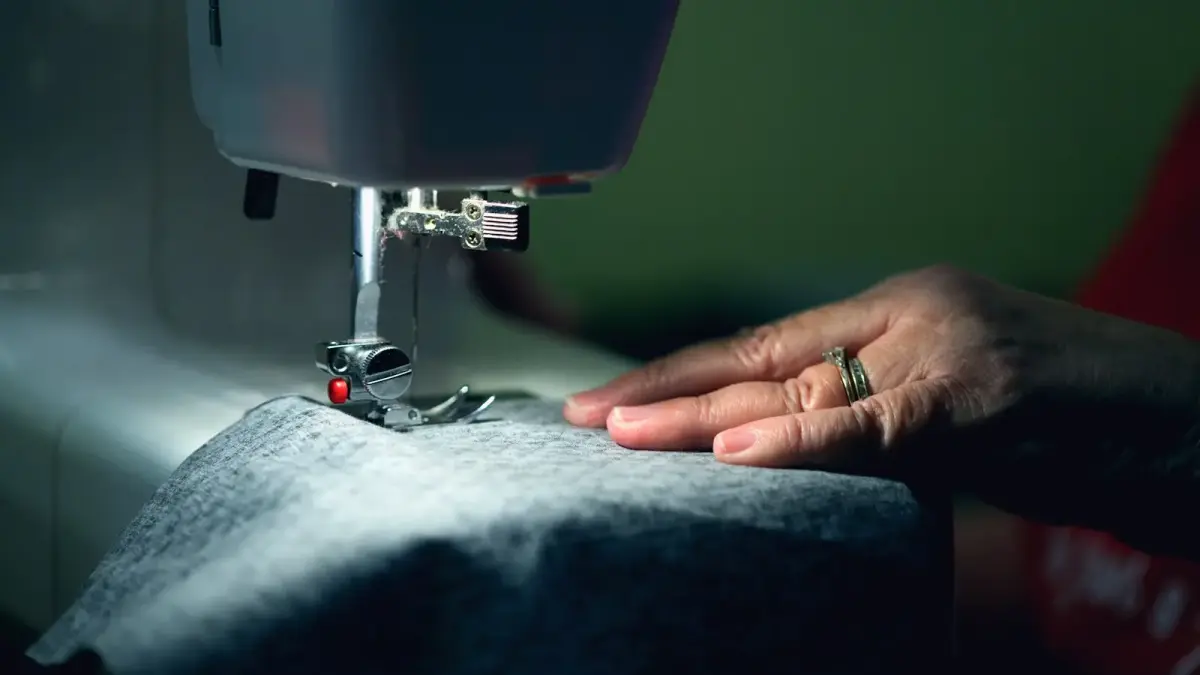
It sits in the corner of the spare bedroom, next to a box of old curtains and a stack of books nobody has opened in years. The cord is wrapped neatly around the base. The foot pedal is tucked underneath, still showing the scuff marks where her heel wore through the finish.
You have not threaded that machine in over a decade. You might not even remember how.
But when your partner suggested donating it during the last move - just casually, while taping boxes, not even looking up - something in your chest tightened so fast you surprised yourself. You said no before you had a reason. You said no the way you would if someone reached for a photograph of your mother’s face.
Because that is what it is. Not a machine. A photograph. A record of a woman who sat at that table after everyone went to bed and turned three yards of clearance fabric into the reason nobody at school ever looked at you and saw what your family couldn’t afford.
And you carry it from house to house because you are not sentimental. You are a witness.
The sound that meant something was being fixed
If you grew up in a house where money was managed rather than spent, you know the sound. The rhythmic pulse of the needle punching through cotton. The brief silence when she adjusted the fabric. The whir picking back up, steady and purposeful, the way a heartbeat sounds when someone is concentrating.
Your mother did not sew because she enjoyed it - or maybe she did, eventually, the way you can learn to enjoy anything you become exceptional at. She sewed because the dress in the store window cost forty dollars, the fabric at the remnant bin cost four, and she had hands that knew the difference between a French seam and a flat-felled seam before she was fifteen.
She sewed because there was a gap between the life the family could afford and the life she wanted her children to walk through. And she closed that gap stitch by stitch, on weeknights, after dinner, with pins between her teeth.
A 2019 study published in the Journal of Consumer Research found that families navigating economic constraint often develop what researchers call “creative capital” - the ability to produce goods and experiences that exceed their market purchasing power. The study noted that this labor is almost always invisible because the result, by design, looks effortless. The whole point was that nobody could tell.
Your mother’s competence was built to be undetectable. That was the skill. Not just making the dress - making the dress look like it came from somewhere it didn’t.
What the machine actually held
Here is what people who grew up comfortable do not understand about a sewing machine in a working-class house: it was not a hobby. It was infrastructure.
It hemmed school uniforms so they lasted another year. It took in waistbands when hand-me-downs ran too wide. It turned an adult’s old blouse into a child’s skirt, and it did it so cleanly that the child never knew she was wearing something repurposed.
The machine was a translator. It translated limited income into the appearance of enough. It translated a mother’s pride into something her daughter could wear without feeling marked.
And it did one more thing that nobody talks about. It translated love into a form that didn’t require vulnerability. Your mother may not have been the kind of woman who said I love you before bed. She may not have been the kind who asked how you were feeling or sat on the edge of the mattress and stroked your hair.
But she was the kind who noticed that the zipper on your only good jacket was pulling, and she fixed it before morning so you would never have to ask.
That machine held every act of love she couldn’t say out loud. Every hour she spent making sure the world wouldn’t look at her children and see a family that was struggling. Every late night where she chose labor over rest because rest wouldn’t send you to school looking like you belonged.
The economics of dignity
Dr. Brene Brown has written extensively about the relationship between shame and socioeconomic status - about how poverty in America carries a moral weight that transforms financial limitation into personal failure. Brown’s research suggests that the deepest shame isn’t about what you lack but about who might notice.
Your mother understood this without reading a single study. She understood it in her hands, in the tension she kept on the thread, in the way she pressed every seam flat before she let you try something on.
She was not making clothes. She was making a case. The case was: my children are not less than. The evidence was: look at them. You cannot tell.
And the thing about that kind of labor is that it succeeds by disappearing. When it works - when the dress fits perfectly, when the coat looks store-bought, when the other kids don’t ask where you got it - the skill itself becomes invisible. Nobody praises you for a problem no one noticed. Nobody thanks you for the crisis you prevented.
A 2021 study in Frontiers in Psychology examined what researchers termed “invisible domestic expertise” - skilled labor performed within households that generates real economic value but receives no formal recognition. The study found that women who performed this labor often internalized its invisibility, describing their own skills as “just something I picked up” even when those skills required years of practice and genuine mastery.
Your mother could look at a pattern and adjust it in her head. She could feel when the tension was off by the way the fabric pulled. She could match a plaid across a seam - something that baffles even experienced sewers - and she probably described this ability as nothing special.
It was not nothing special. It was extraordinary. It was a working-class woman’s version of expertise, and the world never built a category to honor it.
Why you cannot let it go
People will tell you it is nostalgia. They’ll say you are holding on to the past, that you should keep a photograph instead, that the machine is just taking up space.
But you know what that machine is, even if you have never said it out loud.
It is proof.
Proof that your mother had a skill the economy never paid her for. Proof that she performed a kind of labor that nobody counted, nobody measured, and nobody thanked her for at the time. Proof that there was a woman in your house who looked at the distance between what the family earned and what the world expected, and instead of accepting that distance, she sat down at a table every night and erased it.
You keep the machine because you are the only one who saw. Your siblings might remember the dresses. Your father might remember the sound. But you - you remember the hours. You remember walking into the kitchen at midnight for water and seeing her back curved over the table, pins scattered, the lamp making a small circle of gold around her hands.
You saw the cost. And you refuse to let the evidence of that cost disappear into a donation bin.
Psychologist Susan Cain has written about the way quiet, interior labor is systematically undervalued in cultures that prize visibility and self-promotion. The people who do the most essential work, she argues, are often the least likely to be recognized for it - not because the work doesn’t matter but because the workers themselves were taught that drawing attention to it would be unseemly.
Your mother was that worker. The sewing machine was her office, her workshop, her studio. And when people look at it and see an outdated appliance, you see the entire architecture of your childhood dignity.
The inheritance nobody names
There is a particular kind of inheritance that doesn’t show up in wills or estate plans. It is the inheritance of watching someone refuse to be diminished by their circumstances. Of growing up in a house where the answer to “we can’t afford that” was never defeat - it was “give me the measurements and two days.”
You carry that inheritance whether you sew or not. It shows up in the way you solve problems - not by spending more but by being more resourceful. It shows up in your refusal to accept that something is impossible just because it is expensive. It shows up in your hands, which learned from watching her hands that skill is a form of resistance.
And it shows up in the way you keep that machine.
Because you are not keeping a machine. You are keeping a record. A record of a woman who was never called talented or gifted or brilliant, who never had her work displayed or reviewed or applauded - but who sat down every evening and performed an act of such precise, patient, invisible love that her children walked through the world without ever knowing they were supposed to feel less than.
The machine is heavy. It takes up space in every house you move to. You set it up in a room you never enter, and sometimes you walk past the door and glance at it the way you’d glance at a headstone - not with grief, exactly, but with the quiet, permanent weight of knowing what someone gave you and understanding that you can never fully repay it.
You are not sentimental. You are faithful.
And the machine stays.